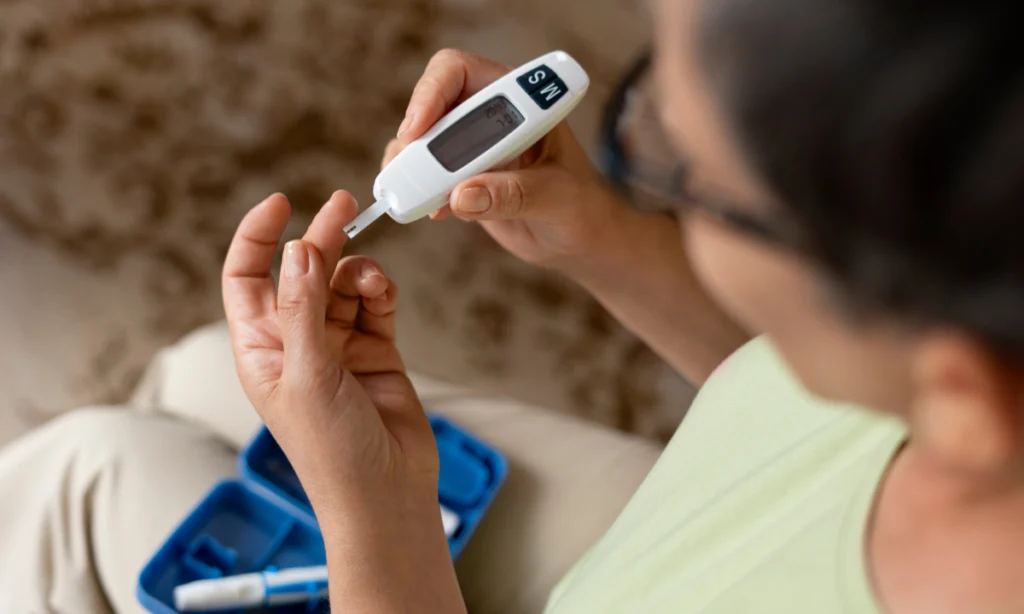
Summary: A new population-based study shows that an oral glucose tolerance test may help predict the risk of memory decline over the long run. People with poor results on this test are much more likely to lose episodic memory (memory of life events) in old age. Severe memory loss from aging and dementia is a major health worry for older adults. Alzheimer’s is on the rise. It is one of the top causes of death in the western world. Yet we know very little about what causes dementia or how it develops. There are no proven early markers or tests to predict the risk. Diabetes or insulin resistance is one known risk factor for dementia.
Can memory decline be caught early enough to prevent it?
Memory loss from aging and diseases like Alzheimer’s is a growing cause of disability in older adults. But, unlike what most people think, about 40% of dementia cases can be delayed or even prevented1. That only works if the risk of dementia later in life is spotted early.
Sadly, right now there are no proven markers or tests to predict the risk of dementia or Alzheimer’s later in life. Still, researchers know many risk factors for dementia. These include diabetes, depression, and even habits like smoking.
Researchers are hunting for tests that can predict memory loss later in life. They are also checking whether common tests can flag the risk. That would give a person time to act and change how they live. Chronic pain specialists can play a key role here. Managing chronic pain well lifts overall health and quality of life. That may lower the risks tied to memory loss.
Episodic memory is how you remember key events in life and the feelings tied to them. Think of a first kiss, a wedding date, or graduation day. Some forgetfulness comes with age. But it may also be a sign of something worse, like Alzheimer’s or another cause of dementia.
Can a glucose tolerance test predict memory loss?
A study published in 2021 in the Diabetes Care journal offers a clue. One of the common tests for diabetes may help predict memory problems later in life2.
The two most common tests for diabetes are fasting plasma glucose (FPG) and oral glucose tolerance tests (OGTT). OGTT is very good at catching diabetes early. It also helps when the FPG test fails to confirm it.
In OGTT, doctors give a person a sugary drink full of glucose. Then they test blood sugar after 2-hours. A reading above 200 mg/dl means diabetes. A reading between 140 mg/dl to 200 mg/dl may point to prediabetes3.
This new study used data from the Finnish population-based Health 2000 Survey. It also used follow-up data gathered after 10-years in the Health 2011 study2.
Researchers looked at memory tests from 961 people who took OGTT between 2001 and 2002. After 10 years, those with worse OGTT results had lost more episodic memory over those 10 years. So even a simple test like OGTT may help show the long-term risk of memory problems.
Do these findings indicate that OGTT may help predict Alzheimer’s risk?
Not really. The study did not look at this question. Also, diabetes is already known as a risk factor for poor memory later in life. That does not always mean a higher risk of dementia4.
Still, the finding has value. More studies are needed to see if OGTT can predict the risk of severe memory loss or dementia in the long run. Follow-up studies also need to show whether poor OGTT results early in life predict a higher risk of Alzheimer’s later on.
Still, it does confirm that the risk of memory loss is higher in people with poor OGTT results. People with higher OGTT values need to pay closer attention to brain health. That can mean keeping blood sugar in check, giving up smoking, staying active, and sleeping better. Steps taken early may help cut the risk of dementia later in life.
Frequently asked questions
What is a normal glucose tolerance test result?
In an oral glucose tolerance test, your blood sugar is checked two hours after a sugary drink. A two-hour reading above 200 mg/dl means diabetes. A reading between 140 and 200 mg/dl may point to prediabetes. A reading below 140 mg/dl falls under both ranges. In the study on this page, people with worse two-hour results lost more episodic memory over the next 10 years.
How is a 2-hour glucose tolerance test done?
You drink a sugary liquid full of glucose. Your blood sugar is tested two hours later. Doctors use the oral glucose tolerance test (OGTT) along with the fasting plasma glucose test to diagnose diabetes. The OGTT is very good at catching diabetes early. It also helps when the fasting test fails to confirm it. It is a simple, common test. That is what makes its link to memory useful.
Can high blood sugar cause dementia-like symptoms?
High blood sugar is tied to memory loss. Diabetes and insulin resistance are known risk factors for dementia. In a Finnish study of 961 adults, those with worse glucose tolerance results lost more episodic memory 10 years later. That study did not test for Alzheimer’s itself. So it shows a higher risk of memory loss, not a dementia diagnosis.
Can memory decline from high blood sugar be prevented?
About 40% of dementia cases can be delayed or even prevented. But only when the risk is found early. That is the value of a poor glucose tolerance result: it is an early warning. People with higher OGTT values need to pay closer attention to brain health. That means keeping blood sugar in check, giving up smoking, staying active and sleeping better.
References
- The Truth About Aging and Dementia. Published September 8, 2021. Accessed October 2, 2021. https://www.cdc.gov/aging/publications/features/dementia-not-normal-aging.html
- Toppala S, Ekblad LL, Viitanen M, Rinne JO, Jula A. Oral Glucose Tolerance Test Predicts Episodic Memory Decline: A 10-Year Population-Based Follow-up Study. Diabetes Care. Published online August 12, 2021. doi:10.2337/dc21-0042
- Diagnosis | ADA. Accessed October 2, 2021. https://www.diabetes.org/a1c/diagnosis
- Arvanitakis Z, Tatavarthy M, Bennett DA. The Relation of Diabetes to Memory Function. Curr Neurol Neurosci Rep. 2020;20(12):64. doi:10.1007/s11910-020-01085-9
Dr. Gurpreet Singh Padda, MD, MBA, MHP


