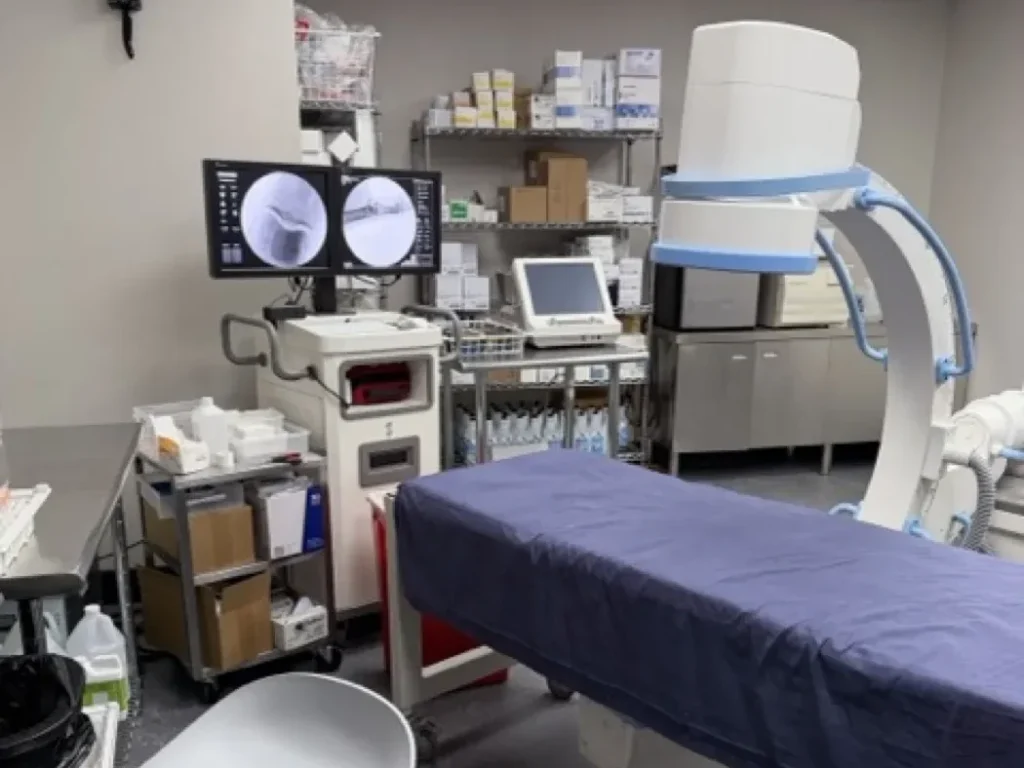
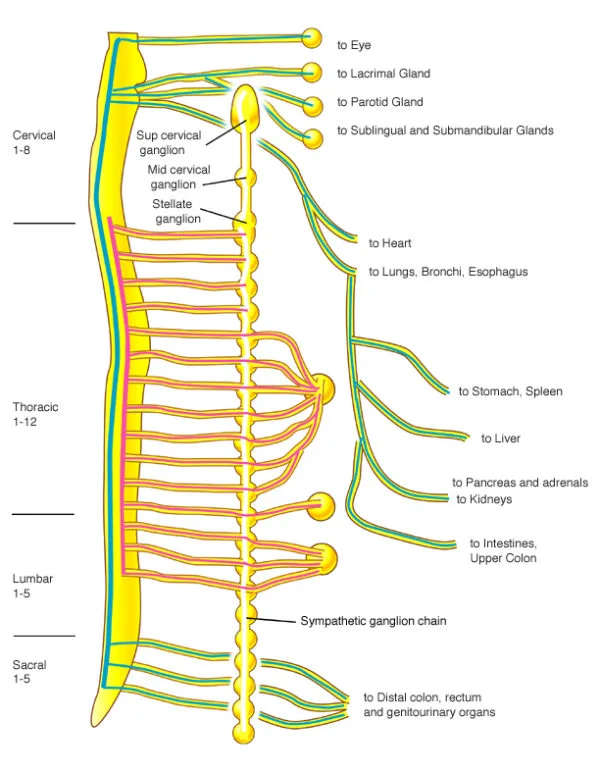




The nerves going to the arm can be anesthetized in one of two place; the low neck which is known as a stellate block, or the upper chest area known as a T2 sympathetic block. The Stellate Ganglion Block is an outpatient procedure, usually done in the Operating Room or a Procedure Room. For your safety and comfort, you will be connected to monitoring equipment (EKG monitor, blood pressure cuff, and a blood-oxygen monitoring device). The doctor or nurse may start an intravenous line and give some medicine to help you relax. You will also have skin temperature monitors placed on your hands. The procedure is performed with you lying on your back.
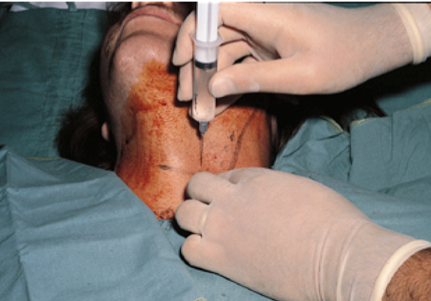
A rolled-up sheet or other support is placed between your shoulder blades, which may be a little uncomfortable. After cleansing your neck with an antiseptic solution, the doctor will inject numbing medicine into the skin and tissue. This may cause a burning sensation for a few seconds. The doctor will also apply some pressure on your neck to determine exactly where to place the needle. It is very important that you do not talk, swallow, or cough. If you have to swallow or cough, raise your hand to let someone know.
After the numbing medicine takes effect the doctor will insert another needle, and with the assistance of a special X-ray machine called a fluoroscope, inject a radiopaque dye (contrast solution) to confirm correct needle position. When satisfied with the needle position, the doctor will inject a small mixture of numbing medicine (anesthetic) and anti-inflammatory medicine (cortisone/steroid).
Although it takes about 10 to 20 minutes for the medication to take effect, you will remain at the Clinic until the doctor feels you are ready to leave. If the block works, then your hand will warm up and (depending upon the source of your pain) your pain may improve. When utilized for CRPS (RSD), stellate blocks are used as a way of getting you to work with physical or occupational therapy to desensitize your arm or hand.