

Mon–Fri: 8 AM – 5 PM
Same-Day & Emergency Visits
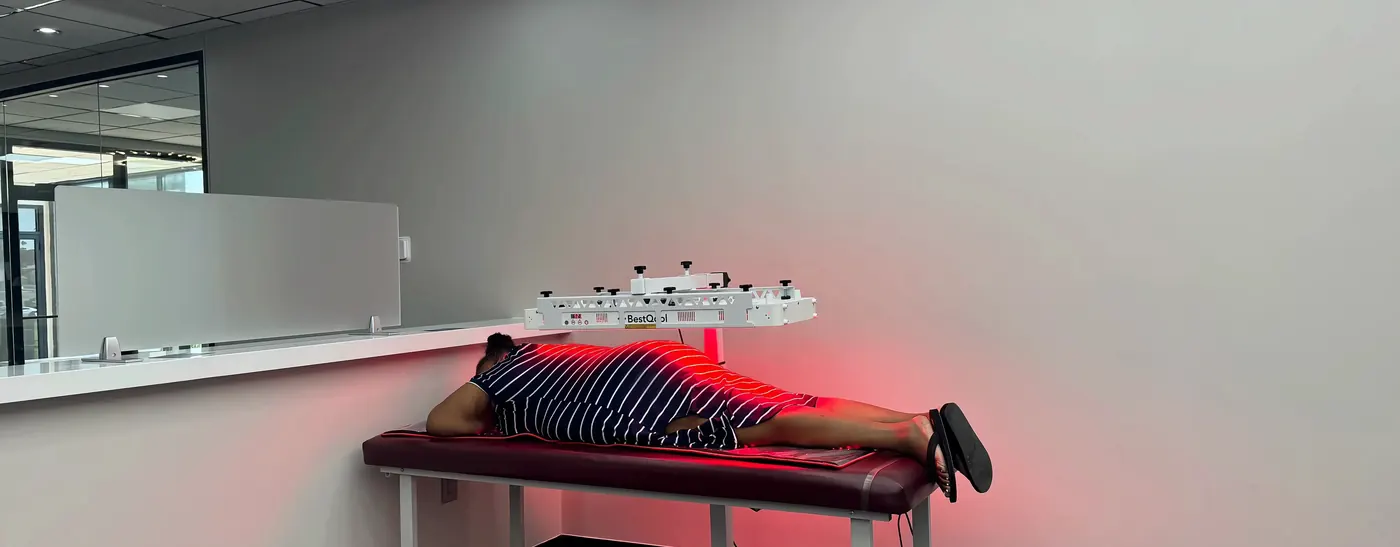
Patient receiving whole body photobiomodulation under a red light array at Padda Institute, St. Louis

Cold Laser Therapy in St. Louis

Photobiomodulation at 650, 808, 905 and 980 nm — delivered in-office as part of your treatment plan. Complete the form and we will be in touch.

What cold laser therapy is

Cold laser therapy — more precisely called photobiomodulation — uses specific wavelengths of red and near-infrared light to change how tissue behaves at the cellular level. It is called cold because it delivers no meaningful heat. The light is absorbed and used, not felt as warmth. There is no incision, no needle and no recovery period.

The name you encounter depends on who is speaking. Low-level laser therapy and cold laser are the older clinical terms. Photobiomodulation is now preferred in the research literature because it describes what is actually happening — light modulating cellular behavior — rather than describing the device.

At Padda Institute photobiomodulation is delivered in-office as part of a treatment plan rather than as a standalone service. It runs alongside interventional procedures and rehabilitation, and is most often used where inflammation or impaired tissue healing is limiting what the rest of the plan can achieve.

Cold laser therapy console showing 650, 808, 905 and 980 nm wavelengths at Padda Institute

The four wavelengths, and why more than one is used

Our console delivers four wavelengths, and the reason for using several rather than one is depth and target.

650 nm sits in the visible red range. It is absorbed superficially and is used for tissue at or near the surface.

808 nm is near-infrared and penetrates considerably further, which makes it the workhorse wavelength for structures below the skin — muscle, tendon, and the tissue surrounding peripheral nerves.

905 nm is typically delivered in very short, high-intensity pulses. Pulsing allows high peak power without accumulating heat, which is useful for reaching deeper tissue.

980 nm is absorbed more strongly by water and by tissue generally, producing a gentle thermal effect alongside the photochemical one. That helps with local circulation and muscle relaxation.

A single wavelength is always a compromise. Using several allows treatment to be matched to the depth and type of tissue involved rather than applying the same light to every problem.

How light changes what a cell does

The mechanism most widely accepted is absorption by cytochrome c oxidase, an enzyme in the mitochondrial respiratory chain. Red and near-infrared light in this range is absorbed by that enzyme, and the effect is to improve mitochondrial efficiency — more usable energy produced from the same substrate.

Two secondary effects follow. Nitric oxide that had been inhibiting the enzyme is displaced, which locally improves blood flow. And there is a brief, modest rise in reactive oxygen species which acts as a signal rather than as damage, triggering repair and anti-inflammatory pathways.

This is also why the response is not proportional to dose the way a drug is. Too little light does nothing; too much can suppress the response rather than amplify it. That biphasic dose relationship is the reason parameters matter more than raw intensity, and why a clinical device is not interchangeable with a consumer one.

Watch: photobiomodulation, metabolic inflammation and melatonin

Dr. Gurpreet Singh Padda, MD, MBA, MHP on photobiomodulation, metabolic inflammation and melatonin — a full presentation on the research underpinning this therapy.

What we use it for

Photobiomodulation is used here where inflammation, impaired healing, or peripheral nerve involvement forms part of the clinical picture:

  • Neuropathic pain, including diabetic neuropathy
  • Tendon and soft-tissue injury that has not resolved with rest or rehabilitation
  • Persistent inflammation around a joint or a peripheral nerve
  • Supporting recovery between interventional procedures
  • As one component of broader work on metabolic inflammation, where systemic inflammatory load is driving symptoms

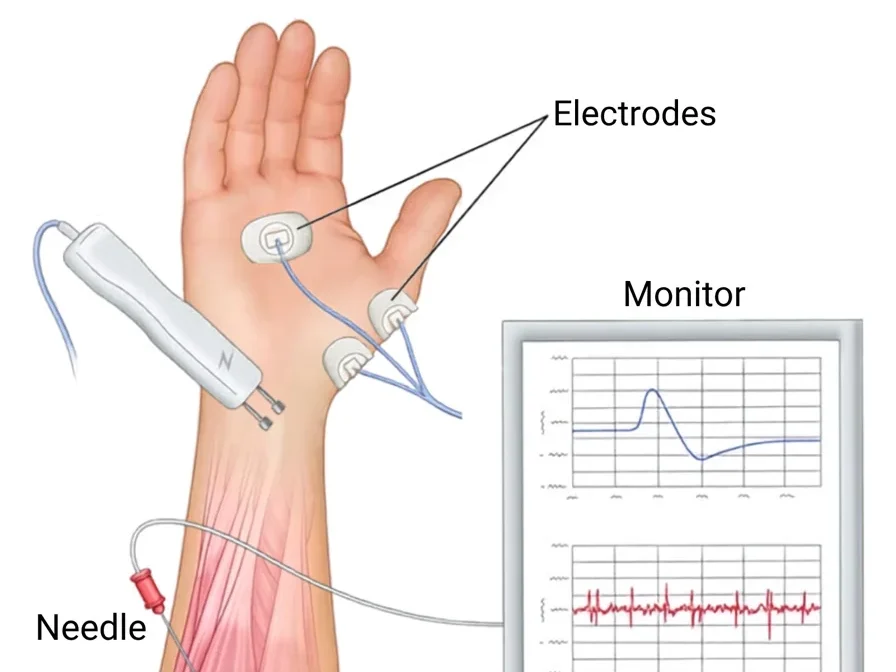
Where nerve involvement is suspected we generally establish it objectively first with electrodiagnostic testing, so that treatment is aimed at a confirmed problem rather than a presumed one.

What a session actually involves

Sessions are short, typically several minutes per treated area. The handpiece is applied directly to the skin over the target tissue. Most patients feel nothing at all; at 980 nm some notice mild warmth.

There is no preparation and no downtime. You can drive yourself, return to work immediately, and there are no activity restrictions afterwards. Protective eyewear is worn during treatment.

Photobiomodulation is cumulative rather than immediate. A single session rarely produces a lasting change; a course delivered over several weeks is the usual approach, with the interval and number determined by what is being treated and how you respond.

Watch: what light has to do with pain

A shorter introduction to how light exposure and circadian signaling relate to chronic pain.

What cold laser therapy is not

We would rather set expectations accurately than oversell this.

Photobiomodulation does not replace identifying the source of your pain. If a nerve root is compressed or a joint is arthritic, light does not change the mechanics, and treating the region without establishing the generator is how patients end up spending months on therapy that was never going to work.

The evidence base is also uneven. It is stronger for some indications — certain soft-tissue and wound-healing applications — than for others, where it remains an area of active investigation. We will tell you which category your indication falls into.

It is likewise not the same as a consumer red-light panel. Wavelength, power density and delivery time determine whether anything useful happens at the tissue depth you need, and a device designed for skin does not reach a structure several centimeters down.

Cold laser therapy for peripheral neuropathy

Of everything photobiomodulation is used for, peripheral neuropathy is the indication we are asked about most, and it is worth being precise about what is and is not plausible.

In diabetic and other metabolic neuropathies, the damage is not only to the nerve fiber itself. The small blood vessels supplying the nerve — the vasa nervorum — are compromised, and the nerve is starved of the perfusion it needs to maintain and repair itself. That microvascular component is the part photobiomodulation is most plausibly acting on: improved local blood flow through nitric oxide release, and improved mitochondrial function in tissue that is energy-starved.

What that means practically is that photobiomodulation is aimed at the environment the nerve is trying to survive in, not at reversing established structural damage. Fibers that have already died do not come back. Where symptoms are driven by an ischemic and inflammatory environment around surviving fibers, there is a reasonable mechanistic case for treating it.

It also means the therapy does very little on its own if the metabolic driver is untouched. Sustained high blood sugar will continue damaging the nerve faster than any light can support its repair, which is why we treat neuropathy as a metabolic problem and a nerve problem at the same time.

How we decide whether it is worth trying

We start by establishing what is actually generating your symptoms. For suspected nerve involvement that usually means electrodiagnostic testing to confirm whether a nerve is affected, where, and how severely. Treating a presumed neuropathy that turns out to be referred pain from the lumbar spine wastes months.

From there the question is whether inflammation, perfusion or impaired healing is a meaningful part of the picture. Where it is, photobiomodulation has a mechanistic rationale and is worth a defined trial. Where the dominant problem is mechanical — a compressed nerve root, an arthritic joint, an unstable segment — the honest answer is that light will not change the mechanics, and we would rather say so than sell you a course of treatment.

We also set a review point in advance. A defined number of sessions, then an honest reassessment of whether anything measurable has changed. Open-ended treatment with no checkpoint is how patients end up months into something that was never working.

Ask Whether Photobiomodulation Fits Your Plan

It works best as one part of a treatment plan built around a confirmed diagnosis. Call to arrange an evaluation.

What Our Patients Say

Individual results vary. These are unpaid patient testimonials shared with permission and are not a guarantee of outcome. See all patient stories.

Cold Laser Therapy FAQs

No. Most patients feel nothing during treatment. At the 980 nm wavelength some notice mild warmth. There is no needle, no incision and no recovery period, and you can drive yourself home.

Photobiomodulation is cumulative rather than immediate, so a course over several weeks is usual rather than a single session. The number depends on what is being treated and how you respond, and we reassess rather than committing you to a fixed block in advance.

No. Wavelength, power density and delivery time determine whether the light reaches the tissue you need at a dose that does anything. Consumer panels are generally designed for skin. A device aimed at a nerve or tendon several centimeters deep is a different specification.

It is non-ionising and non-thermal at the wavelengths and doses used, and protective eyewear is worn throughout. It is generally avoided directly over a known malignancy, over the thyroid, and over the abdomen in pregnancy. Tell us your full history and we will work around it.

Coverage varies considerably and photobiomodulation is not universally a covered benefit. We will tell you what applies to your plan before you commit to a course rather than after.

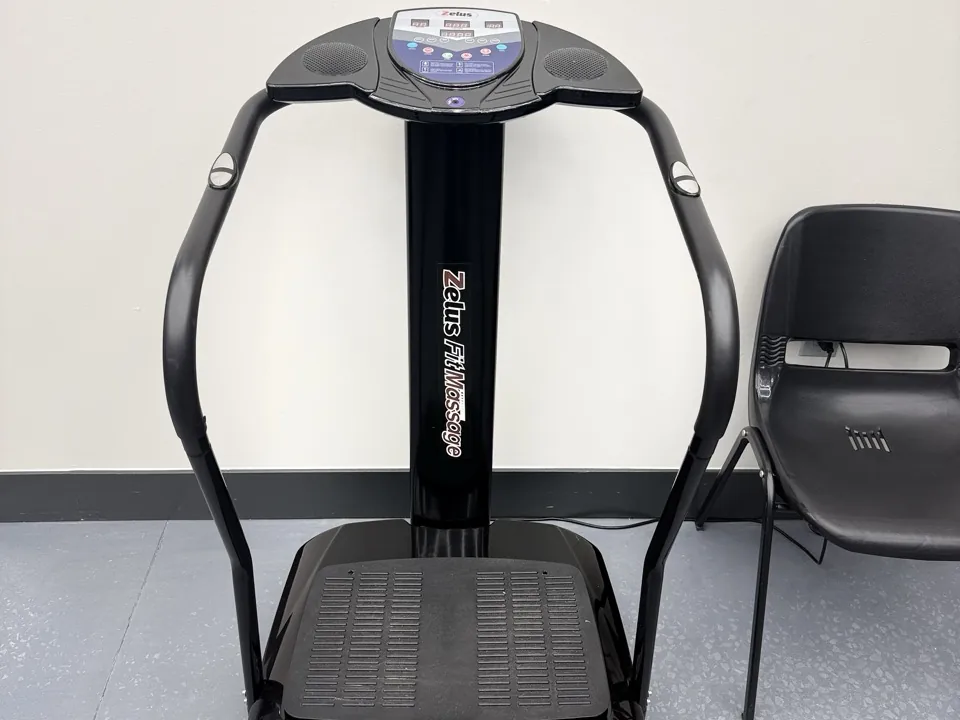
They work through different mechanisms. Photobiomodulation acts photochemically on mitochondrial function. Shockwave delivers focused acoustic energy to stimulate repair in tendon and soft tissue. Whole-body infrared delivers penetrating warmth to reduce muscle guarding and improve circulation. Which is appropriate depends on the tissue and the problem, and they are sometimes combined.

Send A Message

For questions and concerns, please fill out the form below.

Pain Conditions We Treat

At Padda Institute, our pain management specialists provide the guidance and treatments tailored to your needs. We diagnose and evaluate to determine your best treatment plan, so that you can experience chronic pain relief like never before.
Diabetes And Neuropathy

Diabetic Peripheral Neuropathy (DPN) is the most common complication of diabetes, and often presents as a distal, symmetric..

Peripheral Nerve Stimulation

Peripheral nerve stimulation places a fine lead near a specific damaged nerve and delivers electrical impulses that modulate the pain signal it carries. Performed at Padda Institute in…

Electrodiagnostics

Electrodiagnostics (EDX) testing is used to evaluate the integrity and function of the peripheral nervous (most cranial nerves..