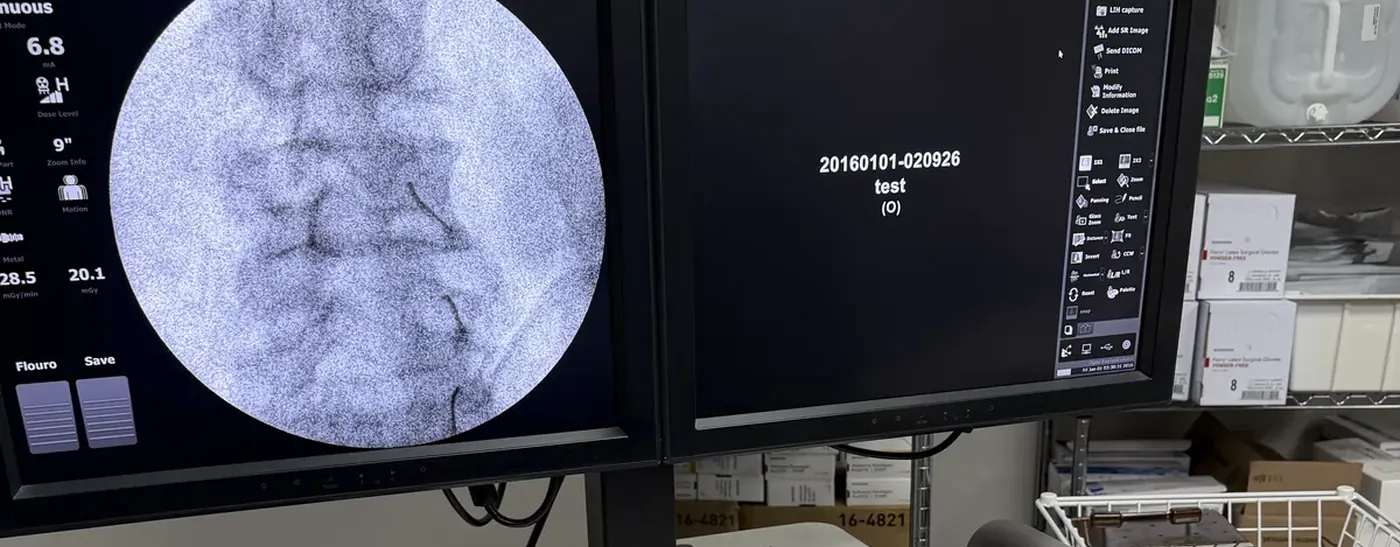


Fluoroscopic image of a medial branch nerve block with contrast outlining the target at Padda Institute, St. Louis

Nerve blocks · St. Louis

Nerve Blocks in St. Louis

Nerve blocks are targeted shots that cut off pain signals along one nerve. We use them both to find the source of pain and to treat it.

Prefer not to fill in a form?

Same-day and emergency appointments are available.

What is a nerve block, and how does it work?

Pain is a signal running along a nerve, like current down a wire. A nerve block puts local anesthetic right around that nerve. It cuts the signal before it reaches the spinal cord and brain. Sometimes we add a steroid to calm inflammation around the nerve and make the effect last longer. The numbing medicine works within minutes, so your response tells us something right away.

How does a nerve block find the source of pain?

A nerve block both tests and treats. That double role is why blocks sit at the center of interventional pain medicine. If numbing one nerve wipes out your pain, that nerve is the path carrying it. No scan can tell you that. That is because a scan shows the parts, not which part hurts. A positive block eases pain and opens the next step, whether that is radiofrequency ablation or neuromodulation of the confirmed target.

Which nerve blocks does Padda Institute perform?

We do selective nerve root blocks for radicular pain (pain that shoots down an arm or leg), stellate ganglion blocks for upper-body sympathetic pain, lumbar sympathetic blocks for lower-limb sympathetic pain and complex regional pain syndrome, celiac plexus blocks for upper abdominal pain, sphenopalatine ganglion blocks for cluster headache and facial pain, genicular nerve blocks for knee pain, and cluneal nerve blocks to tell a pinched cluneal nerve apart from sacroiliac and radicular pain.

How is a nerve block performed?

We do every block with live imaging, using ultrasound or fluoroscopy depending on the target. Most take fifteen to thirty minutes, and you go home the same day. We ask you to track your pain over the next few hours. That is because when the relief comes and how much you get is the test result we are looking for.

How a local anesthetic actually stops a signal

Local anesthetics work by plugging sodium channels on the inner face of the nerve membrane. A nerve fires when sodium rushes in. Block the sodium, and the nerve cannot reach its firing point. So the signal cannot pass the treated stretch. The drug has to cross the nerve membrane in its uncharged form, then work in its charged form. That is why numbing medicine works poorly in inflamed, acidic tissue. The acid tips the balance toward the charged form, which cannot get in.

Not all nerve fibers are blocked the same. Small unmyelinated (bare) C fibers and thinly myelinated (coated) A-delta fibers carry pain and temperature. They shut down at lower concentrations than the large A-alpha fibers that carry motor signals to the muscles. That is why a well-placed block can wipe out pain and leave your strength alone. It is also why the order of loss is predictable: temperature, then pain, then touch, then power.

Why isn't one positive nerve block enough?

Here is the hard truth from the research on diagnostic blocks. A single positive block is often a false positive. Placebo response is real. The numbing medicine can spread past the target. And a patient hoping for an answer may report relief the drug did not cause.

Doctors handle this with controlled blocks. We repeat the block with a numbing drug that lasts a different length of time. Then we check that the relief matches how long that drug should last. Or we compare against a placebo injection. Say relief lasts about an hour with lidocaine and several hours with bupivacaine. That answer fits how the drugs work. If someone reports the same relief from both, it does not fit. We are strictest about this before any step that cannot be undone, such as radiofrequency ablation. That is where a false positive costs the most.

What Our Patients Say

Individual results vary. These are unpaid patient testimonials shared with permission and are not a guarantee of outcome. See all patient stories.

Frequently Asked Questions

Some short-term numbness where the treated nerve runs is expected. It confirms the block worked. Some blocks can cause short-term weakness. We will tell you ahead of time if yours is one of them.

The numbing medicine lasts hours. When we add a steroid, relief can last weeks to months. Relief that is short but complete is still a useful test result.

Often we repeat a diagnostic block once to confirm the finding before moving to a longer-lasting treatment. The plan depends on how you respond, not on a fixed number.

Expect short-term numbness where the treated nerve runs. That confirms the block worked. Some blocks also cause short-term weakness, and we tell you ahead of time if yours is one of them. The numbing medicine lasts only hours, and it works poorly in inflamed, acidic tissue. A single positive block can also be a false positive. That is why we confirm the result before any step that cannot be undone, such as radiofrequency ablation.

Track your pain over the next few hours. When the relief comes and how much you get is the test result we are looking for. So jot down when the pain eased and by how much. Numbness where the treated nerve runs is expected. Most blocks take fifteen to thirty minutes, and you go home the same day.

A block that leaves your pain the same is still an answer. If numbing one nerve wipes out the pain, that nerve is the path carrying it. If it does not, that nerve is likely not the source, and the search moves on. A scan shows the parts, not which part hurts. That is how cluneal nerve blocks, for example, tell a pinched cluneal nerve apart from sacroiliac and radicular pain.

Request an Appointment

Same-day and emergency appointments are available. Call (314) 481-5000 or request a time below.

Prefer not to fill in a form?

Same-day and emergency appointments are available.

Related Treatments and Conditions

Other procedures and conditions our St. Louis pain specialists treat.
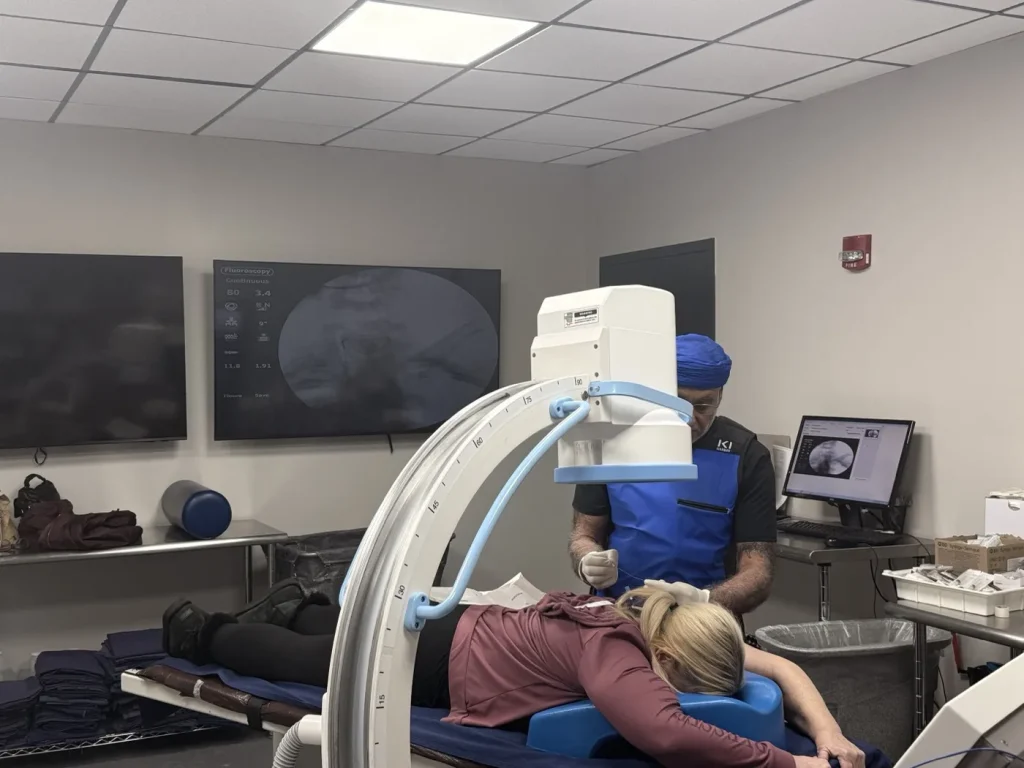
Selective Nerve Root Block

Nerve roots exit your spinal cord and form nerves that travel into your arms or legs. These nerves allow you to move your arms, chest wall, and..

Stellate Ganglion Block

Your body has special nerves known as sympathetic nerves in your neck which ,control blood supply and sweating to your arms and hands . These nerves can be…
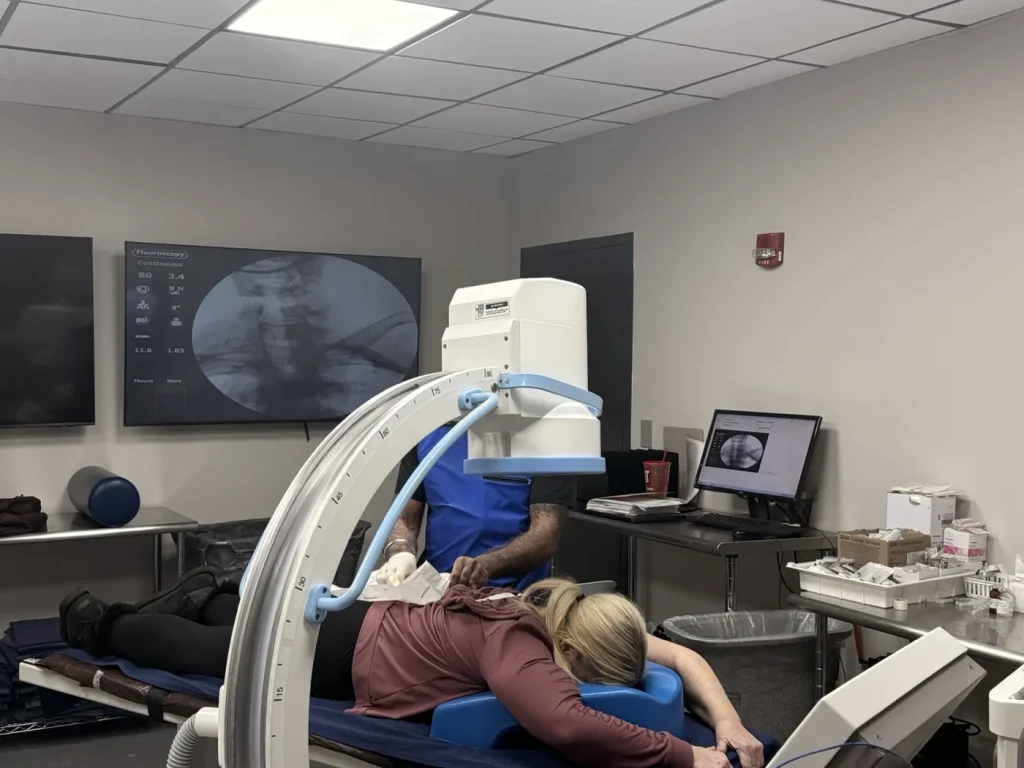
Lumbar Sympathetic Nerve Block

Your body has special nerves known as sympathetic nerves in your back that control blood supply and sweating to your legs and feet.

Schedule NowCall (314) 481-5000