


Main Banner

Cluneal Neuropathy Treatment in St. Louis

A commonly missed cause of low back and buttock pain, produced by entrapment of the cluneal nerves where they cross the pelvic rim.

What the cluneal nerves are

The cluneal nerves are small sensory branches that supply the skin and deeper tissue over the upper buttock. The superior cluneal nerves cross over the top rim of the pelvis, the iliac crest, through a tight fibrous tunnel. The middle cluneal nerves pass near the sacrum and the sacroiliac ligaments. Both cross bone through confined spaces, and both can be compressed there.

Why it is so often missed

Cluneal entrapment produces pain across the lower back and buttock that can radiate into the thigh. That pattern overlaps almost exactly with sacroiliac joint dysfunction, with lumbar radiculopathy, and with piriformis syndrome, which produces a very similar buttock and leg pattern. Patients are frequently treated for a disc or an SI joint for months without relief. MRI does not show it. The diagnosis is made clinically, by finding a precise point of tenderness over the iliac crest that reproduces the pain, and confirmed by a diagnostic block.

How it is diagnosed

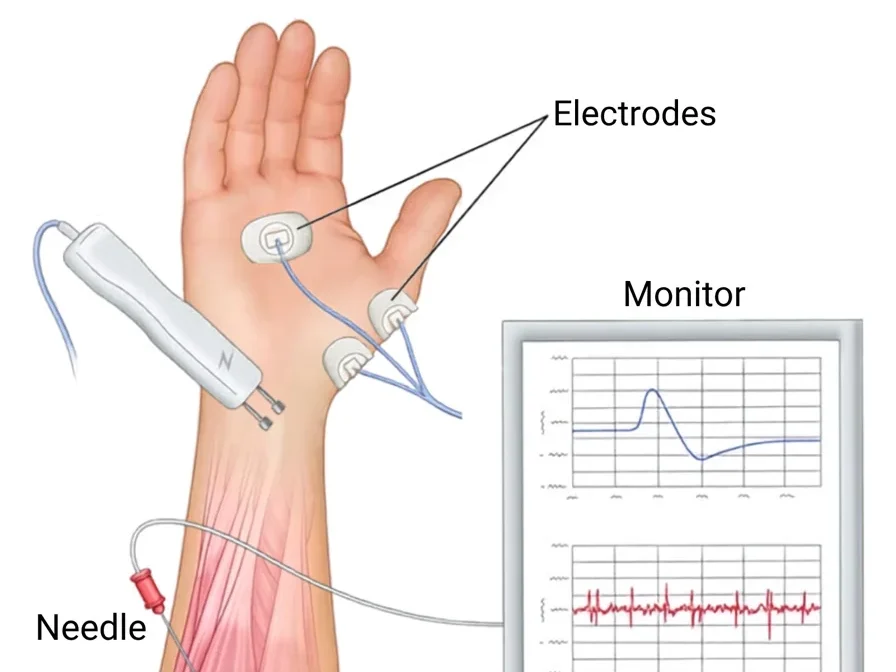
Examination locates the tender point where the nerve crosses bone. A cluneal nerve block is then placed at that exact site under ultrasound guidance, using a small volume of local anesthetic so the result stays specific to that nerve. If the pain disappears for the duration of the anesthetic, the diagnosis is essentially confirmed. Electrodiagnostic testing is used where a lumbar nerve root problem needs to be excluded at the same time, since the two can coexist.

Treatment options

Many patients improve with a series of blocks combined with activity and posture changes that stop provoking the tunnel. Where the entrapment is mechanical and persistent, ultrasound-guided hydrodissection can free the nerve from the fibrous band compressing it. Radiofrequency treatment of the affected branch is an option when blocks give good but short-lived relief. Surgical release is reserved for the minority who fail all of the above.

The osteofibrous tunnel

The superior cluneal nerves are the lateral cutaneous branches of the L1 to L3 dorsal rami. Their vulnerability lies in a specific anatomical feature: as they cross the iliac crest they pass through a tunnel formed by the thoracolumbar fascia and the bone itself. That tunnel is rigid on one side and fibrous on the other, so it cannot accommodate swelling of its contents.

Anatomical work, notably by Maigne, established that these nerves are constrained at that point and can be compressed there, and described the resulting syndrome. The middle cluneal nerves, from the S1 to S3 dorsal rami, face a comparable problem where they pass beneath the long posterior sacroiliac ligament. In both locations the nerve is squeezed between an unyielding fibrous band and bone, which is why the tender point is so focal and so reproducible.

A cutaneous nerve producing deep pain

The counterintuitive part is that these are purely sensory cutaneous nerves, yet patients describe deep aching pain rather than a superficial burning. Entrapment sensitizes the nerve trunk itself, and the nervi nervorum supplying the nerve sheath generate exactly this deep, poorly localized quality. Sustained input then sensitizes dorsal horn neurons that also receive input from deeper structures, so the pain is perceived as arising from the joint rather than the skin.

This is the mechanism behind the misdiagnosis. The patient reports deep buttock pain, the clinician reasonably investigates deep structures, and imaging obligingly shows degenerative change somewhere. Nothing about the presentation points to a small cutaneous nerve at the pelvic rim unless it is specifically palpated for, which is why the condition is estimated to account for a non-trivial share of low back pain that has resisted conventional treatment.

Frequently Asked Questions

No. Sciatica comes from a nerve root in the lumbar spine. Cluneal neuropathy is entrapment of a small sensory nerve at the pelvic rim. They can feel similar, which is exactly why the diagnostic block matters.

Generally no. That is a large part of why it goes undiagnosed. It is found on examination and confirmed by a targeted block.

A diagnostic block answers the question the same day. Durable relief usually takes a short series, or hydrodissection where scarring is the driver.

Request an Appointment

Same-day and emergency appointments are available. Call (314) 481-5000 or request a time below.

Related Treatments and Conditions

Other procedures and conditions our St. Louis pain specialists treat.
Sciatica Nerve Pain Treatment

Sciatica mainly refers to the pain that radiates along the sciatic nerve. The sciatic nerve branches from the lower back, the hips, and the..

Electrodiagnostics

Electrodiagnostics (EDX) testing is used to evaluate the integrity and function of the peripheral nervous (most cranial nerves..
Hip Joint Injection

The hip joint is a large joint where the leg joins the pelvis, functioning as a ball and socket joint. The top of the thigh bone (the femur)…