Mon–Fri: 8 AM – 5 PM
Same-Day & Emergency Visits
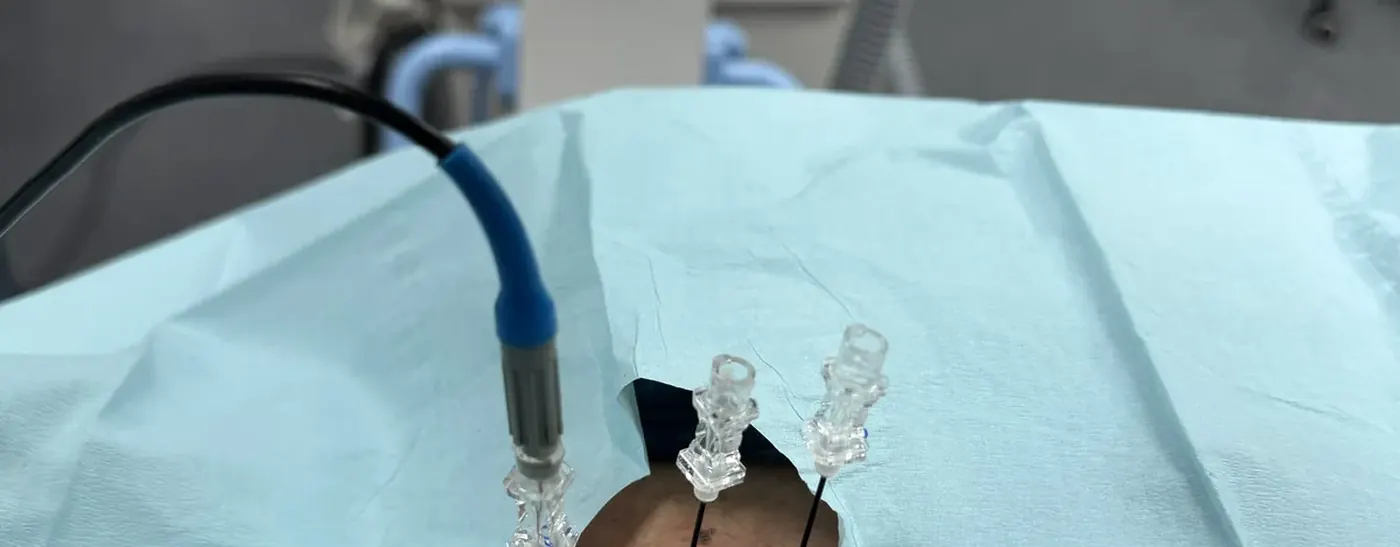
Sterile procedure setup in the image-guided suite at Padda Institute, St. Louis

Peripheral Nerve Stimulation in St. Louis

Targeted neuromodulation of a single damaged or irritated nerve outside the spinal cord, for focal pain that has not responded to injections.

Prefer not to fill in a form?

Same-day and emergency appointments are available.

What peripheral nerve stimulation treats

Where spinal cord stimulation addresses pain across a broad region, peripheral nerve stimulation targets one nerve. It suits focal pain that can be traced to a specific nerve: pain after a nerve injury, entrapment that persists after decompression, or a painful nerve in the shoulder, knee, foot or trunk. The more precisely the pain maps to one nerve, the better this approach tends to work.

Identifying the right nerve

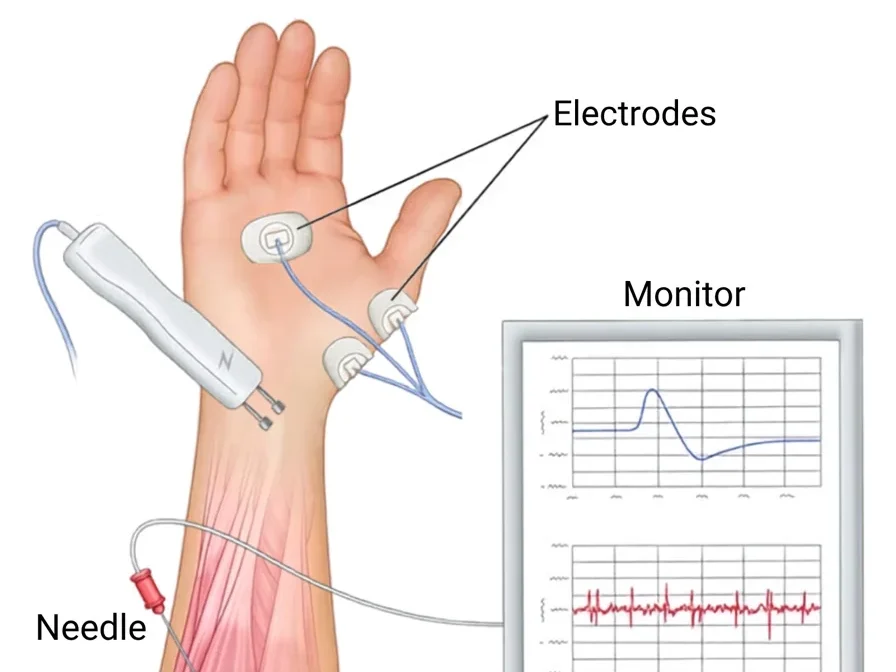
Precision matters more here than in almost any other procedure we offer. Electrodiagnostic testing and diagnostic nerve blocks are used to confirm which nerve is generating the pain before any lead is placed. A block that reliably abolishes the pain is strong evidence that stimulating that nerve will help.

How the lead is placed

Under ultrasound guidance, a fine lead is positioned alongside the target nerve. Ultrasound allows the nerve, the surrounding vessels and the lead to be seen in real time as the lead is advanced. As with spinal cord stimulation, a trial period precedes any permanent system.

What to expect

The procedure is performed awake and on an outpatient basis, usually taking under an hour. Some systems are designed as a fixed-duration treatment lasting weeks rather than a permanent implant, which suits patients who want to avoid a long-term device. We discuss which category fits your situation before scheduling.

Why stimulating a peripheral nerve changes pain

Peripheral nerve stimulation works on the same principle as spinal cord stimulation but applies it closer to the source. Electrical current preferentially recruits large-diameter myelinated fibers, which have a lower activation threshold than the small unmyelinated C fibers carrying most chronic pain traffic. Activating those large fibers drives inhibitory interneurons in the dorsal horn and suppresses transmission from the smaller ones.

Because the lead sits next to one identified nerve rather than the spinal cord, the effect is confined to that nerve territory. That is a limitation when pain is diffuse, and an advantage when it is not: there is no need to place hardware in the epidural space to treat a single entrapped nerve in a limb.

Temporary systems and what the trials show

An important development is the sixty-day percutaneous system. A fine lead is placed, worn for up to sixty days, then withdrawn, with no permanent implant left behind. The rationale is that sustained modulation may reset the sensitized circuit rather than simply masking the signal while the device runs.

Published prospective work supports durable relief in a meaningful proportion of patients after the lead is removed, and the RESET trial met its primary endpoint, with more patients achieving at least fifty percent pain relief at three months than those receiving standard interventional care. The evidence base is younger and smaller than for spinal cord stimulation, and we present it that way rather than as settled.

Auricular vagal stimulation for diabetic peripheral neuropathy

For painful diabetic peripheral neuropathy we use the NS-100, a programmable peripheral electrical nerve stimulator manufactured by Nalu. It is an FDA-cleared Class II device.

It is applied to the auricular branches — the nerve branches at the ear — rather than to the nerves in the painful limb, and it acts as a vagal stimulator. That is the part patients find counter-intuitive: the device is placed at the ear and the pain being treated is in the feet. It works through the vagal pathway and its influence on how pain signals are processed, not by interrupting the painful nerve where it hurts.

The stimulator is worn for a defined period — up to 30 days, though most patients are treated for around 20. Nothing is left permanently in place.

Placement is done under local anesthetic with no sedation, you drive yourself home, and there are no activity restrictions afterward.

On coverage. Peripheral nerve stimulation is a covered category under Medicare’s national coverage determination for electrical nerve stimulators, and local coverage determinations set the criteria that apply. That is the category, not a promise about your claim: your specific plan, indication and documentation still govern, so coverage is verified before anything is scheduled. An authorization, where one is obtained, is not itself a guarantee of payment.

See diabetic peripheral neuropathy for how the condition is evaluated before this point is reached.
What Our Patients Say

Individual results vary. These are unpaid patient testimonials shared with permission and are not a guarantee of outcome. See all patient stories.

Frequently Asked Questions

Spinal cord stimulation treats a broad region through leads near the spinal cord. Peripheral nerve stimulation treats one specific nerve, with the lead placed near that nerve in the limb or trunk.

Yes. As with spinal cord stimulation, a trial establishes whether the response justifies a permanent system.

Yes. It is frequently combined with rehabilitation and medication adjustment, and it does not preclude other procedures later.

Request an Appointment

Same-day and emergency appointments are available. Call (314) 481-5000 or request a time below.

Prefer not to fill in a form?

Same-day and emergency appointments are available.

Related Treatments and Conditions

Other procedures and conditions our St. Louis pain specialists treat.

Electrodiagnostics

Electrodiagnostics (EDX) testing is used to evaluate the integrity and function of the peripheral nervous (most cranial nerves..

Serious Foot Pain

Nearly 60% of patient’s with chronic forefoot pain presenting to a podiatry practice have surgical intervention, yet only 50-60% of them..

Diabetes And Neuropathy

Diabetic Peripheral Neuropathy (DPN) is the most common complication of diabetes, and often presents as a distal, symmetric..

Cold Laser Therapy (Photobiomodulation)

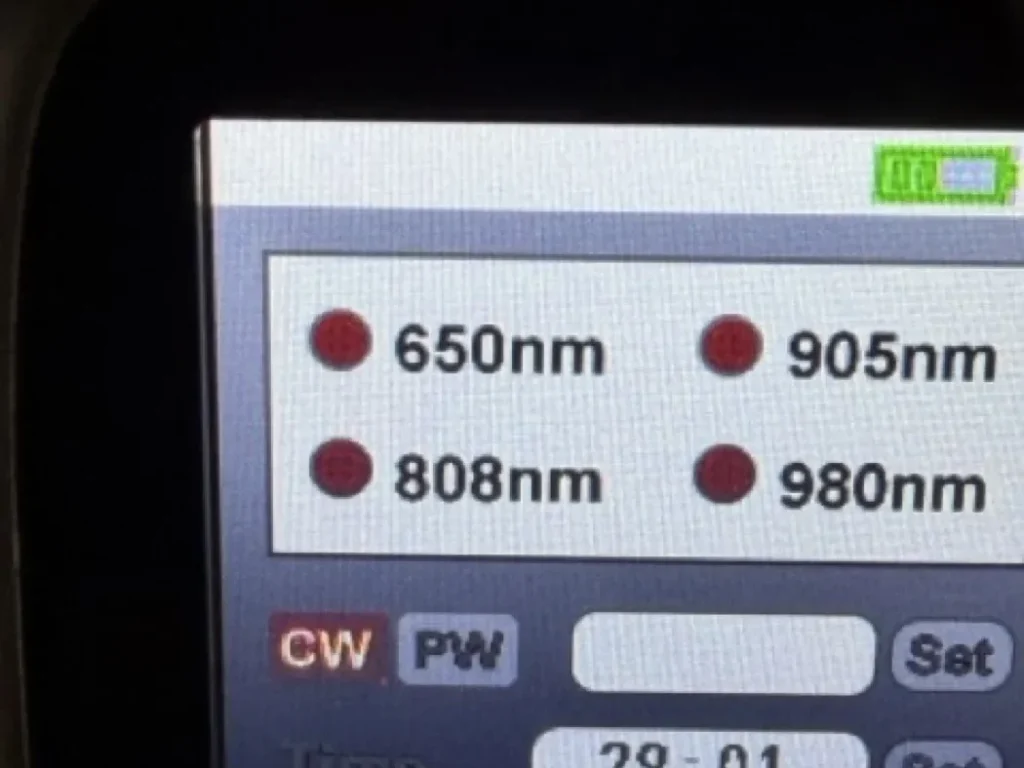
Cold laser therapy, also called photobiomodulation, uses red and near-infrared light at 650, 808, 905 and 980 nanometers to reduce inflammation and support tissue repair at the cellular…