Epiduroplasty for Failed Back Surgery in St. Louis

A catheter-based procedure that breaks down epidural scar tissue tethering nerve roots after spine surgery, and delivers medication directly to the affected nerve.

Why scar tissue causes pain after spine surgery

Surgery in or near the spinal canal provokes healing, and healing produces scar. In the epidural space that scar, known as peridural or epidural fibrosis, can wrap around and tether a nerve root. The nerve loses its ability to move freely within the canal, and it is also insulated from medication: this is precisely why a standard epidural steroid injection that once worked can stop working.

How epiduroplasty is performed

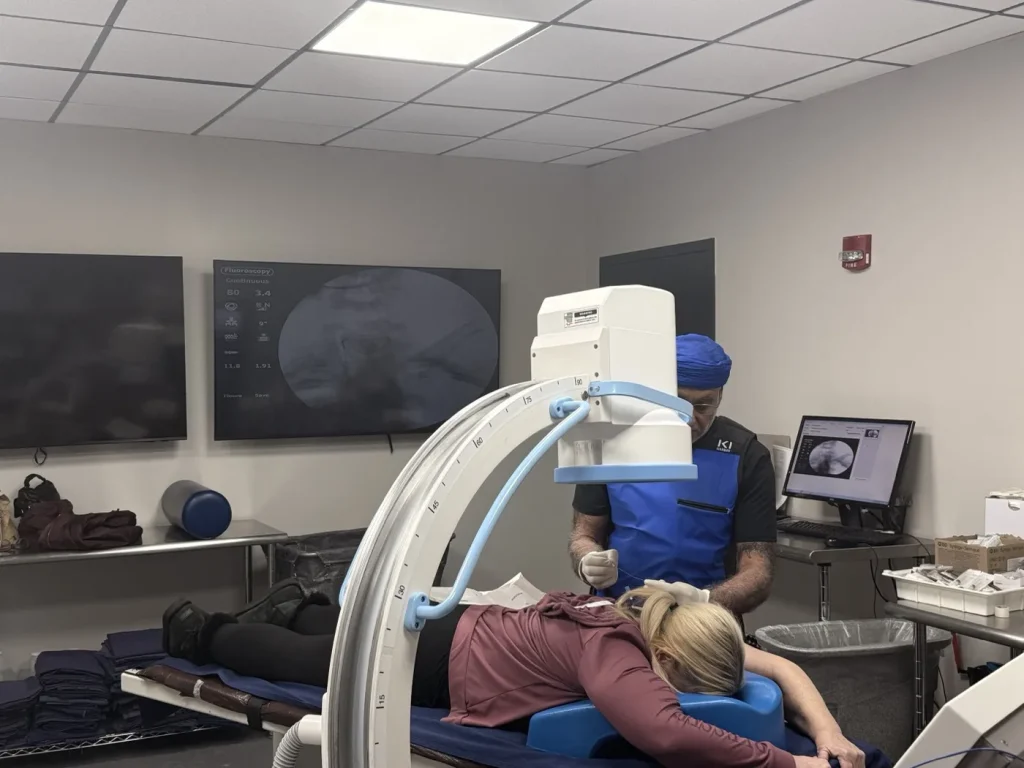
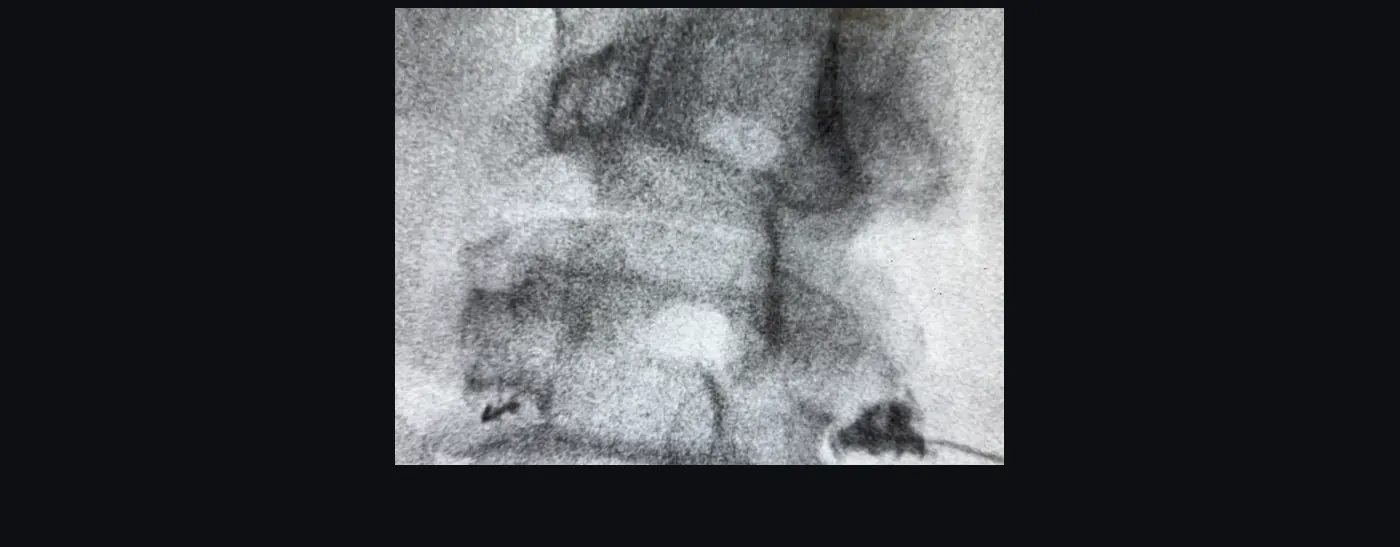
A catheter is introduced into the epidural space through the sacral hiatus and steered under fluoroscopic guidance to the level of the scarring. Contrast is injected to map the adhesions and to show where medication is failing to spread. The catheter is then used to break down the adhesions mechanically, and medication is delivered directly to the freed nerve root. Contrast is used again at the end to confirm that spread has been restored.

Who it helps

The main indication is failed back surgery syndrome, where leg or back pain persists or returns after an operation that was technically successful. It is also used in some cases of severe spinal stenosis and in patients whose imaging shows adhesions limiting the spread of previous injections. Diagnostic selective nerve root blocks often precede it to confirm which level is responsible.

What to expect

The procedure is usually performed over one to three sessions on consecutive days, depending on the extent of scarring. It is done with sedation and takes about an hour. Most patients go home the same day and resume light activity within a few days.

Frequently Asked Questions

The Racz procedure is a named technique for epidural lysis of adhesions, and the terms are often used interchangeably. Both describe catheter-based breakdown of epidural scar tissue.

No. It does not touch the surgical hardware or the bony work. It addresses the scar tissue that formed afterwards.

This varies with the extent of the scarring and whether it reforms. Some patients get relief measured in many months; others benefit from repeat treatment.

Request an Appointment

Same-day and emergency appointments are available. Call (314) 481-5000 or request a time below.

Related Treatments and Conditions

Other procedures and conditions our St. Louis pain specialists treat.
Epidural Steroid Injection (ESI)

Back pain affects nearly everyone at some point in their adult life. Often times the exact cause of pain is not readily apparent, as there are many..

Selective Nerve Root Block

Nerve roots exit your spinal cord and form nerves that travel into your arms or legs. These nerves allow you to move your arms, chest wall, and..
Sciatica Nerve Pain Treatment

Sciatica mainly refers to the pain that radiates along the sciatic nerve. The sciatic nerve branches from the lower back, the hips, and the..