

Main Banner

Genicular Radiofrequency Ablation in St. Louis

Longer-lasting relief for chronic knee pain, using controlled heat to interrupt the genicular nerves confirmed by a diagnostic block.

What the procedure does

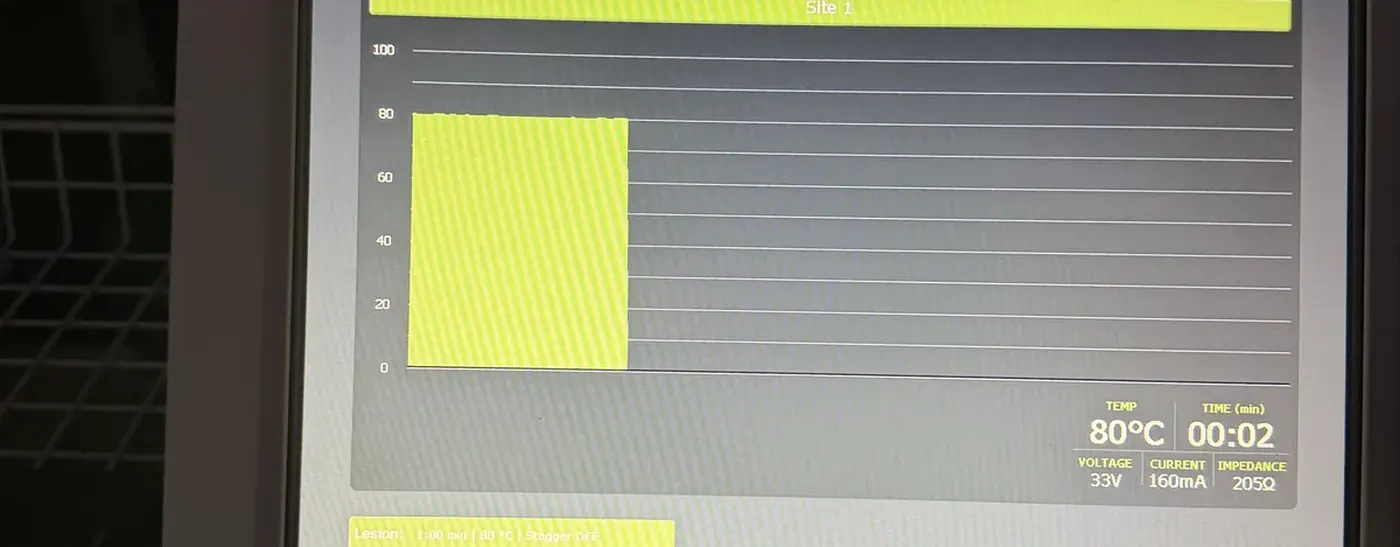
Radiofrequency ablation uses a small electrode that heats the tip of a needle placed precisely against a nerve. The heat interrupts that nerve so it stops carrying pain signals from the knee. The joint itself is untouched: nothing is removed, replaced or reconstructed. What changes is the message the knee is sending, which is why it suits people whose imaging shows arthritis they are not ready to have operated on.

Why the block always comes first

We do not ablate a nerve without evidence it is the right nerve. A diagnostic genicular nerve block is performed first, and only a clear, meaningful response qualifies you for ablation. This is the same discipline we apply in the spine, where facet joint injections precede facet radiofrequency ablation. Skipping the diagnostic step is how patients end up with procedures that were never going to work.

How it is performed

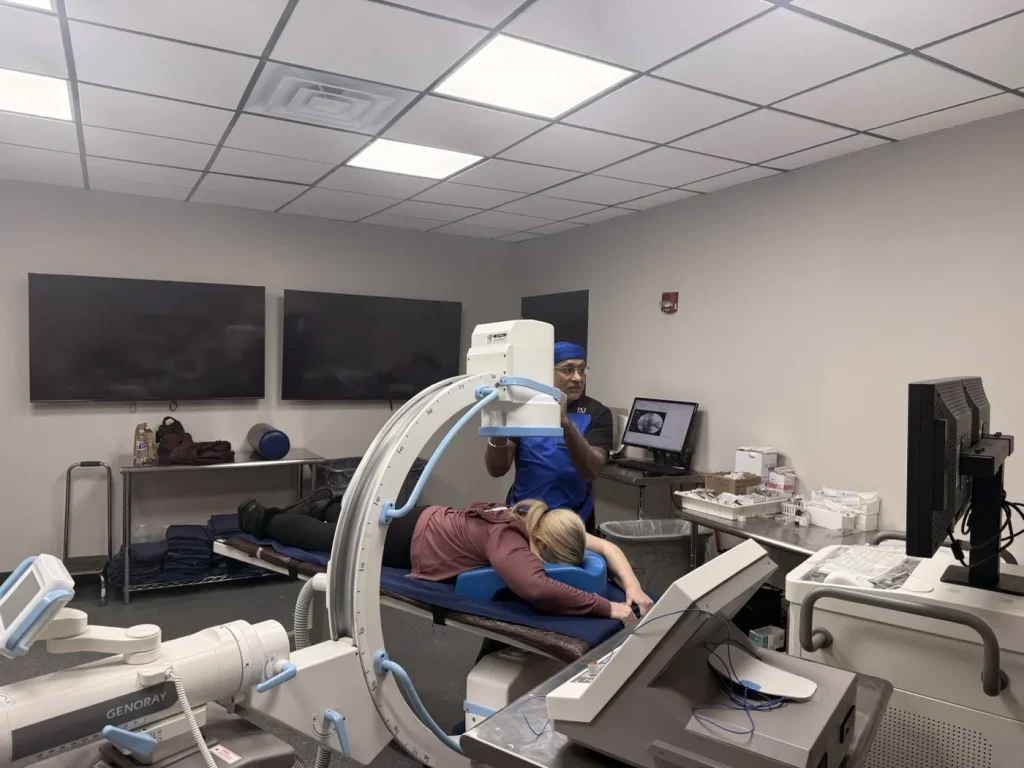
Under image guidance, needles are positioned at the superior medial, superior lateral and inferior medial genicular nerves. Sensory and motor testing confirms the tip is next to the intended nerve and away from anything that moves the leg. The nerves are then treated in turn. The whole procedure takes roughly thirty to forty-five minutes on an outpatient basis, with sedation available.

What to expect afterwards

Soreness at the needle sites for a few days is normal, and the full benefit typically builds over two to three weeks as the treated nerves stop transmitting. Relief is measured in months rather than weeks. Nerves do regenerate over time, so the procedure can be repeated when the pain returns. Because the knee joint is unchanged, ablation does not prevent a knee replacement later if you decide to have one.

What the evidence shows

The trial that established this procedure is Choi and colleagues, published in Pain in 2011. Thirty-eight patients with severe knee osteoarthritis were randomized to genicular radiofrequency or a sham procedure, double-blinded. At twelve weeks, 59 percent of the treated group reported at least 50 percent pain relief. In the sham group, none did. That separation from placebo is what distinguishes this from treatments where the evidence is equivocal, and it is why a diagnostic block is required first: the trial selected patients who had already responded to one.

Subsequent work has compared conventional monopolar radiofrequency with cooled radiofrequency, which produces a larger lesion. Both are in routine use. We select based on the anatomy and how your diagnostic block behaved rather than on a fixed preference.

Why nerves regrow, and what that means

Radiofrequency does not remove a nerve. It creates a thermal lesion that interrupts conduction along the axon while leaving the surrounding connective tissue sheath intact. Axons regenerate along that preserved sheath at roughly one to two millimeters per day, which is why relief is measured in months rather than being permanent, and why the procedure can be repeated when sensation and pain return.

This is also why the genicular nerves are a good target and motor nerves are not. The three standard targets, the superior medial, superior lateral and inferior medial genicular nerves, are purely sensory at the point where they are treated. Sensory and motor testing before each lesion confirms this, which is what keeps the technique from affecting your ability to move the leg.

Frequently Asked Questions

Longer than an injection, and typically measured in months. The exact duration varies with how quickly the treated nerves regenerate, and the procedure can be repeated.

No. The treatment is applied to sensory nerves outside the joint. The cartilage, ligaments and bone are not touched, and it does not rule out a knee replacement in future.

A patch of reduced sensation around the knee is possible and usually not noticeable in daily life. Motor testing during the procedure is specifically done to protect the nerves that move the leg.

Request an Appointment

Same-day and emergency appointments are available. Call (314) 481-5000 or request a time below.

Related Treatments and Conditions

Other procedures and conditions our St. Louis pain specialists treat.
Hip Joint Injection

The hip joint is a large joint where the leg joins the pelvis, functioning as a ball and socket joint. The top of the thigh bone (the femur)…

Facet Joint Radiofrequency (Rf)

A patient with primary facet pain, proven with either one or more blocks, may be a candidate for a facet rhizotomy using radiofrequency (RF)..
Electrodiagnostics

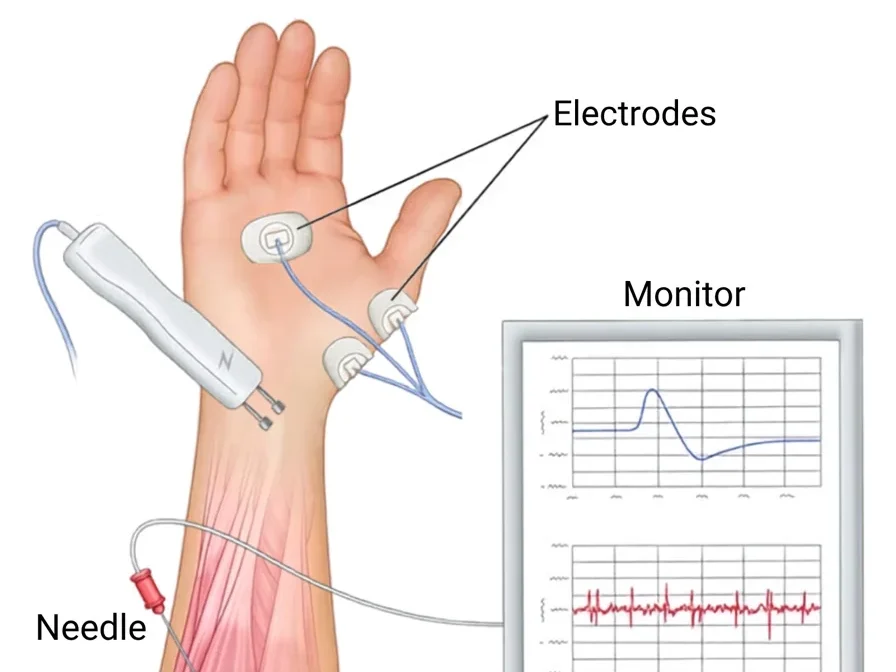
Electrodiagnostics (EDX) testing is used to evaluate the integrity and function of the peripheral nervous (most cranial nerves..