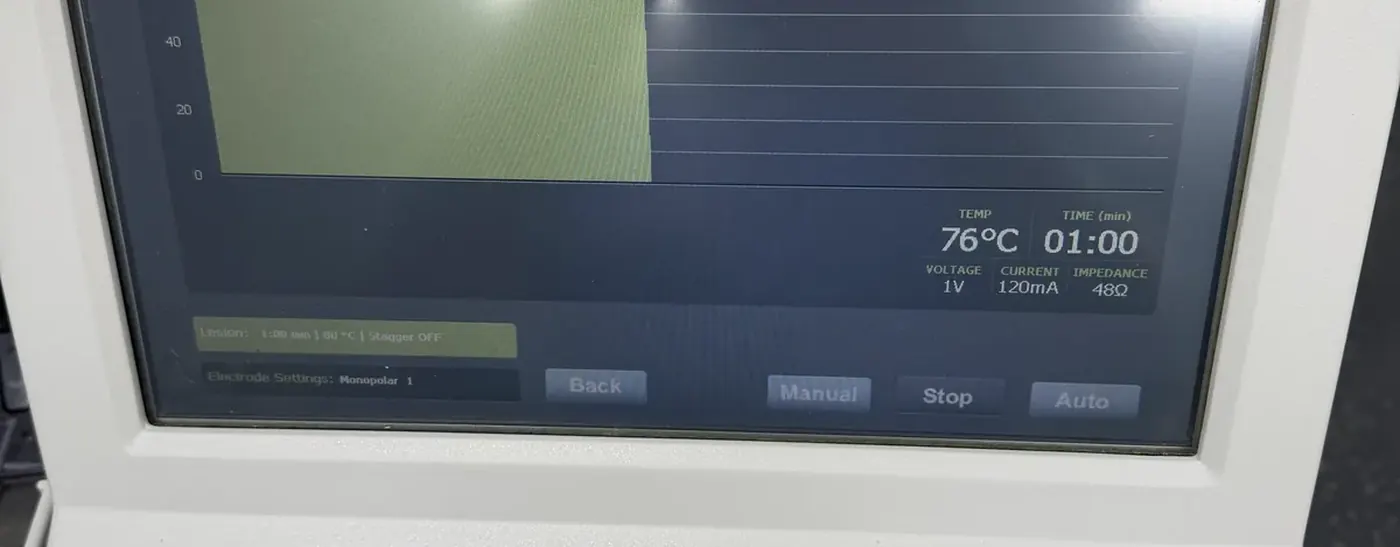
Procedure suite equipment between treatment cycles at Padda Institute, St. Louis

Trigger point injections · St. Louis

Trigger Point Injections in St. Louis

Trigger point injections are quick, targeted injections. They release the tight bands of muscle behind stubborn neck, shoulder and low back pain.

Prefer not to fill in a form?

Same-day and emergency appointments are available.

What is a trigger point?

A trigger point is a small, tight band in a muscle that will not let go. It hurts when you press on it. It also sends pain to other places. A trigger point in the upper trapezius (the muscle on top of the shoulder) often sends pain into the head and neck. Left alone, the muscle around it tenses up to guard the pain. That pulls the band even tighter.

How do trigger point injections work?

A fine needle goes right into the tight band. Then a small volume of local anesthetic is injected. The needle working together with the anesthetic breaks the cycle of spasm and pain. That lets the muscle stretch out again. We use ultrasound to guide the needle when the target sits near a nerve, a blood vessel or the chest wall.

What conditions do trigger point injections treat?

Muscle pain of the neck, shoulders, upper back and the low back muscles along the spine responds best. We also use trigger point injections with other treatments when tense, guarding muscles are holding back your rehab. That includes rehab after a motor vehicle injury.

What should I expect after a trigger point injection?

The injection takes only a few minutes. Several points can be treated in one visit. Soreness at the injection site is normal for a day or two. Stretch the treated muscle gently afterward. The goal is to give the muscle back its length, not just to numb it.

What causes a trigger point in a muscle?

The leading explanation is the integrated hypothesis. It puts the problem at the motor endplate, where the nerve meets the muscle. Too much acetylcholine (the nerve’s signal chemical) is released. That keeps a small cluster of sarcomeres (the tiny units that make muscle contract) locked tight. Because those units cannot relax, they squeeze the tiny blood vessels that feed them. That cuts off the oxygen and ATP (the cell’s fuel) the muscle needs to let go. The squeeze starves the muscle, and the starved muscle keeps squeezing.

In that low-oxygen pocket, bradykinin, substance P, CGRP and hydrogen ions build up. All of them make the local pain nerves more touchy. That is why an active trigger point is so tender for its size. It is also why pressing it brings back your own familiar pain, not just a new hurt.

Why does a trigger point cause pain somewhere else?

Trigger points send pain in patterns that do not follow dermatomes (the skin areas each spinal nerve serves). That often confuses the diagnosis. The spread starts in the spinal cord. Steady pain signals from the muscle wind up dorsal horn neurons (pain relay cells in the spinal cord). Those same cells also get signals from other body areas. So the brain gets the source wrong. The wiring is the same from person to person. So the pain maps repeat between people, and that makes them useful in the clinic.

It also explains why treating only the spot that hurts often fails. The upper trapezius sends pain into the temple. The gluteus minimus (a deep hip muscle) sends pain down the leg, much like sciatica. Treating where you feel the pain instead of where the trigger point sits is a common reason these problems last for years.

What Our Patients Say

Individual results vary. These are unpaid patient testimonials shared with permission and are not a guarantee of outcome. See all patient stories.

Frequently Asked Questions

Several points can usually be treated in one visit. The number depends on which muscles are involved. It also depends on the total dose of local anesthetic that is safe for you.

Often they do not. Local anesthetic alone is often enough. The needle in the band does much of the work. Steroid is added only in some cases, not every time.

They can. That happens most when the root cause is not dealt with. That cause may be posture, a joint problem or an untreated pain source somewhere else. That is why the injection is part of a plan, not used on its own.

Stretch the treated muscle gently in the days afterward. The goal is to let the muscle lengthen again, not simply to numb the area, so gentle movement is part of the treatment. Soreness where the needle went in is normal for a day or two. If the muscle keeps tightening, tell us, because the driver behind it may need attention too.

Only a few minutes. A fine needle goes right into the tight band of muscle. Then a small amount of local anesthetic is injected. Several trigger points can usually be treated in the same visit. When a target sits near a nerve, a blood vessel or the chest wall, we use ultrasound to guide the needle.

Trigger points often come back when the problem feeding them is left alone. That problem may be posture, a joint problem or an untreated pain source somewhere else. Treating the spot where you feel pain instead of the trigger point itself is another common reason these problems last for years. That is why the injection is one part of a plan, along with rehab, not used on its own.

Request an Appointment

Same-day and emergency appointments are available. Call (314) 481-5000 or request a time below.

Prefer not to fill in a form?

Same-day and emergency appointments are available.

Related Treatments and Conditions

Other procedures and conditions our St. Louis pain specialists treat.
Severe Head And Neck Pain

The goal of the Padda Institute Headache Section is to provide diagnosis and treatment that will help people who experience severe pain..

Car Accidents Injuries

At Padda Institute Of Pain Management, we understand that car accidents can result in a wide range of injuries. That pain can affect your daily life.

Anxiety, PTSD and Chronic Pain

Many of our patients have suffered significant trauma, either mental or physical. It keeps their anxiety high all the time, and..

Schedule NowCall (314) 481-5000