Mon–Fri: 8 AM – 5 PM
Same-Day & Emergency Visits
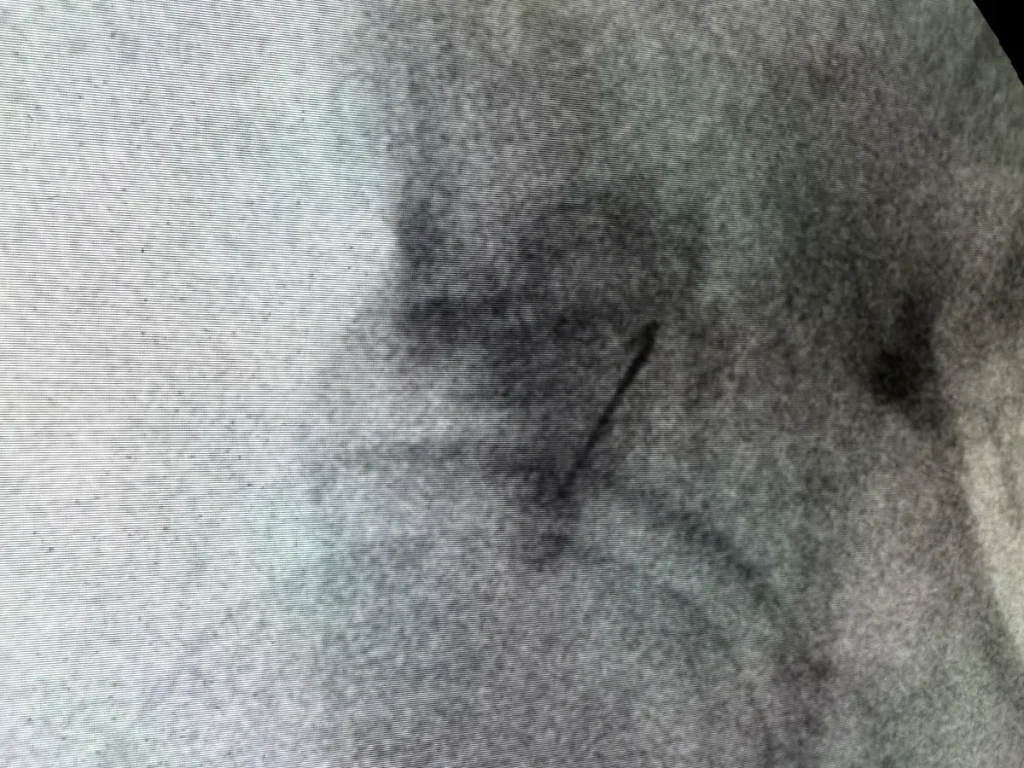
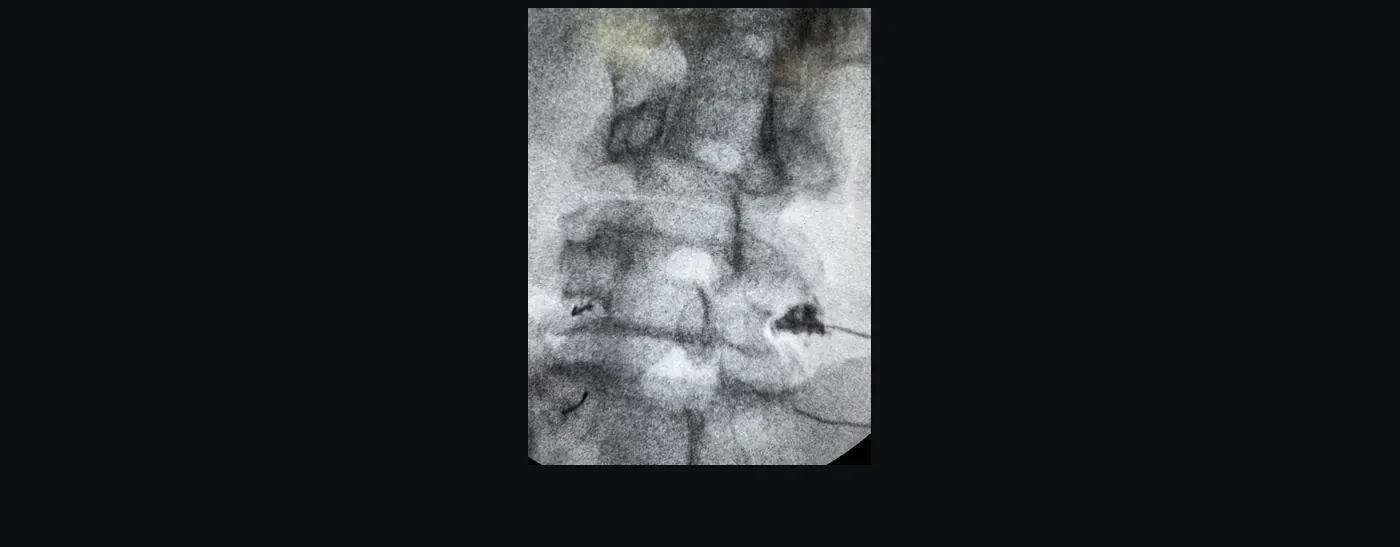
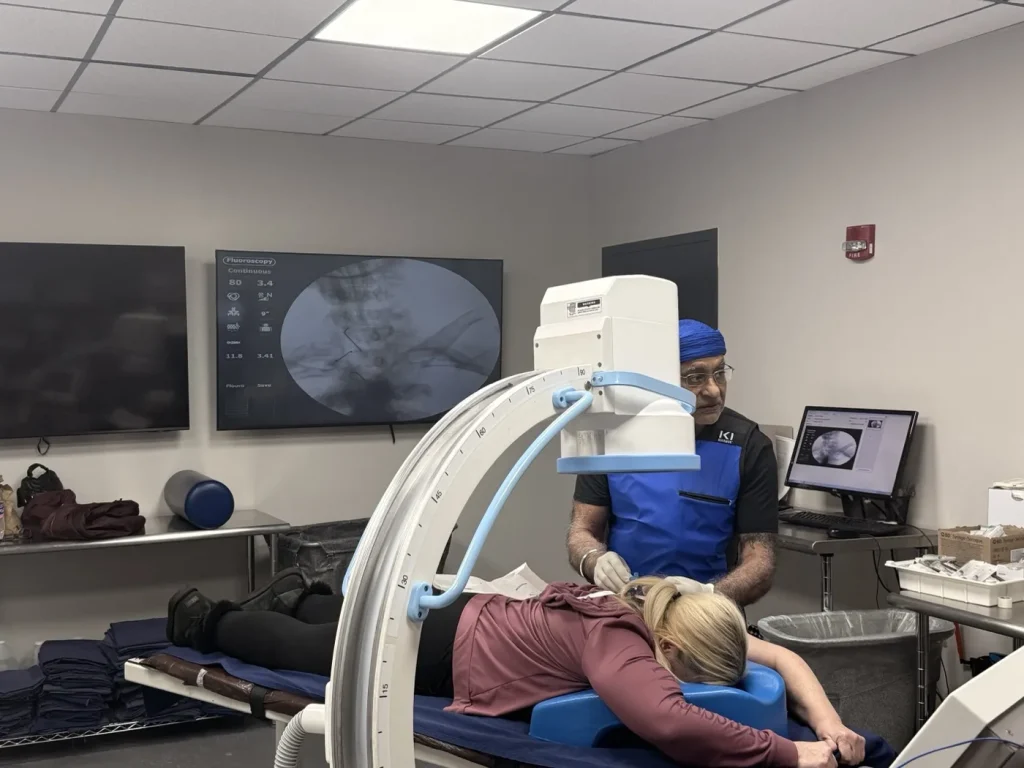
Fluoroscopic view of the lumbar spine dorsal root ganglion targeted during neurostimulation at Padda Institute, St. Louis

Spinal Cord Stimulation in St. Louis

An implanted neuromodulation system that interrupts chronic nerve pain in the back, arms or legs before the signal reaches the brain.

Prefer not to fill in a form?

Same-day and emergency appointments are available.

How spinal cord stimulation works

A thin lead carrying electrical contacts is placed in the epidural space, just outside the spinal cord, and connected to a small generator implanted under the skin. The device delivers mild electrical impulses that alter how pain signals are processed as they travel toward the brain. Rather than treating the original injury, it changes the signal the nervous system is sending about it.

The trial comes first

Nobody receives a permanent implant without first completing a trial. Temporary leads are placed percutaneously and worn for several days while normal daily activity resumes. The trial answers the only question that matters: does this reduce your pain enough, and reliably enough, to justify an implant? Patients who do not get a convincing response during the trial do not proceed.

Who it helps

The strongest candidates have neuropathic pain that has not responded to injections, medication or surgery. Common indications include persistent radicular leg pain, pain after spine surgery, and complex regional pain syndrome. It is generally considered after less invasive options such as epidural steroid injection have been tried.

What to expect

Both the trial and the implant are outpatient procedures. Modern systems are programmable, so the stimulation pattern can be adjusted over time as your pain changes, and several waveform options exist if the first program is not the right fit. Device checks and reprogramming are part of ongoing care rather than a sign something has gone wrong.

How the signal is actually changed

The original rationale came from the gate control theory of pain proposed by Melzack and Wall in 1965, which held that stimulating large-diameter sensory fibers in the dorsal column could inhibit transmission of pain signals carried by smaller fibers. That model explained the tingling sensation older systems produced in the painful area, since the same fibers carry touch.

Modern understanding is broader. Stimulation also alters neurotransmitter activity in the dorsal horn and modulates supraspinal pathways, which is why newer high-frequency and burst waveforms relieve pain without producing any tingling at all. Practically, this means a device that does not feel like it is doing anything may still be working, and that a program producing no sensation is not a malfunction.

What the trial evidence supports

The landmark randomized comparison is Kumar and colleagues, published in Pain in 2007, a multicenter trial of spinal cord stimulation versus conventional medical management in failed back surgery syndrome, with results sustained at twenty-four months in the PROCESS follow-up. That evidence base is why persistent radicular pain after spine surgery is the best-established indication.

It is also why we insist on the trial period. The published outcomes come from populations selected by a successful trial, so a permanent implant placed without one is not supported by the same evidence. If your trial does not produce a convincing response, the honest conclusion is that the data predicting benefit does not apply to you.

Who is not a candidate

Spinal cord stimulation is not appropriate for everyone, and the screening exists to protect you from an implant that will not help. It is generally not offered where there is untreated infection, uncorrected bleeding risk, an inability to manage the device, or pain that is predominantly mechanical rather than neuropathic — stimulation modulates nerve signaling, so pain generated by an untreated structural problem is usually better served by treating that problem directly.

Most insurers also require a psychological evaluation before authorizing the trial. This is not a test of whether your pain is real. Untreated depression, anxiety, and unaddressed substance use all measurably reduce the likelihood that a trial succeeds, and where they are present we prefer to address them first rather than proceed and hope. Our counseling services are part of the same practice for exactly this reason.

Insurance authorization and what it requires

Spinal cord stimulation is nearly always subject to prior authorization, and the documentation requirements are specific. Payers typically want a record of conservative care that did not work, imaging consistent with the pain complaint, electrodiagnostic or diagnostic block correlation where relevant, a completed psychological evaluation, and a documented trial result showing meaningful improvement.

Our office assembles and submits that package. Practically, this means there is usually a gap of several weeks between a successful trial and the permanent implant while authorization is processed. We will tell you where you are in that process rather than leaving you to guess, and we verify your specific benefits before the trial rather than after.

Risks worth knowing before you decide

The most common problem is lead migration — the lead shifts slightly from where it was placed, and the coverage pattern changes. This is usually correctable by reprogramming, and sometimes requires a revision procedure. Infection at the generator pocket is uncommon but is the complication that most often requires removing hardware.

Other considerations are practical rather than dangerous. Depending on the system, the generator either needs periodic recharging or will eventually need replacing when the battery is depleted. Some patients find the generator pocket uncomfortable at first, particularly if they are thin. None of this is hidden from you before the trial, and the entire system can be removed if you decide it is not worth keeping.

Living with the device

MRI. Many current systems are MRI-conditional, meaning scans are possible under specific conditions set by the manufacturer. Carry your device card and tell any imaging facility what you have before a scan is booked — the conditions differ by system and by body region.

Security screening. Airport screening will not damage the device, but the device may trigger a metal detector. Your device card exists for this.

Driving. Some manufacturers advise turning stimulation off while driving. Your device instructions will specify; follow them rather than a general rule.

Adjustment over time. Programming is not set once. Pain patterns change, and reprogramming to follow them is routine care rather than evidence of a problem.

Spinal cord stimulation compared with peripheral nerve stimulation

Both interrupt pain signaling with electrical stimulation, and the choice depends on how localized the pain is. Spinal cord stimulation covers broader regions — a whole limb, or the lower back and both legs — because the lead sits in the epidural space where many pathways converge.

Where a single identifiable nerve is generating the pain, peripheral nerve stimulation places the electrode directly at that nerve and is often the better-targeted option. Deciding between them is part of the evaluation, not something to settle in advance.

Find Out Whether Stimulation Is Right For You

The trial answers that question before any permanent decision. Call to arrange an evaluation.

What Our Patients Say

Individual results vary. These are unpaid patient testimonials shared with permission and are not a guarantee of outcome. See all patient stories.

Frequently Asked Questions

It depends on the system and program. Some waveforms produce a light tingling sensation in the painful area; others work below the threshold of sensation and are not felt at all.

It is designed to be long-term but is fully reversible. The leads and generator can be removed if the device stops helping or is no longer wanted.

The temporary leads are simply removed in the office, and we move on to other options. A trial that fails is useful information, not a wasted step.

Usually several days. You go about normal daily activity with temporary leads in place so the result reflects real life rather than a clinic visit.

In most cases yes, because most insurers require it before authorizing the trial. It screens for factors that are known to reduce the chance a trial succeeds, and those factors are treatable.

It is generally a covered benefit when the documentation requirements are met, including a successful trial. Coverage and out-of-pocket cost vary by plan, and we verify your specific benefits before the trial.

Many current systems are MRI-conditional, meaning scans are possible under conditions the manufacturer specifies. The conditions differ by system, so tell the imaging facility what device you have before a scan is scheduled.

It depends on the system. Rechargeable generators are recharged by the patient on a routine schedule; non-rechargeable ones are replaced in a minor outpatient procedure when depleted.

Request an Appointment

Same-day and emergency appointments are available. Call (314) 481-5000 or request a time below.

Prefer not to fill in a form?

Same-day and emergency appointments are available.

Related Treatments and Conditions

Other procedures and conditions our St. Louis pain specialists treat.
Complex Regional Pain Syndrome

“Of all the chronic neuropathic pain syndromes, none has perplexed patient, clinician, and scientist more than the complex regional pain..

Sciatica Nerve Pain Treatment

Sciatica mainly refers to the pain that radiates along the sciatic nerve. The sciatic nerve branches from the lower back, the hips, and the..
Epidural Steroid Injection (ESI)

Back pain affects nearly everyone at some point in their adult life. Often times the exact cause of pain is not readily apparent, as there are many..