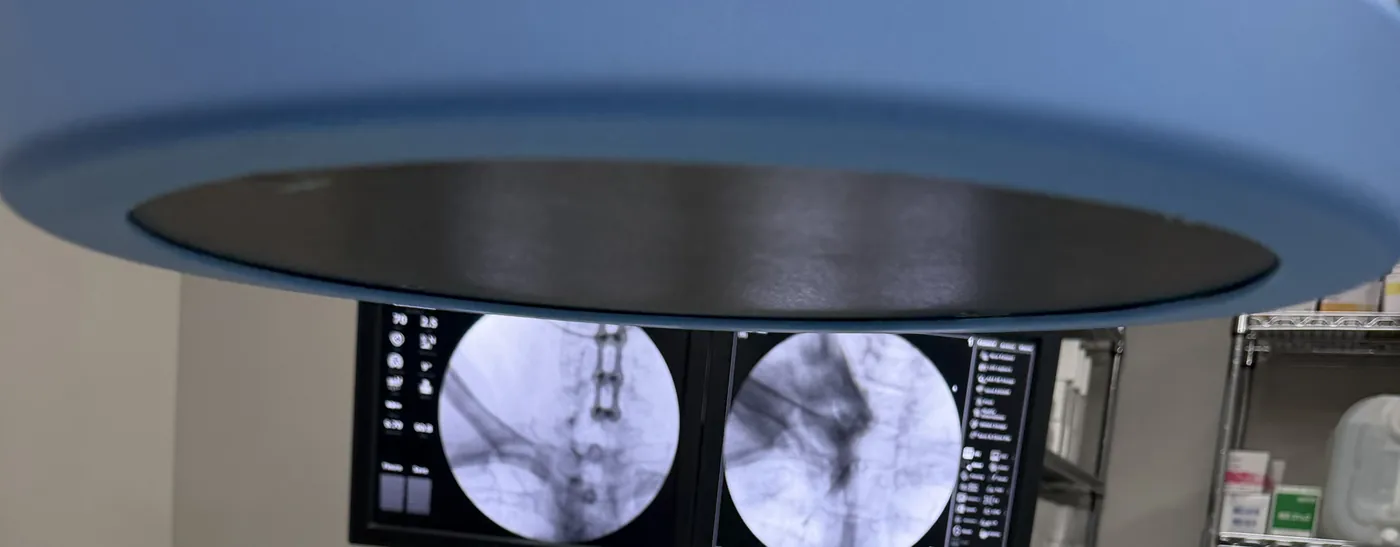

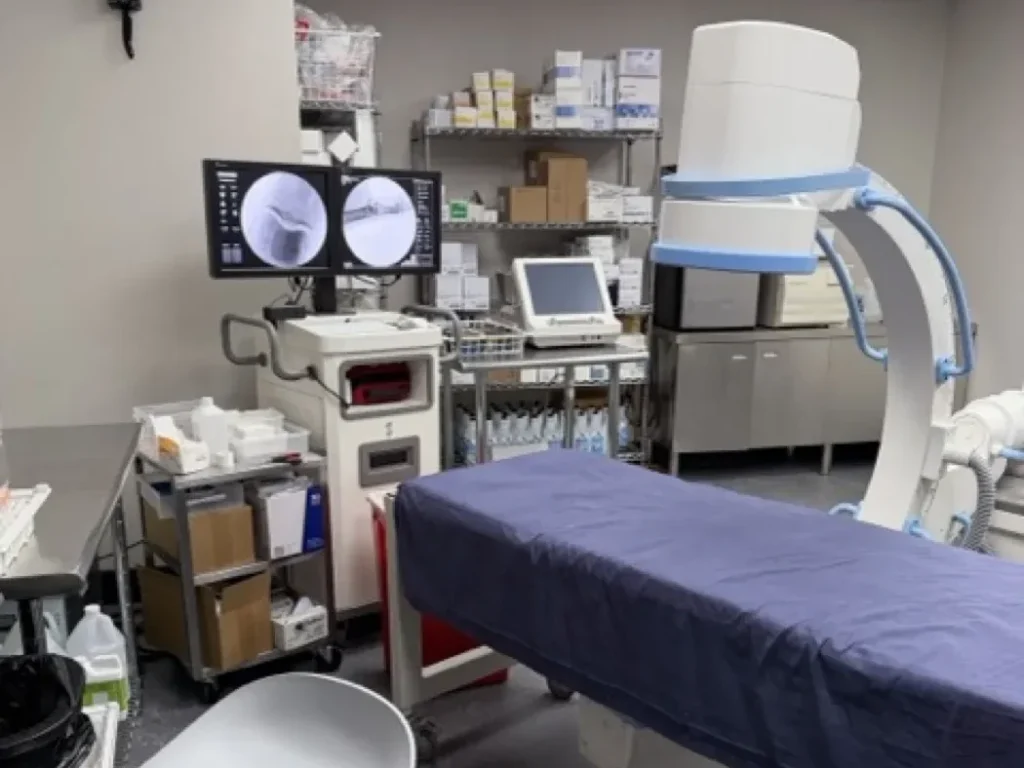
Fluoroscopy monitors under the C-arm in the procedure suite at Padda Institute, St. Louis

SI joint injection · St. Louis

Sacroiliac (SI) Joint Injection in St. Louis

A sacroiliac (SI) joint injection is an image-guided injection for lower back and buttock pain that comes from the sacroiliac joint. This joint is one of the most often missed sources of low back pain.

Prefer not to fill in a form?

Same-day and emergency appointments are available.

What is the sacroiliac joint?

The sacroiliac joints are the two joints that join the sacrum, at the base of the spine, to the hip bones of the pelvis. They pass the weight of the upper body into the legs. They move only a few millimeters. When they get inflamed or strained, they cause pain across the lower back, the buttock and sometimes the back of the thigh. That pattern is easy to mistake for sciatica or a disc problem.

How is an SI joint injection performed?

Under fluoroscopic guidance (live X-ray), dye (contrast) confirms the needle is inside the joint before any medicine goes in. Then a local anesthetic (numbing medicine) and an anti-inflammatory steroid are injected into the joint space. The procedure takes about fifteen minutes. You go home the same day from our St. Louis office.

Can an SI joint injection find the source of my pain?

The numbing medicine works right away, so the shot doubles as a test. Real relief in the next few hours confirms the SI joint as the pain source. Little or no change points the search elsewhere. That answer steers what comes next: a repeat shot, radiofrequency treatment of the nerves that feed the joint, or a different diagnosis altogether.

What is recovery like after an SI joint injection?

Most patients go back to light activity the same day. The numbing wears off within hours. The steroid effect usually builds over several days. We ask you to write down your pain levels over the first twenty-four hours. That record is what makes the test part of the shot mean something.

Why is SI joint pain so hard to diagnose?

The sacroiliac joint has an odd nerve supply. Its back side gets nerve branches from the S1 to S3 dorsal rami, and often from L5 and S4. That supply varies a lot from person to person. There is no single nerve to test. Pain from the joint can show up in the buttock, the groin, the back of the thigh and sometimes below the knee. That is why it is so easy to mistake for a pinched nerve in the low back (lumbar radiculopathy).

Scans do not settle it either. Wear and tear at the SI joint is common in adults with no pain. So a finding on CT or MRI does not prove the joint is the source. No single hands-on exam test is reliable on its own. The research backs using a group of tests that press on the joint to provoke pain. Even then, the result only raises or lowers suspicion. It does not confirm it.

Why the injection is the reference standard

Neither scans nor exams give a final answer. So the field uses a controlled diagnostic block as its gold standard. The logic is simple. Numb the joint under fluoroscopic guidance (live X-ray), with dye confirming the medicine spread inside the joint. Then see whether the pain goes. If it does, while the numbing lasts, the joint is to blame. If it does not, the joint is not the source, and treating it further wastes time.

This is why we ask you to track your pain in the hours afterward. It is also why we never inject blind. Without imaging and dye, the needle often misses the joint. A missed shot gives a false negative. That can send the whole workup in the wrong direction.

What Our Patients Say

Individual results vary. These are unpaid patient testimonials shared with permission and are not a guarantee of outcome. See all patient stories.

Frequently Asked Questions

It varies a lot. Some patients get several months of relief from one shot. Others get a shorter window that still confirms the diagnosis and guides the next step. The steroid usually takes a few days to reach full effect.

The skin and deeper tissues are numbed first. Most patients feel pressure, not sharp pain, during the shot itself. You stay awake, without general anesthesia.

Exam findings and your pain pattern raise the suspicion. But no single hands-on test gives a final answer. The shot is the most reliable way to confirm it. That is why how you respond in the first day matters as much as the relief.

Active infection, some bleeding disorders and some blood thinners need to be dealt with first. We review your medicine list and health history before we schedule.

Yes. An irritated sacroiliac joint can send pain across the lower back, into the buttock, the groin and the back of the thigh, and sometimes below the knee. That pattern is easy to mistake for sciatica or a disc problem. Scans often cannot tell them apart. An image-guided SI joint injection settles it. If the numbing medicine takes the pain away, the joint is the source.

The shot takes about fifteen minutes at our St. Louis office, and you go home the same day. You stay awake, without general anesthesia. The skin is numbed first. Under live X-ray, dye confirms the needle is inside the joint. Then a local anesthetic and an anti-inflammatory steroid are injected. Most patients go back to light activity the same day.

Write down your pain levels over the first twenty-four hours. The numbing works right away and wears off within hours. So that record tells us whether the SI joint is the true pain source. Most patients go back to light activity the same day. The steroid effect usually builds over several days, so give it time before you judge the full result.

Little or no relief in the hours after the shot points the search elsewhere. That is useful to know. It tells us the SI joint is not the source, so we stop treating it and look for the real pain source. When the shot does help, the next step can be a repeat shot or radiofrequency treatment of the nerves that feed the joint.

Request an Appointment

Same-day and emergency appointments are available. Call (314) 481-5000 or request a time below.

Prefer not to fill in a form?

Same-day and emergency appointments are available.

Related Treatments and Conditions

Other procedures and conditions our St. Louis pain specialists treat.
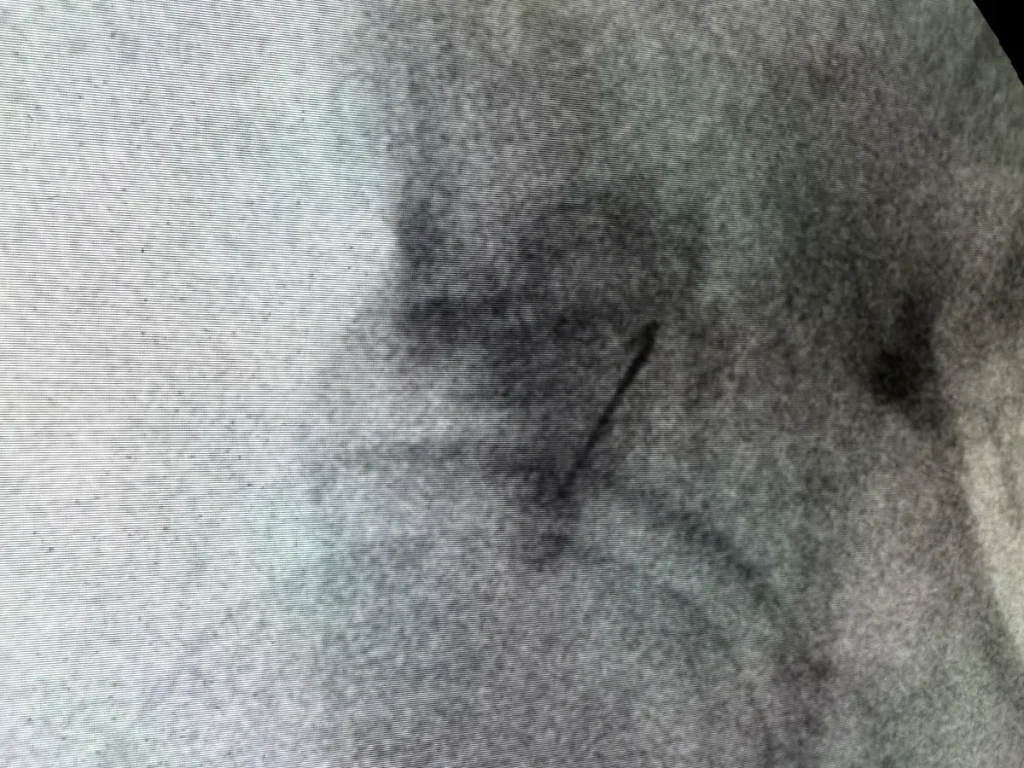
Sciatica Nerve Pain Treatment

Sciatica mainly refers to the pain that radiates along the sciatic nerve. The sciatic nerve branches from the lower back, the hips, and the..

Hip Joint Injection

The hip joint is a large joint where the leg joins the pelvis. It works as a ball and socket. The top of the thigh bone (the femur)…
Facet Joint Injection

The spine is designed to bend and turn. Along with the intervertebral discs, facet joints (also referred to as Z joints or zygapophyseal joints)..

Schedule NowCall (314) 481-5000