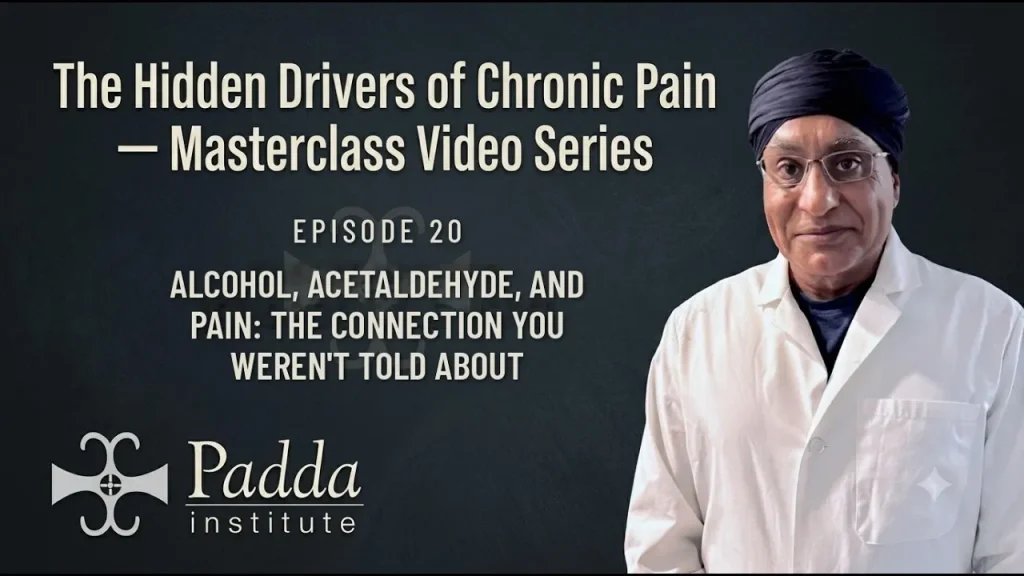
If you live with chronic pain, you may reach for a drink to take the edge off. That urge makes sense. But the honest body science is uncomfortable: alcohol can quietly make pain worse. It drains the exact nutrients your nerves need. It makes a toxin that sets them on edge. And it breaks up the sleep your body heals by. This article is part of our Hidden Drivers of Chronic Pain series. It walks through what actually happens, so any choice you make is an informed one.
What is acetaldehyde, and why is it toxic?
As your body breaks alcohol down, it first turns it into a compound called acetaldehyde. Acetaldehyde is truly toxic. It is far more reactive and harmful than the alcohol itself, a strong poison. Clearing it puts real strain on your system. So every drink makes a wave of this toxin that your body then has to scramble to clean up, using up your reserves. That is where several problems that land right on your pain begin.
Does alcohol make nerve pain worse?
Alcohol quickly drains magnesium and B vitamins. Those are the exact nutrients your nerves need to stay steady and repair. Magnesium calms jumpy nerves. The B vitamins keep up and repair the nerves themselves. Alcohol drains both. On top of that, the acetaldehyde from breaking down alcohol causes oxidative damage (cell rusting). That damage sets your nerves on edge. It is part of why heavy, long-term drinking can cause a full-blown neuropathy. In one drink you get drained nutrients plus irritated nerves, hitting the systems recovery depends on.
How does alcohol affect sleep and healing?
Alcohol feels like it helps you sleep, and it does make you fall asleep faster. But it badly disrupts the structure of your sleep. It blocks the deep, restoring stages your body needs and breaks up the second half of the night. Deep sleep is when your body runs its repairs and recharges its own systems that fight inflammation and pain. So the drink that helped you drift off robs you of the very sleep that would have lowered your pain. You wake less recovered and more sensitive, and the cycle repeats.
How does the Padda Institute help when alcohol is part of your pain?
None of this is about shame. If you use alcohol to cope with pain or stress, that comes from a real and understandable place. Our approach is supportive. First, we help you understand this body science clearly, so any change is your informed choice. Where alcohol adds to your pain, even cutting back can bring real benefit. We support that by replenishing the magnesium and B vitamins it drained. We lower the oxidative load and restore the healthy sleep it broke up. Just as important, we treat the pain and stress the drinking was meant to manage. Ease those, and the need goes away.
Frequently asked questions
Does alcohol make chronic pain worse?
It can. Alcohol drains the magnesium and B vitamins your nerves rely on. It makes acetaldehyde, which irritates nerves through oxidative damage. And it disrupts the deep sleep your body heals by. These effects are proven medicine, though doctors rarely tie them out loud to a patient's pain. Individual results vary.
To learn how low magnesium and B vitamins drive nerve pain, read Magnesium, Vitamin D, and B Vitamins: The Quiet Deficiencies That Drive Nerve Pain.
Why does a drink help me fall asleep but leave me feeling worse?
Alcohol does make you fall asleep faster. But it blocks the deep, restoring stages of sleep and breaks up the second half of the night. Deep sleep is when your body runs repairs and recharges its systems that fight inflammation and pain. So you wake less recovered and more sensitive.
Should I stop drinking to help my pain?
Where alcohol adds to your pain, even cutting back can bring real benefit. The goal is an informed choice, not shame. Do not start, stop, or change any medication without consulting your physician, and let your care team support you as you make changes. Individual results vary.
Does alcohol help with pain?
A drink can feel like it takes the edge off, and that urge makes sense. The body science runs the other way. Alcohol drains the magnesium and B vitamins your nerves need. It makes acetaldehyde, which irritates them. And it breaks up the deep sleep your body heals by. The relief you feel tonight leaves you less recovered and more sensitive the next morning.
Can heavy drinking cause nerve damage?
Yes. Your body turns alcohol into acetaldehyde, and that causes oxidative damage that irritates your nerves directly. Meanwhile, alcohol drains the magnesium and B vitamins those nerves use to stay steady and repair. That combination is part of why heavy, long-term drinking can cause a full-blown neuropathy.
What nutrients does alcohol deplete?
Alcohol quickly drains magnesium and B vitamins. Magnesium calms jumpy nerves, and the B vitamins keep up and repair the nerves themselves. Losing both leaves your nerves less steady and slower to recover. Where alcohol is part of your pain, the Padda Institute replaces these nutrients. We lower the oxidative load and help restore healthy sleep.
Where are you located and how do I book?
Padda Institute Center for Interventional Pain Management, 4477 Woodson Rd, Suite 100, St. Louis, MO 63134. Book at painmd.tv/appointment/ or call (314) 481-5000.
Key takeaways
- Alcohol is broken down into acetaldehyde, a toxin that strains your system and irritates nerves.
- Acetaldehyde’s toxic effects, drained magnesium and B vitamins, and broken sleep are all proven medicine.
- Deep sleep is when your body’s repair and anti-inflammation systems run. So sleep broken by alcohol keeps pain high.
- Understanding the body science lets you make an informed change, with nutrient, sleep and pain support along the way.
This article is educational and is not a substitute for evaluation, diagnosis, or treatment by a physician. Individual results vary. Do not start, stop, or change any medication without consulting your physician.
Find the source of your pain — not just the signal
Padda Institute Center for Interventional Pain Management builds a custom plan for each patient that targets the root cause. Interventional care and metabolic medicine, under one roof in St. Louis.
Or call or text us — 4477 Woodson Rd, Suite 100, St. Louis, MO 63134.
Msg & data rates may apply. Reply STOP to opt out, HELP for help. Text is not a secure channel — please don’t send medical or personal health information by text, and don’t use text for emergencies.
Medically reviewed by Dr. Gurpreet Singh Padda, MD, MBA, MHP — Board Certified in Anesthesiology, Pain Medicine, Interventional Pain Management, Addiction Medicine, and Obesity Medicine. Last reviewed July 2026.
Dr. Gurpreet Singh Padda, MD, MBA, MHP


