

Main Banner

Nerve Blocks in St. Louis

Targeted injections that interrupt pain signals along a specific nerve, used both to identify the source of pain and to treat it.

How a nerve block works

Pain is a signal traveling along a nerve. A nerve block places local anesthetic directly around that nerve, interrupting the signal before it reaches the spinal cord and brain. A steroid is sometimes added to reduce inflammation around the nerve and extend the effect. Because the anesthetic works within minutes, the response tells us something immediately.

Diagnostic and therapeutic in one

This dual role is what makes blocks central to interventional pain medicine. If numbing one specific nerve abolishes your pain, that nerve is the pathway carrying it. That is information no scan can provide, because imaging shows structure rather than which structure hurts. A positive block both relieves pain and unlocks the next step, whether that is radiofrequency ablation or neuromodulation of the confirmed target.

Blocks performed at Padda Institute

We perform selective nerve root blocks for radicular pain, stellate ganglion blocks for upper-body sympathetic pain, lumbar sympathetic blocks for lower-limb sympathetic pain and complex regional pain syndrome, celiac plexus blocks for upper abdominal pain, and sphenopalatine ganglion blocks for cluster headache and facial pain, genicular nerve blocks for knee pain, and cluneal nerve blocks to separate cluneal entrapment from sacroiliac and radicular pain.

What to expect

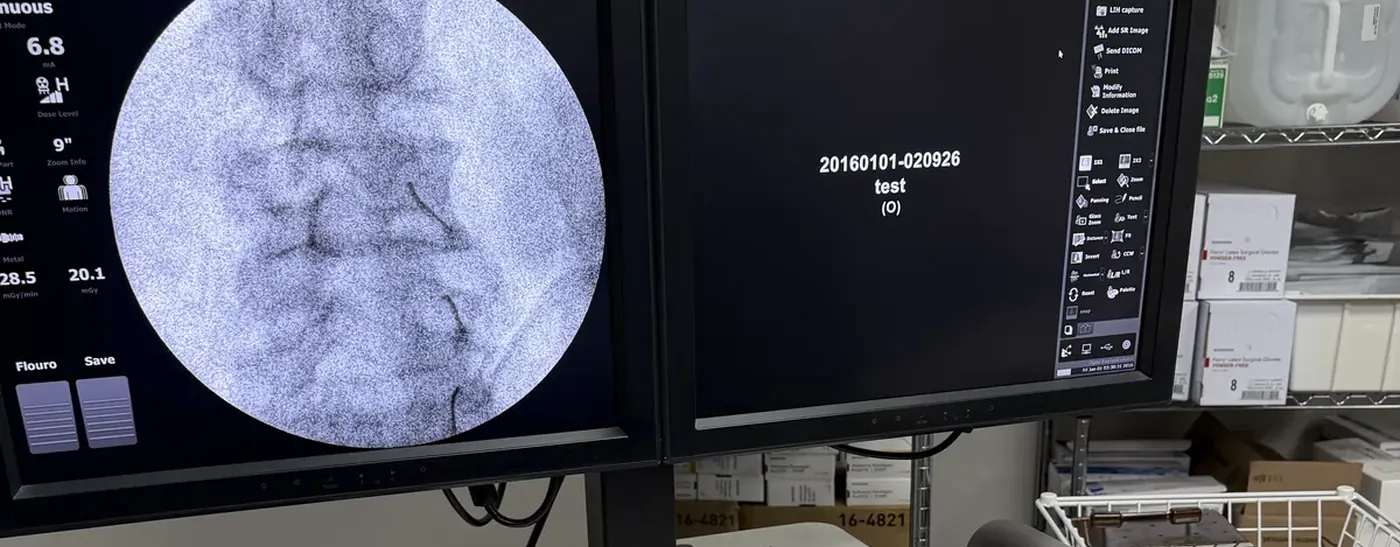
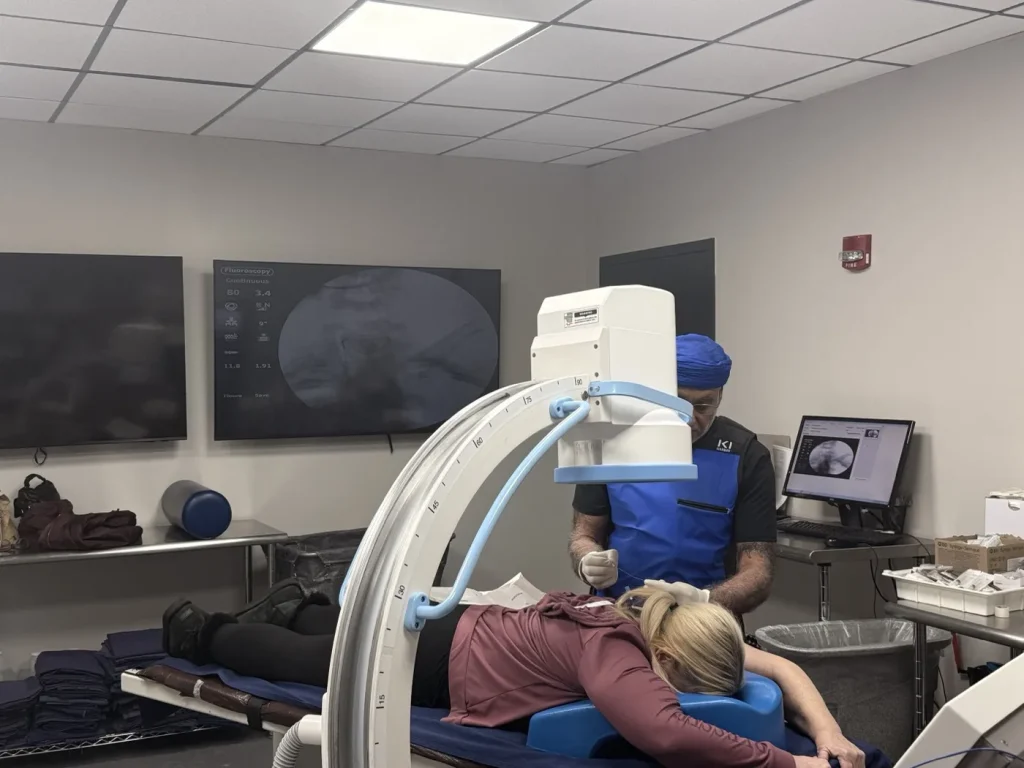
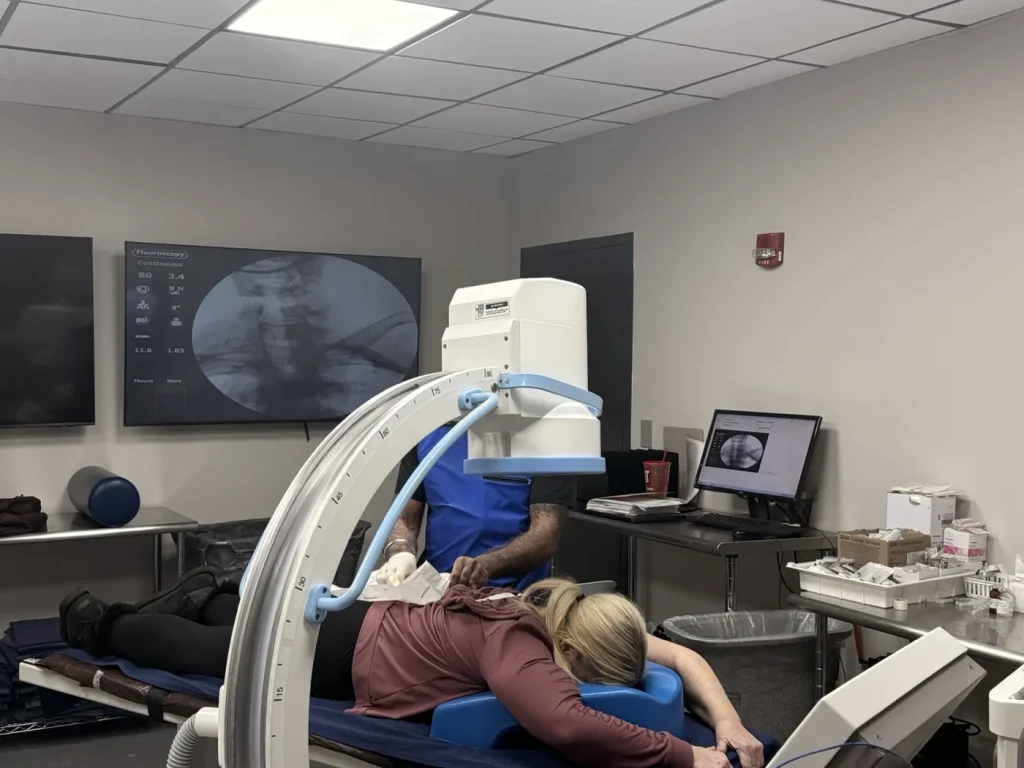
Every block is performed under image guidance, using ultrasound or fluoroscopy according to the target. Most take fifteen to thirty minutes and are performed on an outpatient basis. We ask you to track your pain over the hours that follow, since the timing and degree of relief is the diagnostic result we are looking for.

How a local anesthetic actually stops a signal

Local anesthetics work by binding sodium channels on the inner face of the nerve membrane. Blocking sodium influx prevents the membrane from reaching threshold, so an action potential cannot propagate past the treated segment. The drug must cross the membrane in its uncharged form and then act in its charged form, which is why anesthetics work poorly in inflamed, acidic tissue: the local pH shifts the equilibrium toward the charged fraction that cannot get in.

Fibers are not blocked equally. Small unmyelinated C fibers and thinly myelinated A-delta fibers, which carry pain and temperature, are blocked at lower concentrations than the large A-alpha fibers that carry motor signals. This differential blockade is why a well-executed block can abolish pain while leaving strength intact, and why the sequence of loss is predictable: temperature, then pain, then touch, then power.

Why one positive block is not proof

The uncomfortable finding in the diagnostic block literature is that a single positive block has a substantial false-positive rate. Placebo response is real, the anesthetic can spread beyond the intended target, and a patient hoping for an answer may report relief that does not reflect the pharmacology.

The field addresses this with controlled blocks: repeating the block with an anesthetic of different duration and checking that relief tracks the expected pharmacokinetics, or comparing against a placebo injection. A patient whose relief lasts about an hour with lidocaine and several hours with bupivacaine is giving a physiologically coherent answer. One who reports identical relief from both is not. We apply this most rigorously before any irreversible step such as radiofrequency ablation, because that is where a false positive costs the most.

Frequently Asked Questions

Some temporary numbness in the distribution of the treated nerve is expected and confirms the block worked. Temporary weakness can occur with certain blocks; we will tell you beforehand if that applies to yours.

The anesthetic lasts hours. Where a steroid is added, benefit can extend for weeks to months. A short-lived but complete response is still a useful diagnostic result.

Often a diagnostic block is repeated once to confirm the finding before moving to a longer-lasting treatment. The plan depends on your response rather than a fixed number.

Request an Appointment

Same-day and emergency appointments are available. Call (314) 481-5000 or request a time below.

Related Treatments and Conditions

Other procedures and conditions our St. Louis pain specialists treat.
Selective Nerve Root Block

Nerve roots exit your spinal cord and form nerves that travel into your arms or legs. These nerves allow you to move your arms, chest wall, and..

Stellate Ganglion Block

Your body has special nerves known as sympathetic nerves in your neck which ,control blood supply and sweating to your arms and hands . These nerves can be…
Lumbar Sympathetic Nerve Block

Your body has special nerves known as sympathetic nerves in your back which ,control blood supply and sweating to your legs and feet..