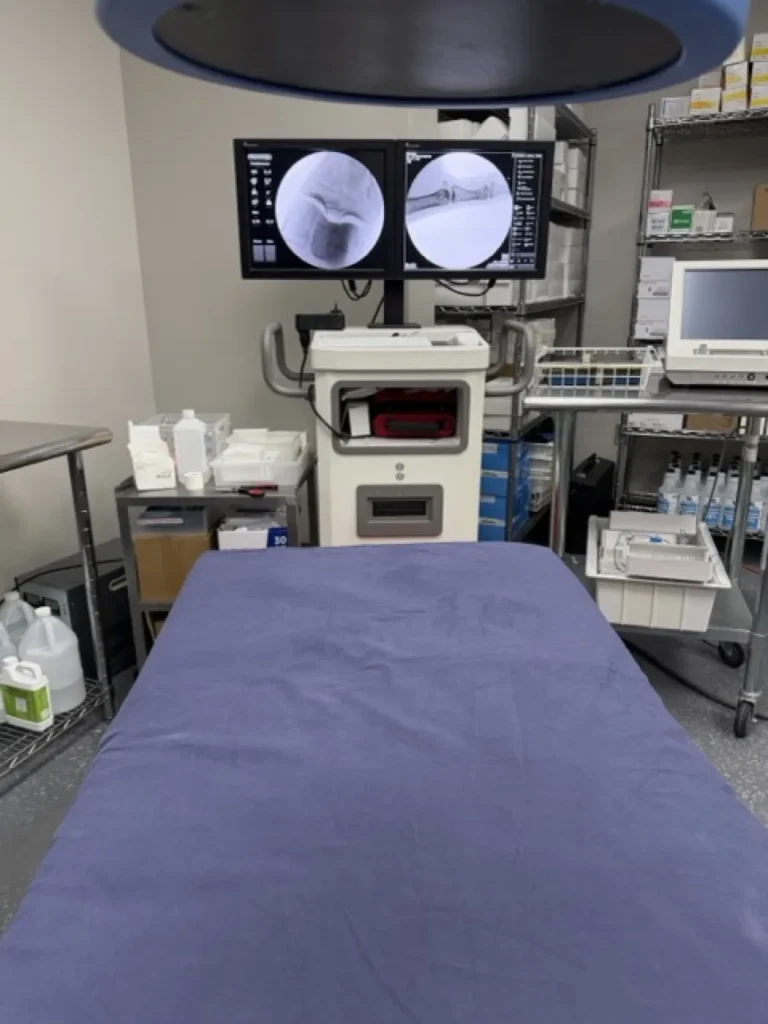
Genicular nerve radiofrequency ablation treats knee osteoarthritis pain by interrupting the sensory (feeling) nerves that carry it. It does not change the joint. Several randomized controlled trials have shown it beats steroid shots into the joint, gel shots (viscosupplementation) and pain pills.1 That comparison matters, because those three are usually what has already been tried by the time anyone brings up ablation.
What is actually being targeted
The genicular nerves are small branches that carry feeling from the knee capsule. Ablating them (turning them off with heat) cuts the pain signal. It does not touch cartilage, ligament or bone. The arthritis stays. But its signal is cut off.
Be clear on this. It is a pain treatment, not a joint treatment. It does not restore cartilage. It does not reverse the arthritis underneath.
Why the targets are debated
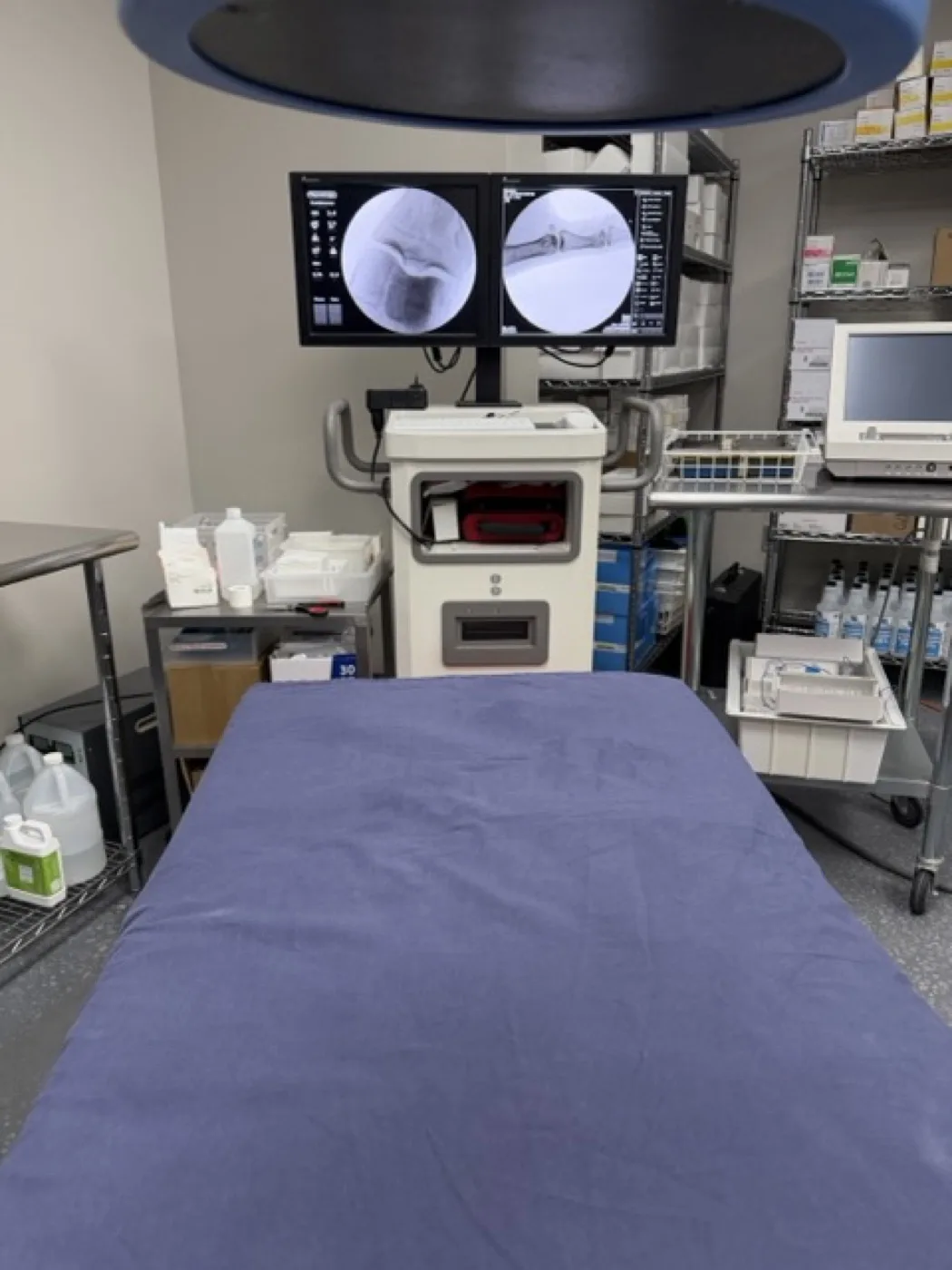
Cadaveric studies (studies on donated bodies) show significant variation in where the genicular nerves sit from person to person. That has sparked debate about the best places to aim the ablation.1 The anatomy is not the same from person to person. So the technique is not a matter of hitting fixed points.
Even so, good results have been seen in studies that target only three nerves: the superior medial, inferior medial and superior lateral genicular nerves.1 Aiming at more nerves may raise the success rate. But that is still an open question, not settled practice.1
How it compares with what you have probably already tried
Ablating those three nerves appears to work well for painful knee osteoarthritis.1 Randomized trials show it beats steroid shots into the joint, gel shots and pain pills. That is the practical case for it when those have not held.1
The other options are described here under viscosupplementation for the knee, and the ablation itself under genicular radiofrequency ablation.
The diagnostic block comes first
Ablation usually comes after a test genicular nerve block. This shot numbs the same nerves for a short time. If the block does not ease the pain, ablating those nerves is unlikely to either. That is exactly what you want to know before you commit to a longer-lasting procedure.
On safety, stated honestly
Based on the data so far, genicular ablation seems fairly safe. But the authors say plainly that more large studies are needed to be more sure.1 That is a fair summary to take into a decision: hopeful evidence, not a closed question.
Frequently asked questions
Does genicular ablation fix the arthritis in my knee?
No. It interrupts the sensory nerves that carry pain from the joint. The arthritis itself does not change. Related options aimed at the joint are described under viscosupplementation for the knee.
How does it compare with a steroid injection or gel injection?
Several randomized controlled trials have shown genicular ablation beats steroid shots into the joint, gel shots and pain pills for painful knee osteoarthritis. See genicular radiofrequency ablation.
Why do I need a nerve block before the ablation?
Because it tests the target. A short block of the same nerves shows whether cutting them off eases your pain. You learn that before the longer-lasting procedure is done. See genicular nerve block.
Are the nerves in the same place in everyone?
No, and that is a real technical problem. Cadaveric studies (studies on donated bodies) show significant variation in where the genicular nerves sit from person to person. That is why the best target sites are still debated. Even so, results from targeting three specific nerves have been good. Image guidance is described under ultrasound-guided and fluoroscopic procedures.
Is it safe?
The data so far suggest it is fairly safe. Still, the authors of the current review call for larger studies before stronger claims are made. To talk about whether it suits your knee, use the appointment request form.
To have knee pain evaluated, request an appointment, call (314) 481-5000, or text (314) 886-5902.
Sources
- Conger A, Gililland J, Anderson L, Pelt CE, Peters C, McCormick ZL. Genicular Nerve Radiofrequency Ablation for the Treatment of Painful Knee Osteoarthritis: Current Evidence and Future Directions. Pain Medicine. 2021;22(Suppl 1):S20–S23. doi:10.1093/pm/pnab129. Retrieved via PubMed. DOI
Dr. Gurpreet Singh Padda, MD, MBA, MHP