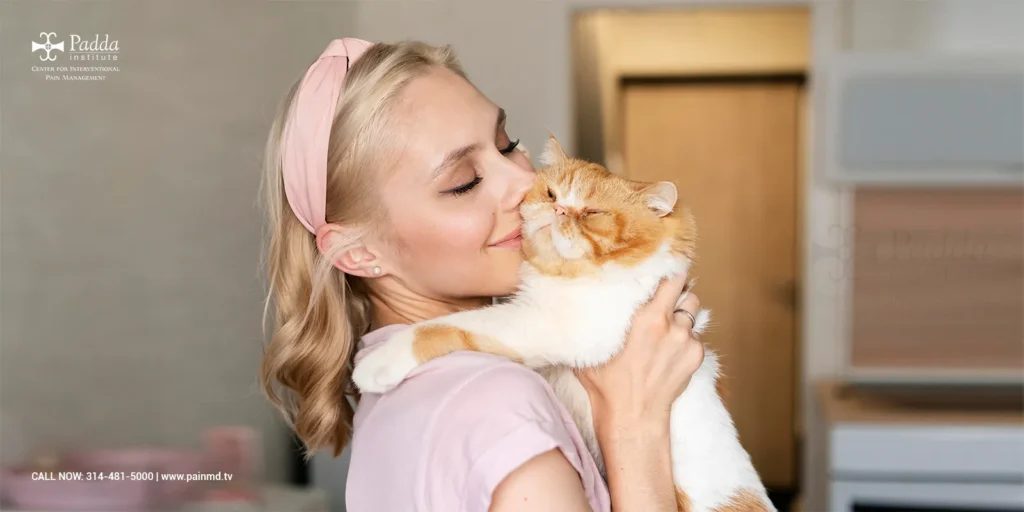
Summary: In a new study, researchers found that some people get more out of cats. These are mostly people who rank high on an emotional scale. Women are also more likely to prefer cats. So the choice of animal seems to depend on personality. In the US, many universities run a program called “pet your stress away.” In it, students can spend time with pets to ease stress. It has been seen that pets help with pain. But most of these pets are dogs.
Many people wrongly think any furry pet will help treat post-traumatic stress disorder. That is too simple. A pet does lower stress and anxiety, keeps a person active and prevents loneliness. But not everyone gets these benefits. Much depends on a person’s personality, emotional type and more. For some, a pet may even add stress. So it is no surprise that a new study by Washington State University found that very emotional, reactive people are more likely to benefit from time with cats.
Many universities and professional groups in the US run the program “Pet Your Stress Away.” They keep animals that students or others can spend time with to ease stress. Studies show that most students (about 85%) prefer dogs, but interest in cats is rising too. Many people believe petting a dog eases stress. But some personality types prefer cats. That shows cats should be added to the mix.
In the new study, published in the journal Anthrozoös, researchers found that people with certain personality types prefer cats. For example, very emotional and reactive people seem to get more out of cats. This matters, because people’s emotional responses are very stable and unlikely to change over time. How people react emotionally to stress is a key part of their personality.
Early studies show that people on the high end of the emotional scale are more likely to bond strongly with animals. Now the new study shows these same people prefer cats over other pets. So cats should also be part of “pet your stress away” programs.
The researchers say they had been told that people split into dog people and cat people. Many also told them there was little interest in cats at universities. But their research shows that many people are in fact interested in cats, and it all depends on personality. For the study, researchers surveyed more than 20 papers with more than 1400 university students and staff taking part.
Moreover, such an interest is even found in people who might be dog owners. Further, it appears that interest in cats is higher in females. Of course, there are specific issues, too. Not everyone likes cats. Some people might be living with different phobias, and they cannot interact with cats. Additionally, some individuals are known to be allergic to cats.
Still, the study showed that cats also help during post-traumatic stress disorder treatment. Dogs are used more often in the US for this. But adding cats would help more people. One reason people prefer dogs is that many think dogs are better at pleasing people. Cats seem unpredictable and don’t always like dealing with people.
Still, the study also showed that when given a choice, some people pick dogs right away, while others pick cats. Some people prefer cats over dogs. It is interesting to see how personality shapes the choice of pet.
Since the choice of pet depends more on personality, the study also found that students and staff chose pets in a similar way. That held even though they are very different groups of people.
So this study also shows that the animal people choose depends not just on the animal’s nature. It depends to a large degree on the person’s personality too. So some people find cats a better choice and are more likely to benefit from them.
Overall, studies have found that pets help with pain and with conditions such as post-traumatic stress disorder.
Frequently asked questions
Do cats reduce stress?
For many people, yes, and for some people more than dogs do. A Washington State University study published in the journal Anthrozoös found that very emotional, very reactive people are the ones most likely to benefit from time with cats. Those emotional responses are a stable part of personality, so the preference tends to last.
Is a dog or a cat better for stress and anxiety?
It depends on who you are. About 85% of students prefer dogs, but people at the high end of the emotional scale lean toward cats, and women are more likely to prefer cats. Even some dog owners are interested in cats. Given a choice, some people pick a dog right away and others pick a cat.
Are cats good for your mental health?
Pets in general lower stress and anxiety, keep people active and ease loneliness. The study found cats can also help during treatment for post-traumatic stress disorder. Dogs are used far more often in the US for that purpose. But adding cats would help more people, especially those whose personality fits a cat better.
Can a pet make stress worse?
Yes. Thinking any furry pet will fix stress or PTSD is too simple. Much depends on personality and emotional type, and for some people a pet adds stress instead of easing it. Not everyone likes cats. Some people have phobias that keep them away from cats, and some are allergic to them.
What is the “Pet Your Stress Away” program?
It is a program many US universities and professional groups run. Students, staff and others can spend time with animals to lower their stress. Most of the animals are dogs. The researchers argue that cats belong in these programs too, because many students and staff are interested in cats once they are asked.
Dr. Gurpreet Singh Padda, MD, MBA, MHP


