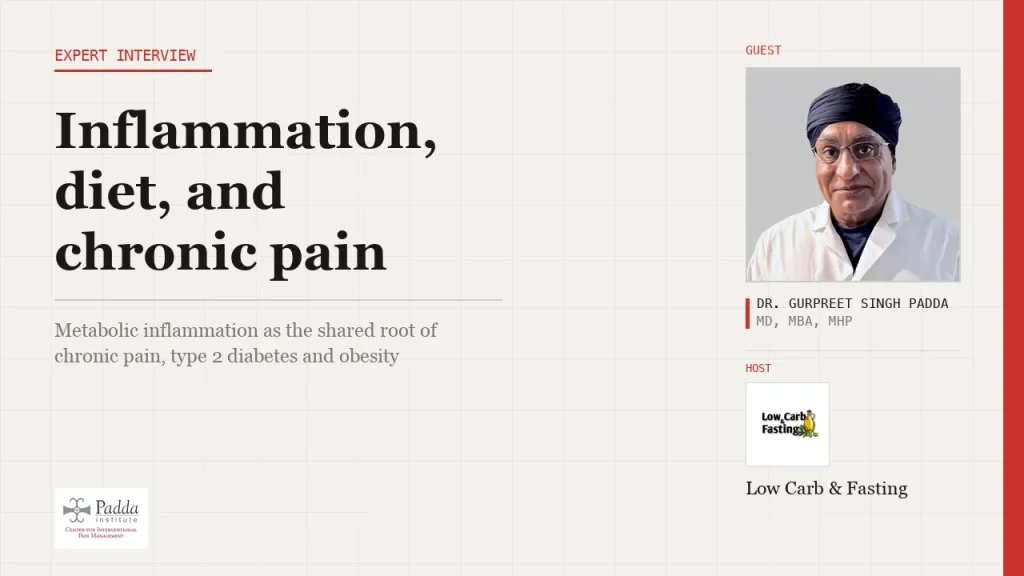
Much chronic pain, from low back pain to neck pain and migraines, shares one root with type 2 diabetes and obesity: metabolic inflammation. It is fed by belly fat, seed oils, sugar, and food addiction. On the Low Carb & Fasting podcast, Dr. Gurpreet Singh Padda, MD, MBA, MHP, laid out how it drives pain and hormone problems. He also laid out the diet steps that cool it.
Many people with stubborn low back pain, neck pain, or migraines are told their problem is purely structural. They hear it is a worn joint or an old injury. On the Low Carb & Fasting podcast, Dr. Gurpreet Singh Padda, MD, MBA, MHP, offered a different lens. Much chronic pain shares a root with type 2 diabetes and obesity. He calls it metabolic inflammation. This article sums up the medical ideas from that talk. It covers how belly fat, seed oils, sugar, and food addiction can keep the body inflamed. And it covers the diet steps his clinic uses to cool it down.
The common thread: metabolic inflammation
Dr. Padda called metabolic inflammation the shared hub behind chronic pain, type 2 diabetes, and obesity. If he renamed his clinic today, he said, he would call it a center for metabolic inflammation. He noted that most patients do not come in asking about metabolism. They come in with severe pain, addiction, or another problem. The metabolic issue is found underneath. His patients often carry more than one chronic disease at once. He sees the clinic’s job as untangling those linked problems together, not treating pain by itself. The reversal and success figures he cited are practice-reported outcomes, and individual results vary.
How do visceral fat and leptin keep the body inflamed?
A central idea in the talk was that fat is not just storage — it behaves like an organ. It does immune work as well as storing energy. Dr. Padda explained that fat cells release a hormone called leptin. Leptin normally tells the brain you are full. As fat builds up, the body releases more leptin. It can become leptin resistant, so the signal stops getting through. Leptin is also a strong inflammation messenger. So high levels drive body-wide inflammation, especially from visceral fat (belly fat packed around the organs). He tied this to insulin. Insulin that stays high pushes extra sugar into cells and storage. It can strain the mitochondria (the cell’s power plants). Over time it feeds insulin resistance. He also called fat stored inside muscle a separate problem that can sap strength. These are explanations of how things work offered in the interview, not personal medical advice.
Which foods trigger inflammation, and why are they addictive?
Dr. Padda singled out industrial seed oils (omega-6 oils) as directly inflammatory. He explained that they can stiffen cell membranes (the thin outer layer of each cell) and dull the receptors on them. They feed the arachidonic-acid pathway that makes inflammatory prostaglandins. And they often go rancid without any smell. On sugar, he split fructose from glucose. He said the liver handles most fructose. Fructose can cause fatty liver. And it fires up the dopamine (reward) system. He tied glucose more to serotonin. That reward effect, he argued, is why junk foods are engineered to keep people coming back. It is why he treats food as genuinely addictive. He also flagged artificial sweeteners. They may not raise blood sugar, he said. But the sweet taste can trigger an early insulin release and upset the gut microbiome. He noted that allulose seemed better tolerated by his patients. These are his clinical views from the talk.
How do you lower inflammation with diet?
Dr. Padda described a step-by-step, food-first plan. Early steps: get patients off vegetable oils and add omega-3s. Then move away from processed refined carbs toward real food. Add sleep coaching and time-restricted eating to deplete glycogen (the body’s stored sugar). Then the body can start burning fat and enter ketosis. He said ketosis itself can reduce pain and, in some people, help with migraines. Exercise comes later, and carefully. Extra weight puts heavy loads on the spine. So mobility and weight loss come before hard exercise. Walking after meals is a simple start. He also stressed gut health and good sleep habits. On cholesterol, he argued that particle count (LDL-P) matters more than the usual LDL-C. Inflammation, not cholesterol alone, is the driver he watches. This is his clinic’s practice-based approach. Individual results vary, and it is not a substitute for personal medical advice.
Frequently asked questions
Can changing my diet really reduce chronic pain?
In this talk Dr. Padda argued that much chronic pain is tied to metabolic inflammation. Cut processed carbs and industrial seed oils, and restore metabolic health. That can lower the inflammation that keeps pain alive. This is a practice-based approach. It is used alongside — not instead of — a proper pain evaluation. Individual results vary.
For how leptin resistance keeps pain running hot, read Leptin Resistance: The Hidden Reason Your Pain Runs Hotter Than Your Scans.
Will a very low-carbohydrate diet raise my cholesterol?
Dr. Padda spoke about most people without familial hypercholesterolemia (an inherited high-cholesterol condition). For them, he said, the more important measure is LDL particle count (LDL-P), not the standard LDL-C. He watches inflammation and insulin resistance more than cholesterol alone. He noted triglycerides can rise some early on, especially with fasting. These points are his clinical opinion from the interview, not a personal recommendation. Discuss your own labs with your physician.
Should I stop my diabetes or pain medication if I start a low-carb diet?
No — diet changes can quickly change blood sugar and other needs. That is exactly why this must be supervised. Do not start, stop, or change any medication without consulting your physician. Type 1 diabetes in particular was described as more complex and needing expert oversight. Individual results vary.
What are the worst foods that trigger inflammation?
Dr. Padda puts industrial seed oils first. Omega-6 oils stiffen cell membranes. They feed the arachidonic-acid pathway toward inflammatory prostaglandins. And they often go rancid without any smell. Next comes sugar, especially fructose, which loads the liver and hits the dopamine reward system. Then processed refined carbs. Junk foods are engineered to keep you coming back. That is why he treats food as genuinely addictive.
How do you flush inflammation out of your body?
In order, not all at once. Get off vegetable oils and add omega-3s. Swap processed refined carbs for real food. Fix sleep. Use time-restricted eating to burn through stored sugar (glycogen), so the body starts burning fat and enters ketosis. Ketosis itself can reduce pain. Walk after meals and look after your gut. Save hard exercise for after weight and mobility improve. Individual results vary.
What is the most effective anti-inflammatory diet for chronic pain?
The diet this clinic uses goes straight at metabolic inflammation. No industrial seed oils. Omega-3s added. Processed refined carbs and sugar swapped for real food. Time-restricted eating to move the body into fat burning and ketosis. It is paired with sleep coaching and gut care. It is used alongside, not instead of, a proper pain evaluation. Individual results vary.
Where are you located and how do I book?
Padda Institute Center for Interventional Pain Management, 4477 Woodson Rd, Suite 100, St. Louis, MO 63134. Book at painmd.tv/appointment/ or call (314) 481-5000.
Key takeaways
- Dr. Padda frames chronic pain, type 2 diabetes, and obesity as sharing one root: metabolic inflammation.
- Key drivers that keep the body inflamed: belly fat and leptin, plus industrial seed oils and fructose.
- The clinic's approach goes in steps. Cut seed oils and refined carbs. Burn off stored sugar and reach ketosis. Then add movement.
- Next step: ask the Padda Institute to check what drives your pain. Do not just treat symptoms.
This article is educational and is not a substitute for evaluation, diagnosis, or treatment by a physician. Individual results vary. Do not start, stop, or change any medication without consulting your physician.
Find the source of your pain — not just the signal
Padda Institute Center for Interventional Pain Management builds a customized, root-cause plan for each patient. Interventional care and metabolic medicine, under one roof in St. Louis.
Or call or text us — 4477 Woodson Rd, Suite 100, St. Louis, MO 63134.
Msg & data rates may apply. Reply STOP to opt out, HELP for help. Text is not a secure channel — please don’t send medical or personal health information by text, and don’t use text for emergencies.
Medically reviewed by Dr. Gurpreet Singh Padda, MD, MBA, MHP — Board Certified in Anesthesiology, Pain Medicine, Interventional Pain Management, Addiction Medicine, and Obesity Medicine. Last reviewed July 2026.
Dr. Gurpreet Singh Padda, MD, MBA, MHP