Interstitial cystitis, or bladder pain syndrome, is pain, pressure or burning that gets worse as the bladder fills and eases as it empties. It lasts 3 months or longer with no better explanation. It stays in limbo because 2.70% to 6.53% of US women meet the symptom criteria, yet only 9.7% have been given the diagnosis.1
Interstitial cystitis bladder pain syndrome evaluation matters because the condition is common enough to be real but unclear enough that patients get stuck in limbo. RAND ran a phone survey of US households between 2007 and 2009. It found that 2.70% to 6.53% of adult women met symptom criteria for bladder pain syndrome/interstitial cystitis. The range comes from using a strict versus a broad case definition. Yet only 9.7% of those women said they had ever been given the diagnosis.1 That gap between “symptoms” and “formal diagnosis” is what drives years of pointless detours.
What is interstitial cystitis, and what causes it?
Here is the honest framing. Interstitial cystitis bladder pain syndrome evaluation starts with a definition. It is an unpleasant feeling like pain, pressure, burning, or discomfort that worsens as the bladder fills and improves when the bladder empties. It lasts 3 months or longer. And it happens without another diagnosis that better explains the symptoms.
“Cause” is where many talks go off the rails. In real practice, we do not usually point to one culprit like a bacterial infection. IC/BPS is best seen as a syndrome, not one injury. Several things can happen at once. The bladder wall may be inflamed or not working right. Nerve signals may be off. The pelvic floor may add to it. And central sensitization can keep the pain loop running even when no single trigger is obvious.
Whether it is mainly “bladder” or “neural,” the symptom pattern is the guide. That is why you can have normal standard scans and still suffer for real. The failure is not in your bladder history. The failure is how often the system stops at the first negative test and never does a proper rule-out workup.
How is interstitial cystitis diagnosed?
The patient history and physical exam are must-haves in an IC/BPS evaluation. So we do not start with procedures. We start with a structured story that ties symptoms to bladder filling and emptying. Then we rule out other diagnoses.
Urinalysis and urine culture are the lab tests needed to rule out active infection. If those are positive, treating the infection first is not optional. If they keep coming back negative, we stop pretending that “UTI-like” symptoms are always bacteria.
1) History that closes the symptom loop
- Symptom timing: does filling make it worse and emptying make it better?
- Duration: symptoms for at least 3 months.
- How often you go, urgency, getting up at night, and triggers.
- Past diagnoses and treatments, including what really helped.
- Pelvic pain, pain with sex, bowel symptoms, and links to stress.
2) Physical exam that actually matters
- Pattern of belly and pelvic tenderness.
- Pelvic floor muscle tone and pain when pressed.
- A nerve check when pain may be coming from somewhere else.
3) Urine tests to exclude look-alikes
- Urinalysis and urine culture.
- More tests only when your story points to other causes.
Whether you meet an IC/BPS definition depends on the exact criteria used. That is part of why the system feels inconsistent. Case definitions can be broad or strict, and neither is perfect.
How is interstitial cystitis treated?
Once the evaluation supports an IC/BPS diagnosis, treatment usually becomes a layered plan. There is no honest way to call this a one-shot fix. The honest framing is: splint, not repair. You manage symptoms, cut triggers, and break the central sensitization that keeps the pain going.
1) Education and symptom-directed strategies
- Bladder-friendly habits (timed bathroom trips, knowing your triggers).
- Review of food and drinks for your own triggers.
- Steadier sleep and stress, because they change pain signals.
2) Pelvic floor targeted approaches
A tight or weak pelvic floor can make urgency and pain worse. If your evaluation suggests pelvic floor pain when pressed, pelvic floor physical therapy can be part of a sound plan.
3) Medication options (urology-led, individualized)
Which medicine you get depends on your symptom type and your risks. We do not oversell any one option. Some patients respond and some do not. The evaluation helps you avoid piling on treatments without knowing what works.
4) Pain-loop interventions when pelvic pain overlaps with chronic pain mechanisms
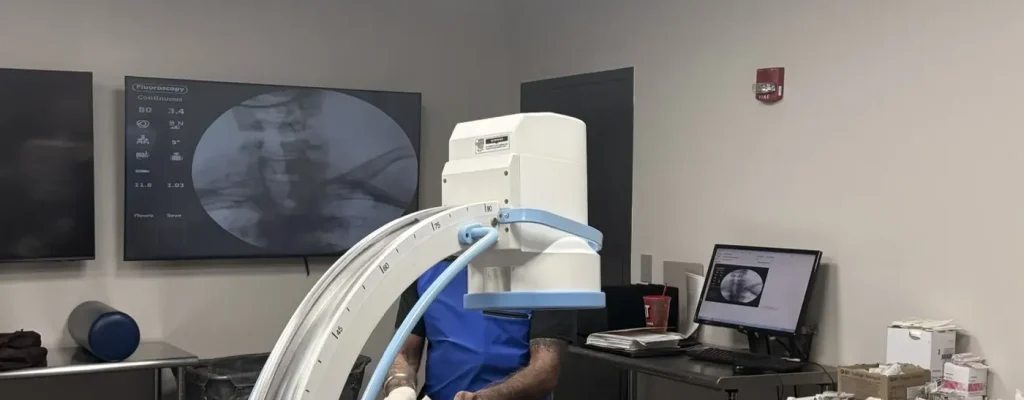
When IC/BPS becomes part of a wider pain loop, we consider pain-focused treatments. Depending on your symptoms, that can include nerve pain counseling. In some cases it can include image-guided procedures aimed at referred or nerve pain patterns.
We do not do random nerve blocks for IC/BPS “because it might help.” A procedure only makes sense if your picture points to a likely pain source and you can measure the response.
Frequently asked questions
What should an interstitial cystitis evaluation include?
In an interstitial cystitis bladder pain syndrome evaluation, we start with a history and physical exam that ties symptoms to bladder filling and emptying. Then we use urinalysis and urine culture to rule out active infection and other causes. If your story does not fit, we adjust the workup instead of forcing the label. See diagnostic nerve blocks for how this is evaluated.
Do I need a cystoscopy to get diagnosed with IC/BPS?
No. Many patients can be evaluated and managed using the symptom definition plus rule-out testing. This is especially true when urine tests are negative and the symptom timing fits. Cystoscopy (a camera look inside the bladder) can make sense in some cases, when symptoms are unusual or your clinician needs more detail. See counseling for chronic pain for how this is evaluated.
How long do symptoms usually last before an IC/BPS diagnosis happens?
Symptoms can last a long time before diagnosis. In data used to study IC/BPS patient groups, symptoms last about 14 years on average. That is why a structured interstitial cystitis bladder pain syndrome evaluation matters. It prevents years of uncertainty. See lifestyle medicine for how this is evaluated.
Why do some people with IC/BPS never receive a formal diagnosis?
One reason is that getting a formal diagnosis depends heavily on whether the evaluation meets the definition clinicians use. In real-world survey data, the strongest factor in getting treatment is having a formal IC/BPS diagnosis. So evaluation is not just medical paperwork. See anxiety, PTSD and chronic pain for how this is evaluated.
What treatments work best once interstitial cystitis is diagnosed?
The evidence supports layered care aimed at symptoms. It starts with education and a rule-out workup. Pelvic floor and pain-loop strategies are added when they play a part. Whether you also need procedures from interventional pain management depends on your overlapping chronic pain type, not on the IC/BPS label alone. See lumbar sympathetic nerve block for how this is evaluated.
What does interstitial cystitis feel like?
Interstitial cystitis feels like pain, pressure, burning or discomfort that builds as the bladder fills and eases after you empty it. It often comes with going often, urgency and getting up at night to urinate. To count as bladder pain syndrome, the pattern has to last 3 months or longer, with no other diagnosis that better explains it.
Can interstitial cystitis feel like a UTI?
Yes, and that is one reason it gets missed. The burning and urgency can feel like a urinary tract infection. So urinalysis and a urine culture come first to rule out active infection. If they are positive, the infection is treated first. If they keep coming back negative, it is time to stop assuming bacteria and look at the bladder pain pattern itself.
Can the pelvic floor cause bladder pain?
The pelvic floor can make bladder pain and urgency worse. Tight, tender pelvic floor muscles are one of several drivers that can sit alongside interstitial cystitis. Others are bladder wall irritation, faulty nerve signals and central sensitization. When the exam shows pelvic floor pain when pressed, pelvic floor physical therapy becomes part of the plan.
To discuss your own case, request an appointment through the appointment request form, call (314) 481-5000, or text (314) 886-5902. You can see the full range of pain treatments, read about the pain management doctors in St. Louis, or find both offices on the locations page.
Sources
- Berry SH, Elliott MN, Suttorp M, Bogart LM, Stoto MA, Eggers P, Nyberg L, Clemens JQ. “Prevalence of symptoms of bladder pain syndrome/interstitial cystitis among adult females in the United States.” The Journal of Urology, 2011;186(2):540–544. RAND population-based telephone survey; 12,752 completed questionnaires. doi:10.1016/j.juro.2011.03.132
Dr. Gurpreet Singh Padda, MD, MBA, MHP