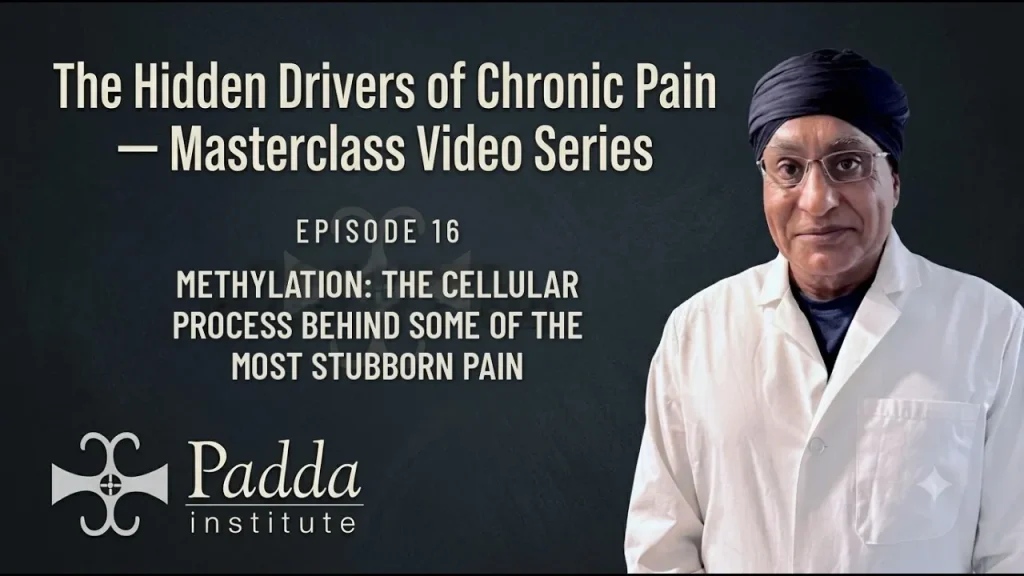
Methylation is the cell’s cleanup crew. It tags molecules with a methyl group to clear waste, build brain chemicals, and keep nerves healthy. Genes or a shortage of B vitamins can slow it down. Then waste and irritants such as homocysteine build up and make your nerves touchy. A standard workup never sees it.
A cleanup process runs billions of times a second inside your cells. It clears out waste and helps keep your nerves calm. When it falters, that waste builds up. The irritants left behind can make your nerves touchy and keep you in pain. This process is called methylation. It does not show up on a standard workup, and it may be central to your story. Here is what it is, how it can drive pain, and how to support it.
What is methylation?
Methylation is a process where your cells attach a small chemical tag, a methyl group, onto other molecules. It happens all the time and runs a huge range of jobs. It turns genes on and off. It builds brain chemicals. It keeps nerves healthy. And it clears waste out of the body. The whole thing runs on a cycle that depends on certain nutrients, including folate, B12, and B6. It also needs certain enzymes to work right. When the cycle runs smoothly, your cellular housekeeping is impeccable.
What causes poor methylation?
Two things can slow methylation. The first is genes. Many people carry common changes in the genes that run the cycle. Those changes can make their enzymes work less well. The second is food. If you are short on the B vitamins and helpers the cycle needs, it slows down no matter your genes. As shown elsewhere in this series, the modern diet and metabolic problems drain exactly these nutrients. So you can get a double hit: genes that lean toward slow methylation, plus a nutrient supply running on empty.
How can poor methylation cause nerve pain?
When methylation falls short, your body clears certain waste products less well. Those wastes and irritants pile up instead of leaving. One example often discussed is homocysteine. It can rise when methylation falters, and it has been associated with irritated nerves and blood vessels. The bigger idea is simple. A buildup of waste creates a chemical bath that irritates your nerves. Irritated nerves are sensitized nerves. They are jumpier, quicker to fire, and quicker to make pain.
What does the evidence show about methylation and pain?
This is a complex and still developing area, so it deserves careful framing. Some things are well established. Methylation is essential for clearing waste, making brain chemicals, and nerve health. High homocysteine, a marker of poor methylation, is associated with neurological and blood vessel problems. The skill is in spotting when slow methylation may be adding to one person’s pain, and then supporting it with care. It is a piece of the puzzle evaluated in context, not a standalone diagnosis.
How is methylation evaluated at the Padda Institute?
Maybe you feel oddly sensitive to medications, foods, or small things, and no one can explain why. Poor methylation may be part of it. Some people’s cells just need more support to keep up with the same workload. That is biochemistry, not a character flaw. Where the picture suggests it, the Padda Institute checks methylation status, including key markers. We support the cycle directly by making sure you get the right forms and amounts of the nutrients it needs. At the same time, we address the drain caused by diet and metabolic stress. As methylation improves, the irritants clear and your nerves calm down.
Frequently asked questions
What is methylation and why does it matter for pain?
Methylation is a constant process in your cells. It tags molecules to control genes, build brain chemicals, keep nerves healthy, and clear waste. When it falters, waste and irritants can pile up around your nerves and make them touchy. That can cause pain or make it worse.
Why do I seem so sensitive to medications and foods when tests look normal?
Poor methylation may be one reason. That is because some people's cells need more support to keep up with the same workload. It is a piece of the puzzle evaluated in context, not a standalone diagnosis, and this remains a developing area. Individual results vary.
For why normal labs can miss the B-vitamin and mineral shortfalls behind nerve pain, read Magnesium, Vitamin D, and B Vitamins: The Quiet Deficiencies That Drive Nerve Pain.
Should I start taking B vitamins like folate or B12 on my own?
The right forms and amounts depend on your own picture. A physician should guide them, since this is precise, personal work. Do not start, stop, or change any medication without consulting your physician.
What are the symptoms of poor methylation?
A common sign is feeling oddly sensitive to medications, foods, or small things when no one can explain why. Underneath, waste and irritants such as homocysteine build up instead of being cleared. They make your nerves touchy, so they fire more easily and cause pain. None of this shows on a standard workup. That is why it gets missed.
Is methylation good or bad for you?
Methylation is essential. Your cells run it all the time to control genes, build brain chemicals, keep nerves healthy, and clear waste. The problem is not methylation itself. It is methylation that runs too slowly. The cause can be common gene changes, a shortage of folate, B12, and B6, or both at once. When the cycle runs smoothly, your cellular housekeeping is impeccable.
How do you support methylation?
Support starts with knowing where you stand. Where the picture suggests it, the Padda Institute checks methylation status, including key markers. Then we supply the right forms and amounts of the nutrients the cycle needs. We also fix the drain caused by diet and metabolic stress. As methylation improves, the irritants clear and your nerves calm down.
Where are you located and how do I book?
Padda Institute Center for Interventional Pain Management, 4477 Woodson Rd, Suite 100, St. Louis, MO 63134. Book at painmd.tv/appointment/ or call (314) 481-5000.
Key takeaways
- Methylation is a cell cleanup system that also helps keep nerves calm.
- It is well established for nerve health. Its role in a given pain case is checked one person at a time.
- Genes plus low nutrients can slow it, letting nerve irritants build up.
- Next step: a personal check of methylation status and nutrient support at the Padda Institute.
This article is educational and is not a substitute for evaluation, diagnosis, or treatment by a physician. Individual results vary. Do not start, stop, or change any medication without consulting your physician.
Find the source of your pain — not just the signal
Padda Institute Center for Interventional Pain Management builds a customized, root-cause plan for each patient. Interventional care and metabolic medicine, under one roof in St. Louis.
Or call or text us — 4477 Woodson Rd, Suite 100, St. Louis, MO 63134.
Msg & data rates may apply. Reply STOP to opt out, HELP for help. Text is not a secure channel — please don’t send medical or personal health information by text, and don’t use text for emergencies.
Medically reviewed by Dr. Gurpreet Singh Padda, MD, MBA, MHP — Board Certified in Anesthesiology, Pain Medicine, Interventional Pain Management, Addiction Medicine, and Obesity Medicine. Last reviewed July 2026.
Dr. Gurpreet Singh Padda, MD, MBA, MHP


