Mon–Fri: 8 AM – 5 PM
Same-Day & Emergency Visits
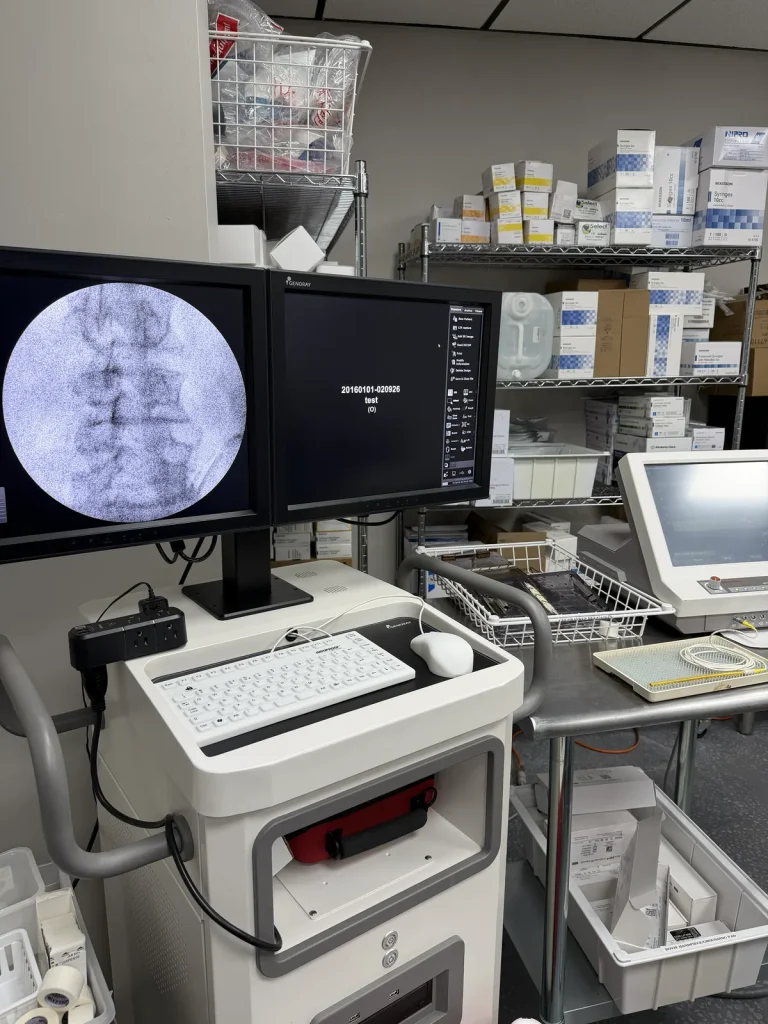
Fluoroscopic image of the lumbar spine during a guided sympathetic chain injection at Padda Institute, St. Louis

Cancer Pain Management in St. Louis

Interventional options that interrupt the pain signal directly, reducing the medication burden.

When medication alone is not enough

Pain from cancer and from its treatment frequently resists oral medication at doses a person can tolerate. The dose required for relief brings sedation, confusion, constipation and nausea, and patients are left choosing between pain and being present.

That trade-off is not always necessary. Where the pain travels along an identifiable nerve pathway, that pathway can often be interrupted directly. The effect is to reduce the medication needed rather than to replace medical oncology or palliative care — we work alongside both, not instead of them.

Interventional pain management is under-used in oncology, largely because patients are not referred rather than because it does not work.

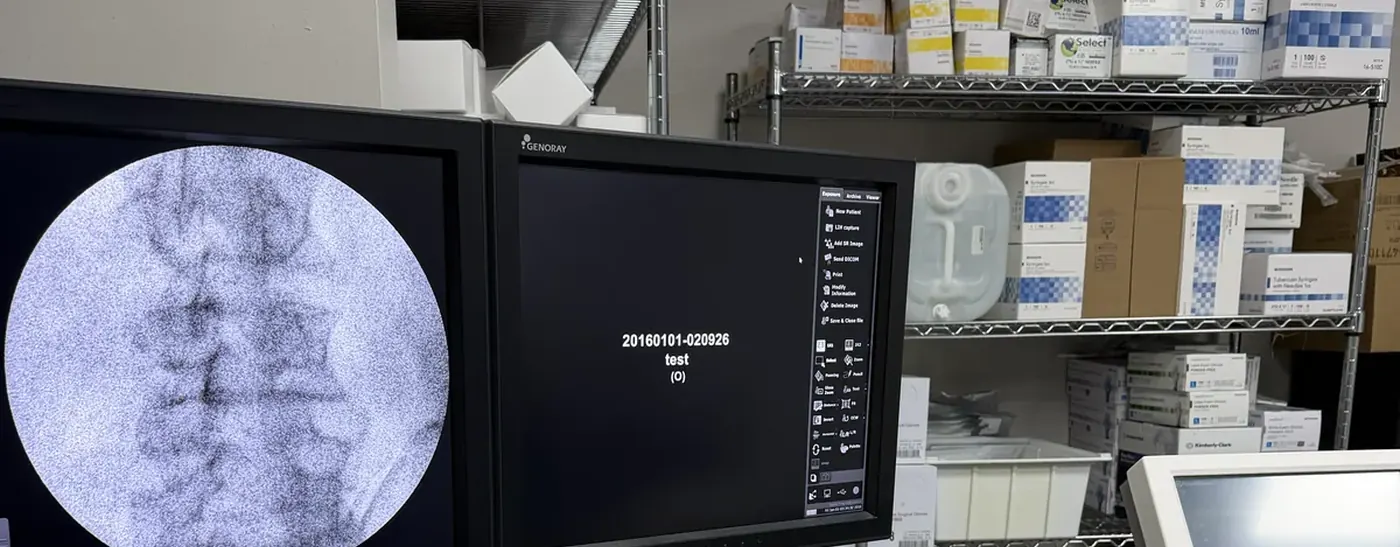
Fluoroscopy-guided injection being performed by Dr. Padda at Padda Institute, St. Louis

Cancer pain has several mechanisms

Cancer pain is rarely one problem. Visceral, bone, neuropathic and mechanical pain frequently coexist in the same patient, and each responds to something different. That is why the assessment decides the treatment rather than a standard menu, and why more than one approach is usually needed.

Celiac plexus block interrupts the visceral pain pathway carrying signals from the pancreas and upper abdominal organs. Its principal use is visceral abdominal pain, most commonly chronic pancreatitis. In pancreatic malignancy it has a well-established role and can substantially reduce opioid requirement.

Other sympathetic blocks target pain from pelvic and lower abdominal structures by the same principle — interrupting the visceral pathway rather than blunting perception centrally.

Vertebral augmentation — vertebroplasty and kyphoplasty — treats painful vertebral compression fractures. The great majority of compression fractures are osteoporotic; fractures caused by metastatic disease, or by bone weakened during treatment, are the less common case. The indication is the same either way: an active fracture where the pain is mechanical and load-related.

Peripheral nerve blocks address pain confined to a specific nerve distribution, including some post-surgical and post-radiation pain.

Ketamine can help where central sensitization has developed and opioid escalation has stopped producing benefit.

Treatment-related pain

Not all cancer pain comes from the tumor. Chemotherapy-induced peripheral neuropathy is common, often persists after treatment ends, and is frequently accepted as permanent when it has never actually been evaluated.

We assess it as we would any neuropathy — with electrodiagnostic testing to establish what is affected and how severely, then treatment directed at the nerve and at the environment around it, including photobiomodulation where perfusion and inflammation are limiting recovery.

Post-surgical and post-radiation pain syndromes are similarly treatable and similarly under-referred.

How we work with your oncology team

We do not take over cancer care. Your oncologist directs treatment of the disease; we address the pain, and we communicate rather than operate in parallel.

Timing matters. Interventional options are often considered only at the very end, when a patient is least able to tolerate a procedure and the window for meaningful benefit has narrowed. A celiac plexus block performed early in pancreatic cancer does considerably more good than the same block performed in the final weeks.

If you or your physician are unsure whether an interventional option applies, that question is worth asking sooner rather than later.

Reduce The Medication Burden

Interventional options can interrupt the pain signal directly. Call to discuss whether one applies.

What Our Patients Say

Individual results vary. These are unpaid patient testimonials shared with permission and are not a guarantee of outcome. See all patient stories.

Cancer Pain FAQs

No. We treat the pain and communicate with them. Your oncologist continues to direct treatment of the disease itself.

Rarely, though earlier is considerably better. Interventional options work best while a patient is well enough to tolerate a procedure and there is time for the benefit to matter.

Often, and that is usually the aim. Where a block substantially interrupts the pain pathway, medication can frequently be reduced, which improves alertness, bowel function and quality of life.

It should be evaluated rather than assumed permanent. We test to establish what is affected and how severely, then treat the nerve and the environment around it. Some of it is modifiable.

Most are performed under local anesthetic with sedation and take well under an hour. Tolerability is part of the decision, and we take current condition into account rather than applying a standard protocol.

Send A Message

For questions and concerns, please fill out the form below.

Pain Conditions We Treat

At Padda Institute, our pain management specialists provide the guidance and treatments tailored to your needs. We diagnose and evaluate to determine your best treatment plan, so that you can experience chronic pain relief like never before.

Celiac Plexus Block

A celiac plexus block places local anesthetic, sometimes with a neurolytic agent, around the celiac plexus under image guidance to interrupt pain signals from the pancreas, liver and…

Pancreatitis Pain Treatment

Pancreatitis is the inflammation of the pancreas. The pancreas is a large gland behind the stomach and near the first part of the small..

Ketamine for RSD, CRPS and Refractory Nerve Pain

Ketamine blocks the NMDA receptor, the reason it is considered for RSD, CRPS and refractory nerve pain after standard care falls short. We offer intravenous, sublingual and topical…