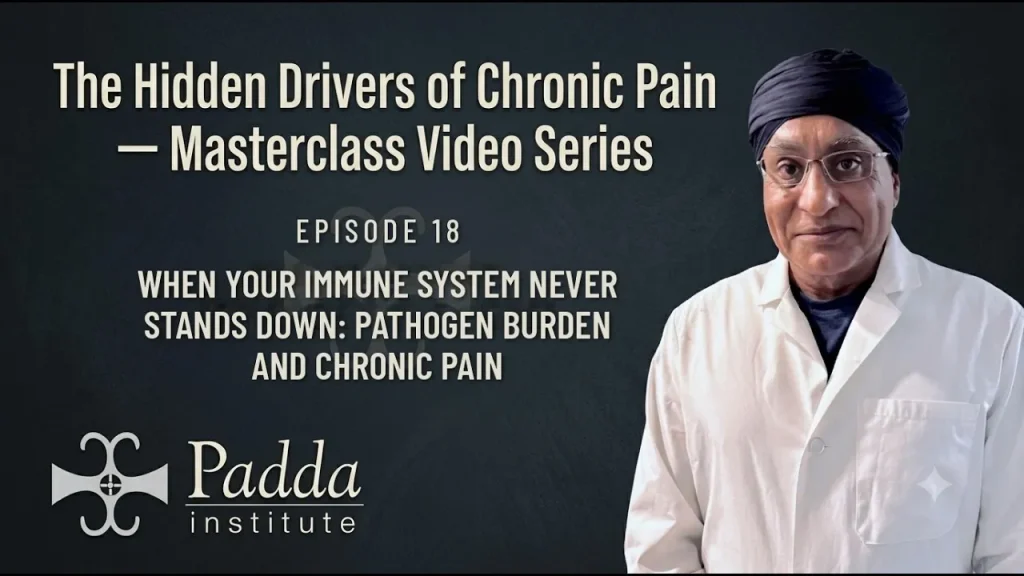
Chronic pathogen burden, the load of old infections that never fully cleared, keeps injuries from healing. Your immune system has a limited budget. When it is tied up for good guarding those hidden germs, little is left to repair hurt tissue. The nonstop alarm signals also lower your pain threshold.
Your immune system has a limited budget of energy and supplies. If it is stuck guarding old, sleeping infections that never fully cleared, it has little left for the one job you need most: fixing your hurt tissue. This hidden drain may be why some injuries never heal. This article explains chronic pathogen burden, how a quiet infection can keep you in pain, and what can be done about it.
How long can an infection stay in your body?
This is not about a sudden illness that makes you plainly sick. It is about low-grade infection that hangs on. These are latent pathogens (germs that hide and stay quiet), and they keep your immune system on duty all the time. Many common germs never fully leave your body once you have been exposed. Some viruses go to sleep and hide inside your cells. Under the right conditions, they can wake back up. Chronic stress, a broken metabolism, or a worn-down immune system can all do it. Then your immune system stays switched on, standing guard with no end in sight.
How can a hidden infection keep an injury from healing?
Here is why this matters for pain. Your immune system does much of the work of tissue repair. Healing an injury is an active job, and it costs a lot of fuel. But your immune system has only so much to spend. If it is busy keeping hidden germs in check, that fuel is pulled away from repair. So a muscle or joint injury that should heal cleanly hangs on and turns chronic. That is because the work crew that should be rebuilding it is stuck elsewhere on guard duty.
How does a hidden infection make pain worse?
Then there is inflammation, which by now you can predict. An immune system that never rests means nonstop inflammatory signaling. As this series has shown, chronic inflammation puts your nerves on edge. It lowers your pain threshold all over your body. So chronic pathogen burden hits you twice. It steals the fuel you need to heal, and it keeps the inflammation going that turns up pain. That is a double drain.
An honest look at the evidence
This is an area of active research, and it is complex. So it deserves a careful look. Here is what is well known. Many germs go into hiding and can wake up under stress or a weak immune system. And an immune system that stays switched on makes inflammation that affects pain. This matters more now that post-viral syndromes are widely seen. The smart move is to treat it as a potential contributor in the right case. It is one part of a full picture, not the whole story.
How do we address pathogen burden at the Padda Institute?
Maybe you have an injury or pain that will not heal no matter what you try. Maybe everyone seems baffled. There may be a reason hiding in your immune system. At the Padda Institute, we look at your whole immune health. We weigh chronic pathogen burden as a possible cause. We work to support and rebalance your immune system. Just as important, we work on the root problems that let hidden germs stay active. Those are the broken metabolism, chronic stress, missing nutrients, and inflammation covered in this series. Paired with our regenerative therapies, the goal is to cut the drain and help the rebuild.
Frequently asked questions
How could an old infection be keeping me in pain?
Many germs, especially some viruses, go to sleep in your cells. They can wake up under stress, a broken metabolism, or a worn-down immune system. That keeps your immune system on duty all the time. It pulls fuel away from healing, and it keeps up the inflammation that turns up pain.
Why won't my injury heal even though I am doing everything right?
Healing is costly work for your immune system. If it is busy guarding hidden germs, that fuel is pulled away from repair. This is one possible cause we weigh as part of a full picture. It is not a sign of weak effort or willpower. Individual results vary.
Should I take antivirals, antibiotics, or immune supplements to clear a hidden infection?
Any such treatment must be evaluated by a physician within your full clinical context, since this is an area of active research. Do not start, stop, or change any medication without consulting your physician.
What is pathogen burden?
Pathogen burden is the total load of old infections that never fully cleared from your body. Many common germs, some viruses most of all, go to sleep and hide in your cells instead of leaving. They keep your immune system on quiet, nonstop guard duty. That duty drains the fuel your body needs for repair. It keeps inflammation running, which lowers your pain threshold.
What makes a dormant virus reactivate?
Hidden germs can wake back up under the right conditions: chronic stress, a broken metabolism or a worn-down immune system. Each time they wake, your immune system stays switched on. Its limited budget gets pulled away from healing hurt tissue. That is why we work on those upstream conditions, not just the pain, when an injury will not heal.
How do you reduce pathogen burden?
At the Padda Institute, we look at your whole immune health. We work to support and rebalance your immune system. We also fix the root problems that let hidden germs stay active: a broken metabolism, chronic stress, missing nutrients and inflammation. Combined with our regenerative therapies, the aim is to reduce the drain and support the rebuild. Any medication decision belongs with your physician.
Where are you located and how do I book?
Padda Institute Center for Interventional Pain Management, 4477 Woodson Rd, Suite 100, St. Louis, MO 63134. Book at painmd.tv/appointment/ or call (314) 481-5000.
Key takeaways
- Hidden germs can wake up under stress and keep the immune system on duty all the time.
- The biology of germs hiding and waking up is well known. Its role in your own pain differs from person to person.
- A tied-up immune system steals healing fuel and keeps up inflammation that turns up pain.
- Next step: a full immune and metabolic exam plus regenerative therapy at the Padda Institute.
This article is educational and is not a substitute for evaluation, diagnosis, or treatment by a physician. Individual results vary. Do not start, stop, or change any medication without consulting your physician.
Find the source of your pain — not just the signal
Padda Institute Center for Interventional Pain Management builds a customized, root-cause plan for each patient. Interventional care and metabolic medicine, under one roof in St. Louis.
Or call or text us — 4477 Woodson Rd, Suite 100, St. Louis, MO 63134.
Msg & data rates may apply. Reply STOP to opt out, HELP for help. Text is not a secure channel — please don’t send medical or personal health information by text, and don’t use text for emergencies.
Medically reviewed by Dr. Gurpreet Singh Padda, MD, MBA, MHP — Board Certified in Anesthesiology, Pain Medicine, Interventional Pain Management, Addiction Medicine, and Obesity Medicine. Last reviewed July 2026.
Dr. Gurpreet Singh Padda, MD, MBA, MHP