Summary: One of the first studies of its kind shows that a high dose of sodium ascorbate, a salt related to vitamin C, can help protect the brain in brain sepsis. It can help reduce inflammation, ischemia (poor blood flow) and hypoxia (low oxygen). In the study, researchers found that this therapy may rapidly help reverse brain sepsis.
Science has long tested other ways to fight severe infections. These differ from the usual approach, which leans heavily on giving several antibiotics at once. A new study shows that one vitamin C salt can quickly reverse brain sepsis and may save lives.
The usual approach of giving more and more antibiotics has many problems. For example, many infections resist antibiotics. Infections that resist many antibiotics are rising. Antibiotics also do little against viral infections. And many people may have infections caused by more than one germ.
Some infections, like brain infections, are very hard to treat. Even when the germ is sensitive to an antibiotic, most antibiotics fail to cross the blood-brain barrier in large enough amounts. So the antibiotic level stays low in the brain. That is why brain sepsis is so hard to manage.
But managing sepsis takes more than killing the infection. It is well known that much of the damage comes from the body’s over-the-top inflammatory response to the infection. That response causes septic shock.
Schedule An Appointment With Us Today
So the aim of any treatment is not just to wipe out the infection. It is also to prevent septic shock. For example, one approach uses corticosteroids in very sick patients. But corticosteroids also lower immunity. They raise the risk of second or opportunistic infections. So their use is a double-edged sword.
Interventional pain management techniques are important in treating the severe inflammation and tissue damage that come with brain sepsis. Now the new study shows that sodium ascorbate, a salt of vitamin C, may be quite good at calming this over-the-top inflammatory response. Researchers say they were amazed by how well and how fast it worked in lab tests, without any side effects. So it could prevent brain ischemia, hypoxia, and brain cell death. The results in the treated group were astonishing.
In the study, researchers caused brain sepsis in an animal model with an E. coli infusion. Once the animal developed brain sepsis, they used mega doses of sodium ascorbate to revive it. These mega doses of sodium ascorbate significantly reduced inflammation markers, beyond what researchers expected. As a result, the animals recovered.
This is not the first study of its kind. Mega doses of vitamin C have long been the focus of many experiments. For example, early studies show that vitamin C mega doses may help fight certain types of cancer.
Vitamin C taken by mouth is known to reduce inflammation, boost immunity and fight oxidative stress (cell damage from unstable oxygen molecules). But when taken by mouth, not much vitamin C is absorbed. The body does store vitamin C. But those stores run out quickly during severe infections.
So, in these cases, a vitamin C infusion may do wonders. It can restore vitamin C levels right away. And its mega doses may bring some unique health benefits. It may calm inflammation in a way not seen with regular doses.
The study’s investigators say they already knew that high doses of vitamin C help in sepsis and protect the liver and kidneys. But this is the first study to show it can also help brain sepsis patients.
Source:
May, C. N., Ow, C. P., Pustovit, R. V., Lane, D. J., Jufar, A. H., Trask-Marino, A., Peiris, R. M., Gunn, A., Booth, L. C., Plummer, M. P., Bellomo, R., & Lankadeva, Y. R. (2024). Reversal of cerebral ischemia and hypoxia and of sickness behavior by megadose sodium ascorbate in ovine Gram-negative sepsis. British Journal of Anesthesia, 133(2), 316–325. https://doi.org/10.1016/j.bja.2024.04.058
Summary: A new study found that many primary care physicians are reluctant to take patients who use medical opioids or cannabis for their chronic pain. This fits earlier findings. Without good access to medical care, many chronic pain patients are forced to buy opioids or medical cannabis on the black market.
Study after study shows that doctors hesitate to take patients who use opioids or cannabis for chronic pain. Here we mean medical opioids or cannabis. This trend has gone on for the last few years. Earlier studies show it, and so does the latest study from the University of Michigan.
Chronic pain patients on these medicines have a hard time finding a primary care doctor. In the new study, lead author Mark Bicket, MD, surveyed 1000 US doctors from many states. The findings were alarming in every way.
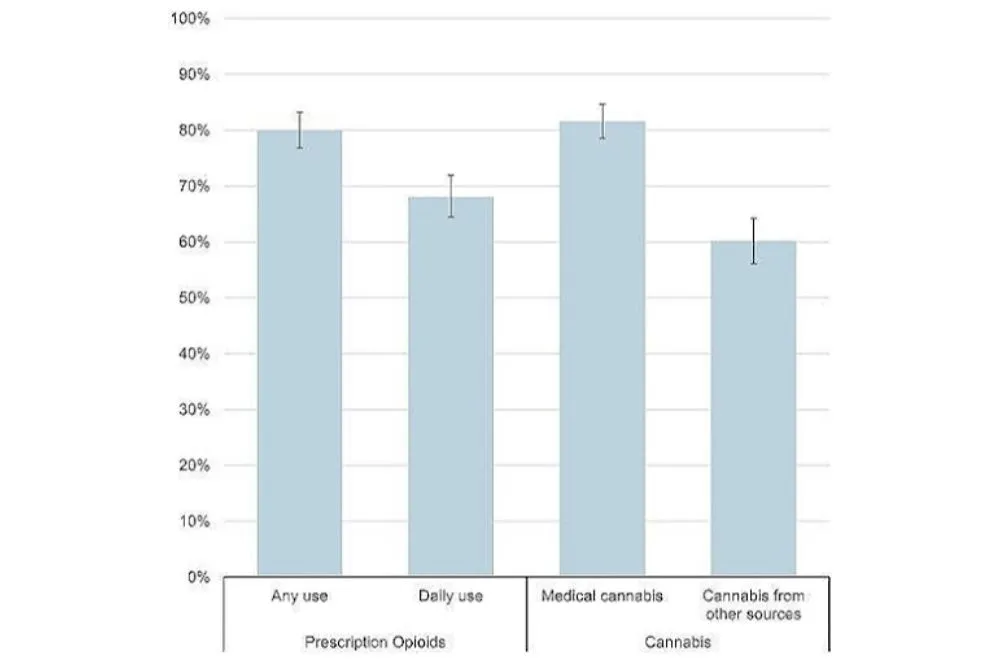
In the end, the study included survey answers from 852 doctors. About one-third of primary care doctors would not accept patients who use opioids daily for chronic pain. And one-fifth would not accept patients who used prescription opioids for pain now and then.
Note that the study was only done in states with medical cannabis programs. You might expect doctors there to be more willing to accept these patients, since they know more about it. So things might be even worse in other states.
Things were slightly better with medical cannabis. 18% of doctors said they would not take patients who had used medical cannabis. Worse, 40% said they would not accept patients if the source of cannabis was unclear or if they bought it on the black market.
There are a few reasons this raises concern. Health experts note there are many legacy patients. They have taken opioids for chronic pain for years. Other medicines are less likely to ease their pain. Many of them are happy with their pain control, so there is no need to change their treatment. But finding a new doctor may be hard for them.
Also note that while opioid prescribing is falling, that is not true for medical cannabis. In fact, medical cannabis is growing more popular.
Maybe the biggest problem with doctors refusing these patients is that many will be forced to buy these drugs on the black market. That puts them at needless risk. It also raises the risk of addiction. These patients need access to high-quality medical opioids or cannabis.
This is not the first study to show doctors’ reluctance. Earlier studies found the same thing.
In another study, University of Michigan researchers found that barely 40% of primary care doctors are willing to treat patients who use opioids. In one survey, they called doctors’ offices for an appointment. They said the patient was taking the opioid Percocet. To the researchers’ surprise, more than 50% refused an appointment.
All this means many chronic pain patients do not get enough care. This reluctance seems to push many of them down the wrong path. Many will buy these drugs on the black market. That can raise the risk of addiction. It can also harm health, since many black-market drugs carry high levels of contaminants. Spreading the word about interventional pain management through a chronic pain specialist can lower the risk of cannabis and opioid abuse.
Frequently asked questions
Do doctors refuse new patients who take opioids for chronic pain?
Many do. In a University of Michigan survey of 852 primary care doctors, about one-third said they would not accept a new patient who takes opioids every day for chronic pain. One-fifth would turn away someone who uses prescription opioids only now and then. The survey covered only states with medical cannabis programs, where doctors may be more open. So access in other states could be worse.
Will a primary care doctor accept a patient who uses medical cannabis?
Most will, but not all. In the same survey, 18% of primary care doctors said they would not take a patient who had used medical cannabis. That number jumped to 40% when the source of the cannabis was unclear or it came from the black market. Opioid prescribing is falling while medical cannabis use keeps growing. So more patients are running into this wall.
How often do doctors’ offices turn away patients who take opioids?
More often than not. In a separate University of Michigan study, researchers called primary care offices for an appointment. They said the patient was taking the opioid Percocet. More than half of the offices refused. Only about 40% of primary care doctors were willing to treat patients who use opioids. Earlier studies found the same pattern. So this is a trend that has run for years, not a one-time result.
What happens to chronic pain patients who cannot find a doctor?
Many end up buying opioids or cannabis on the black market. That puts them at needless risk. Drugs sold there often carry high levels of contaminants. And buying outside medical care raises the risk of addiction. Legacy patients, who have taken opioids for years, are hit hardest. Other medicines are less likely to ease their pain, and many are already happy with their pain control.
What should I do if my doctor refuses to give me pain medication?
Do not turn to the street. Instead, see a chronic pain specialist. Interventional pain management, from a specialist who treats chronic pain every day, lowers the risk of cannabis and opioid misuse. If you are a long-term opioid patient whose pain is well controlled, changing your treatment is not always needed. So bring your full history to the visit.
Source:
Bicket, M. C., Stone, E. M., Tormohlen, K., Pierre, R., & McGinty, E. E. (2024). Access to care for patients with chronic pain receiving prescription opioids, cannabis, or other treatments. Health Affairs Scholar, 2(6), qxae086. https://doi.org/10.1093/haschl/qxae086