Heavy metals such as mercury and cadmium, and many common pesticides, plug the electron transport chain, the assembly line where your mitochondria make energy. ATP (the cell’s energy currency) drops. At the same time, reactive oxygen species surge. That double blow spikes pain, even in patients doing everything right with diet and exercise. That toxin is the saboteur conventional pain care misses.
Some of the most frustrated patients do everything right — the right diet, the right exercise, the right discipline — and they are still in pain. Sometimes the missing piece is something in their surroundings. It is directly poisoning the energy machinery of their cells: a toxin that jams the works, drops their energy, and spikes their pain. This article is part of our Hidden Drivers of Chronic Pain series. It explains this hidden saboteur and why standard pain care so often misses it.
Why are mitochondria so vulnerable to toxins?
Here is a striking fact: your mitochondria are what is left of ancient bacteria. Our cells took them in billions of years ago. They still carry their own DNA and keep many bacteria-like features. That history has a cost — mitochondria are uniquely open to many of the same toxins that target bacteria. So what poisons bacteria can also poison your mitochondria. That is part of why some toxins in the environment hit your cell energy so directly and so hard. They are striking a target that never fully stopped being bacterial.
How do toxins damage your mitochondria?
Certain heavy metals like mercury and cadmium, and many common pesticides, act as direct electron transport chain inhibitors. The electron transport chain is the main assembly line of energy production. Electrons pass down a series of steps to make ATP. These toxins physically plug that machinery and block a step in the chain. Plug the assembly line, and two things happen at once. ATP production drops because the line is jammed. And reactive oxygen species (ROS) surge because the backed-up electrons leak out. They form damaging molecules that signal pain. One class of toxin delivers a double blow — an instant energy crisis plus an instant oxidative and inflammatory surge.
Why this matters clinically
Picture the patient who has truly cleaned up their diet. They exercise. They have done the metabolic work. And they still struggle. For some of these patients, this is the missing piece. They have fixed everything they can control. But they live with an exposure — in their home, their water, or their workplace. It is poisoning their metabolic machinery faster than they can repair it. No amount of perfect diet and exercise can fully overcome a toxin that is plugging the energy assembly line. Until that exposure is found and dealt with, they are trying to fill a bucket with a hole punched in the bottom.
Is it my fault if I'm still in pain after doing everything right?
The science is well established. Heavy metals like mercury and cadmium are well documented to harm mitochondria. That includes directly blocking the electron transport chain. Many pesticides are known mitochondrial toxins too — some were designed to disrupt energy production in pests. So maybe you have done everything right, you are still in pain, and you have started to blame yourself. Hear this: if a toxin is poisoning your cell machinery, no amount of personal effort was ever going to be enough on its own. That is not a failure of discipline or willpower. It is an exposure no one dealt with, because no one thought to look for it.
How is toxic exposure treated at the Padda Institute?
Some patients do everything right and still struggle. For them, we look past diet and exercise to the environmental exposome (everything you are exposed to in your surroundings). We ask whether a heavy metal or toxin is poisoning the metabolic machinery itself. Standard pain care almost never checks for this. When the picture calls for it, the clinic checks for the toxic burden that matters. We help find and remove ongoing sources of exposure. We support the body’s ability to handle and lower that burden safely. At the same time, we shore up the antioxidant defenses and nutrients mitochondria need to recover. As the toxin is removed, the electron transport chain can unplug, ATP production can recover, and the ROS surge can settle. Individual results vary.
Frequently asked questions
How can toxins cause chronic pain?
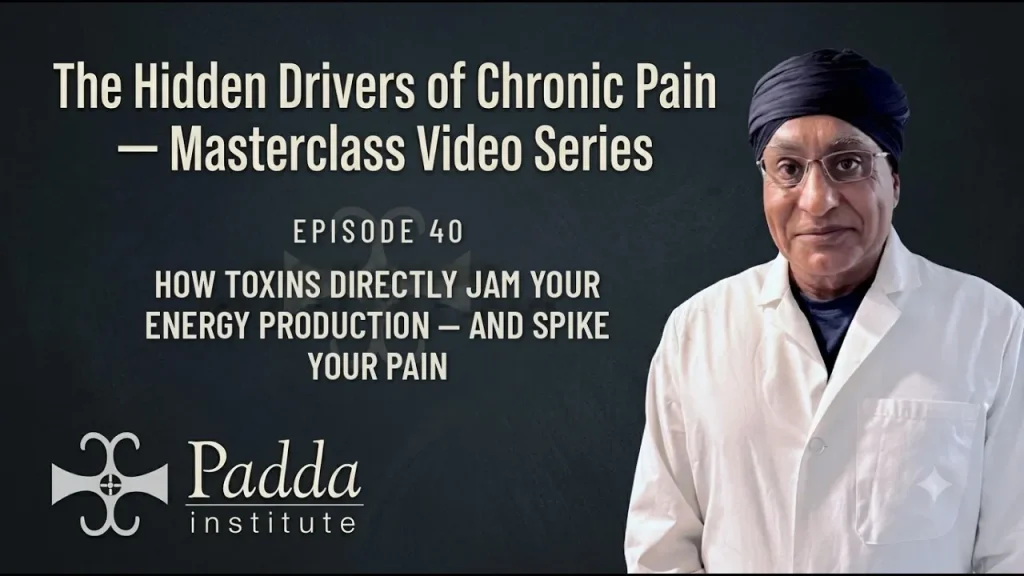
As this video explains, certain heavy metals like mercury and cadmium and many pesticides act as direct electron transport chain inhibitors. They physically plug the core machinery of energy production. That drops ATP energy and makes reactive oxygen species surge. These form damaging molecules that signal pain. It is a double blow: an energy crisis plus oxidative and inflammatory stress.
Why am I still in pain even though I eat well and exercise?
For some patients, the missing piece is an ongoing exposure in the home, water, or workplace. It poisons the cell's metabolic machinery faster than the body can repair it. No amount of perfect diet and exercise can fully overcome a toxin jamming the energy assembly line. Not until that exposure is found and dealt with. Individual results vary.
Should I start a detox product or supplement to remove toxins?
The approach here starts with a professional check for the toxic burden that matters. Then we find and remove ongoing sources of exposure. We support the body's defenses safely, rather than you starting products on your own. Do not start, stop, or change any medication without consulting your physician. Individual results vary.
What are mitochondrial toxins?
They are substances that poison the energy machinery inside your cells. Your mitochondria come from ancient bacteria that our cells took in billions of years ago. They still carry their own DNA and bacteria-like features. That history leaves them uniquely open to many of the same toxins that target bacteria. So a toxin can hit your cell energy directly.
What are some examples of mitochondrial toxins?
Heavy metals such as mercury and cadmium, and many common pesticides, act as direct electron transport chain inhibitors. Some pesticides were designed to disrupt energy production in pests. Each one plugs a step in the chain. So ATP production drops and reactive oxygen species surge at the same time. You get an energy crisis plus an oxidative surge that signals pain.
Where could a toxic exposure be coming from?
Some patients do the diet and exercise work and still struggle. For them, the exposure can sit in the home, the water or the workplace. It poisons the metabolic machinery faster than the body can repair it. When the picture calls for it, the clinic checks for toxic burden. We help find and remove the ongoing source, because recovery stalls until that exposure is dealt with.
Where are you located and how do I book?
Padda Institute Center for Interventional Pain Management, 4477 Woodson Rd, Suite 100, St. Louis, MO 63134. Book at painmd.tv/appointment/ or call (314) 481-5000.
Key takeaways
- Mitochondria come from ancient bacteria, so toxins that target bacteria can poison them too.
- Mercury, cadmium, and many pesticides directly block the electron transport chain. This is well documented.
- Jamming the chain drops ATP and surges ROS. That is an energy crisis plus an oxidative surge that spikes pain.
- An overlooked exposure can block recovery. Checking the exposome makes the difference — painmd.tv/appointment/.
This article is educational and is not a substitute for evaluation, diagnosis, or treatment by a physician. Individual results vary. Do not start, stop, or change any medication without consulting your physician.
Find the source of your pain — not just the signal
Padda Institute Center for Interventional Pain Management builds a customized, root-cause plan for each patient. Interventional care and metabolic medicine, under one roof in St. Louis.
Or call or text us — 4477 Woodson Rd, Suite 100, St. Louis, MO 63134.
Msg & data rates may apply. Reply STOP to opt out, HELP for help. Text is not a secure channel — please don’t send medical or personal health information by text, and don’t use text for emergencies.
Medically reviewed by Dr. Gurpreet Singh Padda, MD, MBA, MHP — Board Certified in Anesthesiology, Pain Medicine, Interventional Pain Management, Addiction Medicine, and Obesity Medicine. Last reviewed July 2026.
Dr. Gurpreet Singh Padda, MD, MBA, MHP