Chronic pain can outlast any injury because overloaded mitochondria leak reactive oxygen species (ROS). ROS switches on inflammation inside your pain nerves and glial cells. That inflammation strains the mitochondria more, so they leak more ROS. The loop keeps your nervous system set to hurt, with no new damage on the scan.
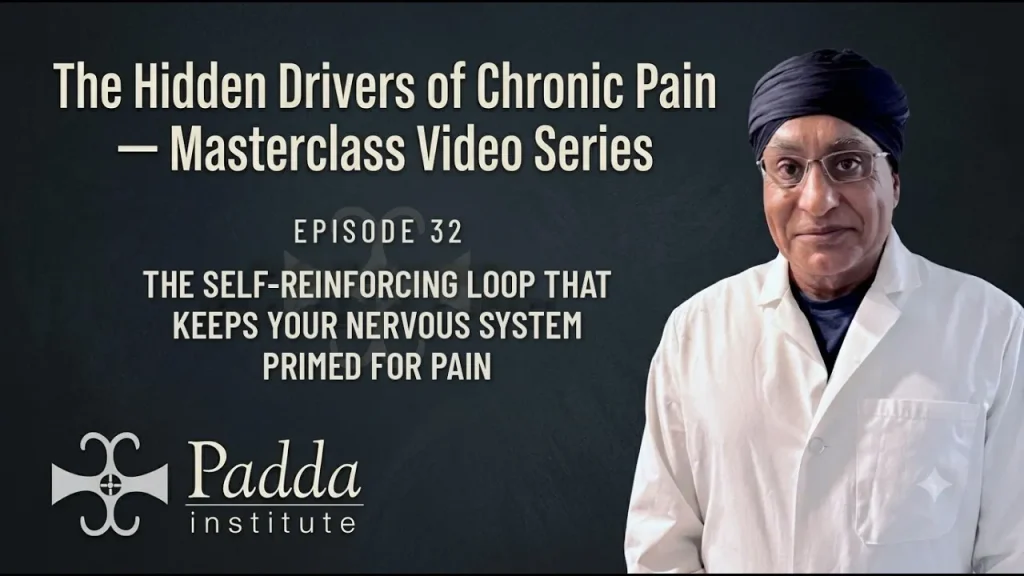
If your pain has persisted or even worsened with no new injury to explain it, you are not imagining it. In this episode of our mitochondria series, Dr. Padda explains how overloaded cell power plants leak a signal called reactive oxygen species. That signal tells your nervous system to inflame and to hurt. It can keep your pain system primed with no end date. This article walks through that loop and how to break it.
What causes oxidative stress in your cells?
Your mitochondria make energy by passing electrons down a line of steps called the electron transport chain. When all is in balance, it runs clean. But too much fuel at once backs up the chain, like cars piling up at a toll booth. High glucose, insulin resistance or too much fat can all do it. The system jams. A jammed chain leaks electrons. They hit oxygen and form unstable molecules called reactive oxygen species, or ROS. We tend to picture ROS as plain damage, like rust or wear and tear. Dr. Padda points to a deeper truth. ROS is also a messenger. And one of the messages it sends is inflammation.
How does oxidative stress cause chronic pain?
ROS can switch on strong inflammation machinery inside your cells, including a complex called the NLRP3 inflammasome. This happens inside your nociceptors—the pain-sensing nerves—and inside glial cells, the support cells of your nervous system that act like immune cells. When that machinery turns on, it sends out signals that set your nerves to overreact to pain. Then a loop forms. ROS sparks inflammation. Inflammation strains the mitochondria more. The damaged mitochondria leak even more ROS, and around it goes. This loop feeds itself. It is a big part of why chronic pain so often keeps itself going long after the first injury has healed. As Dr. Padda puts it, the loop has become the disease.
What a search for new damage can miss
When pain goes on with no fresh injury on the scan, it can leave patients and doctors baffled. But no new injury was never proof that nothing is wrong. It is a clue. A loop of cell stress and inflammation can keep your pain system lit up all on its own. There is no new tissue damage to point to. Chasing an injury that is not there can miss the real driver. The good news: a loop, unlike lasting damage, can be broken.
How we work to break the loop at the Padda Institute
Dr. Padda’s approach hits the loop at several points at once. We work to cut the metabolic overload—the high glucose, insulin resistance and excess fat—that jams the electron transport chain. That overload is what starts the ROS leak. We aim to build up your antioxidant defenses, so the ROS that does form is defused before it can signal. And we work to lower the body-wide inflammation that feeds the cycle from the other side. This is a whole-person approach to breaking a loop that feeds itself, not a single quick fix. Individual results vary.
Frequently asked questions
Why does my chronic pain persist when there’s no new injury?
Because a loop of cell stress and inflammation can drive pain, not fresh tissue damage. Overloaded mitochondria leak reactive oxygen species. These switch on inflammation machinery in your pain nerves and glial cells and keep the nervous system primed. A loop like this can go on long after the first injury has healed. Individual results vary.
What are reactive oxygen species (ROS)?
Reactive oxygen species are unstable molecules. They form when the mitochondria’s electron transport chain backs up and leaks electrons. Besides causing oxidative damage, ROS also works as a messenger. It can turn on inflammation inside pain nerves and glial cells. In chronic pain, that message helps keep the nervous system on edge.
For how toxins jam the electron transport chain and drive this electron leak, read How Toxins Directly Jam Your Energy Production and Spike Your Pain.
Can antioxidant supplements fix this loop on their own?
Nothing here says any single supplement breaks the loop by itself. The approach targets metabolic overload, antioxidant defenses and body-wide inflammation together. Antioxidant support is one part of a bigger plan, not a cure on its own. Do not start, stop, or change any medication or supplement without consulting your physician. Individual results vary.
How are oxidative stress and inflammation connected?
They feed each other. Overloaded mitochondria leak reactive oxygen species (ROS). ROS switches on inflammation machinery such as the NLRP3 inflammasome inside pain nerves and glial cells. That inflammation strains the mitochondria more, so they leak even more ROS. Dr. Padda calls this loop a big part of why chronic pain so often keeps itself going.
How do you prevent oxidative stress?
Start where the ROS leak begins. Dr. Padda’s approach does three things. It cuts the overload of high glucose, insulin resistance and excess fat that jams the electron transport chain. It builds up antioxidant defenses, so the ROS that does form is defused before it can signal. And it lowers the body-wide inflammation that feeds the cycle. It is a whole-person plan, not a single quick fix. Individual results vary.
Where are you located and how do I book?
Padda Institute Center for Interventional Pain Management, 4477 Woodson Rd, Suite 100, St. Louis, MO 63134. Book at painmd.tv/appointment/ or call (314) 481-5000.
Key takeaways
- Mechanism: jammed mitochondria leak ROS, which signals inflammation and primes pain nerves.
- Evidence status: ROS as a messenger, and the NLRP3 and glial roles in chronic pain, are described as well established.
- Why timing matters: the ROS-inflammation loop feeds itself and can keep pain lit up with no new injury.
- Next step: the goal is to break the loop at several points—book at painmd.tv/appointment/.
This article is educational and is not a substitute for evaluation, diagnosis, or treatment by a physician. Individual results vary. Do not start, stop, or change any medication without consulting your physician.
Find the source of your pain — not just the signal
Padda Institute Center for Interventional Pain Management builds a customized, root-cause plan for each patient. Interventional care and metabolic medicine, under one roof in St. Louis.
Or call or text us — 4477 Woodson Rd, Suite 100, St. Louis, MO 63134.
Msg & data rates may apply. Reply STOP to opt out, HELP for help. Text is not a secure channel — please don’t send medical or personal health information by text, and don’t use text for emergencies.
Medically reviewed by Dr. Gurpreet Singh Padda, MD, MBA, MHP — Board Certified in Anesthesiology, Pain Medicine, Interventional Pain Management, Addiction Medicine, and Obesity Medicine. Last reviewed July 2026.
Dr. Gurpreet Singh Padda, MD, MBA, MHP