Soft tissue pain after trauma tends to outlast the fracture because bone repairs itself with new bone, while ligament, meniscus, labrum, muscle and nerve repair themselves with scar, or not at all. Those are also the tissues the emergency scan reads worst and the nervous system hides longest. Pain still there three months after a crash usually lives in the soft tissue, not in the bone that got the cast.
What does “soft tissue” actually mean?
It is a radiology word, not an anatomy word. On a CT, bone stops X-rays and glows white; nearly everything else lands in one band of gray. That gray band holds the brain, the eyes, the liver, every ligament and tendon, the knee’s meniscus, the hip’s labrum, the spinal discs and the nerve roots.
So “just soft tissue” describes how an injury looked on film, not which structure tore or what it will cost you. The phrase survives because it suits whoever pays for care: a fracture has a healing date, and “soft” makes the rest sound like it should too.
Why does a broken bone heal better than a torn ligament?
Bone has a rare talent: it regenerates. Line a fracture up, hold it still, and it lays down new bone until it is bone again. Ligament, tendon, meniscus and labrum only patch. The patch is scar, collagen in a messier weave, stiffer and weaker than what it replaced, and the meniscus and labrum have so little blood supply that parts of them barely patch at all.
Then mechanics take over. An MCL that healed lax lets the knee shift with every step. A torn meniscus stops spreading load, so the cartilage under it takes pressure it was never built for. That chain turns an injury into chronic pain, and none of it shows as a white line on a CT.
How often does a fracture hide a soft tissue tear?
Often enough to assume it until someone checks. Among 59 ankle fractures repaired in surgery and scanned by MRI, over 65% paired the broken malleolus with a complete tear of the ligament anchored to it, and the usual X-ray classification guessed the wrong pattern in 26 of 49 ankles.1 In 42 knees sitting above a broken shin bone, MRI found at least one knee injury in 41, and 35 of them involved a ligament.2
To be fair to that study, most of those knee findings were not clinically important and healed on their own; the group averaged 99 on the Lysholm knee score. Not every tear needs a procedure, but nobody can sort harmless from harmful without looking. A review of trauma care centered on bone, joint and muscle injuries put the share of patients with a missed or late diagnosis anywhere from 1.3% to 39%.3
Why did the pain wait days or weeks to show up?
Ronald Melzack and Patrick Wall’s 1965 gate control theory puts a gate in the spinal cord’s dorsal horn, the first relay for pain. Large touch fibers and control signals sent down from the brain can swing it shut.4 Right after an injury the brain slams it. Stress-induced analgesia, driven by the body’s own opioids and stress chemistry, mutes incoming pain, and how strongly it works differs a great deal from one person to the next.5
Of 138 alert, rational patients interviewed in an emergency clinic, 51 (37%) said the injury did not hurt at first. Pain usually arrived within the hour, but for some it took nine hours or more. The pain-free stretch showed up in 53% of skin-only injuries and in 28% of deep ones: fractures, sprains, bruises and crushes.6
Then the gate reopens. Stress chemistry fades within hours to days, and inflammation swells over several days and sensitizes nerve endings. A spinal cord flooded with pain traffic gets better at relaying it, which is central sensitization, the nervous system turning up its own volume. Last comes load. A torn meniscus in a leg that lives in a boot has nothing to complain about; the first week you stand, climb or pivot on it, it speaks up. Pain that shows up late is the normal sequence, not the exception, and not a sign of exaggeration.
What happened when it was my own leg?
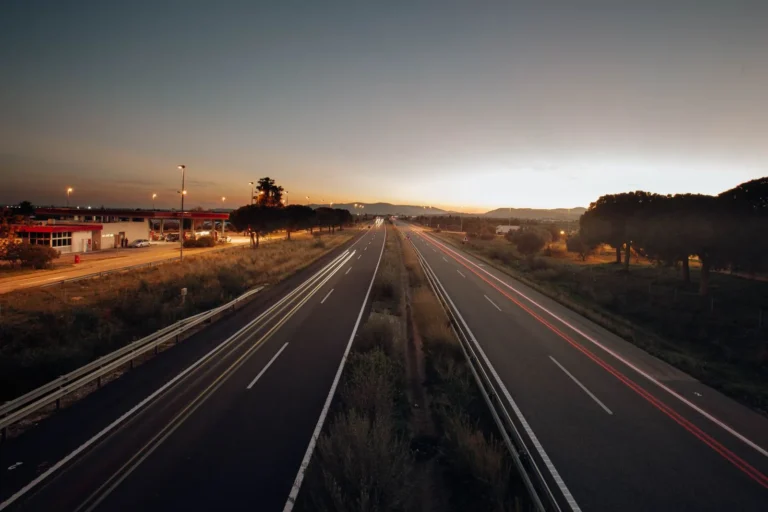
On October 11, 2026, I stopped on a highway shoulder to help a woman out of a burning car, and a driver who never stopped hit me; the trauma CT showed fractures of my medial malleolus, my fibula and two ribs. By October 26 I had my full activity back, and it was under that full load, over the following weeks, that the soft tissue surfaced: my left knee had a torn meniscus and a torn MCL, and the labrum of my left hip was torn, all three found on ultrasound; on MRI, injured discs at L4-5 and L5-S1 irritating a nerve root on the left; and a partial compartment syndrome that scarred my gastrocnemius, the big calf muscle, and cost me some of it. The first scan showed none of it.
“This is an insight that we’ve always had, but it really hits hard when it happens to you personally.”
What should you do if you still hurt after the fracture healed?
- Ask which tissue. A torn ligament, a labral tear and an irritated nerve root need three different plans. See our pages on knee pain and hip pain.
- Write the date down. When a knee first buckled, when the groin first ached on stairs, when the leg first went numb.
- Get the test that sees the tissue. We examine first, then order ultrasound or MRI for ligament, meniscus and labrum, or an EMG for a nerve root. See what EMG and nerve conduction studies measure.
- Keep loading, on purpose. Scar lines up along the stresses it is given, and graded movement in our physician-directed physiotherapy program gives it the right ones.
Some changes cannot wait for a clinic: a leg or arm that suddenly goes weak, wetting or soiling yourself without warning, a foot or hand turning cold or pale, chest pain, shortness of breath, or a headache that builds instead of fading. Those go to the ER or 911.
Frequently asked questions
Why does soft tissue hurt longer than a broken bone?
Because bone regenerates and most soft tissue does not. A healed fracture is bone again. A torn ligament, meniscus or labrum heals with scar, which is stiffer and weaker, and the joint around it can carry load unevenly for years. That uneven load, plus a nervous system that has turned up its sensitivity, keeps pain going after the bone is done.
Can soft tissue damage show up weeks after an accident?
Yes, and that timing is expected. Stress chemistry mutes pain at first, swelling and nerve sensitivity rise over the following days, and a torn meniscus or labrum often stays quiet until you walk, climb or twist on it again.
Does a normal CT mean my ligaments are fine?
No. A trauma CT is excellent at bone and bleeding and weak at ligament, cartilage, meniscus, labrum and nerve. An exam decides whether ultrasound, MRI or a nerve study is the right next test.
Will scar tissue keep hurting forever?
Not necessarily. Scar remodels for months, and it remodels better under graded load than under rest. What keeps pain going is often a joint that moves unevenly or a sensitized nervous system, and both of those are treatable targets.
Still hurting after the bone healed?
We examine the knee, hip, back or nerve that is still complaining, order the test that can actually see it, and build your rehab around the tissue that is hurt.
Request an appointment, or call or text us.
Sources
- Gardner MJ, Demetrakopoulos D, Briggs SM, Helfet DL, Lorich DG. The ability of the Lauge-Hansen classification to predict ligament injury and mechanism in ankle fractures: an MRI study. Journal of Orthopaedic Trauma. 2006;20(4):267-72. doi:10.1097/00005131-200604000-00006 (PMID 16721242)
- Guler F, Kose O, Erol B, Turan A, Koroglu M, Akalin S. The prevalence of knee injuries ipsilateral to tibial shaft fractures and their impact on clinical outcome. European Journal of Orthopaedic Surgery & Traumatology. 2015;25(1):141-8. doi:10.1007/s00590-014-1465-5 (PMID 24760481)
- Pfeifer R, Pape HC. Missed injuries in trauma patients: A literature review. Patient Safety in Surgery. 2008;2:20. doi:10.1186/1754-9493-2-20 (PMID 18721480)
- Melzack R, Wall PD. Pain mechanisms: a new theory. Science. 1965;150(3699):971-9. doi:10.1126/science.150.3699.971 (PMID 5320816)
- Butler RK, Finn DP. Stress-induced analgesia. Progress in Neurobiology. 2009;88(3):184-202. doi:10.1016/j.pneurobio.2009.04.003 (PMID 19393288)
- Melzack R, Wall PD, Ty TC. Acute pain in an emergency clinic: latency of onset and descriptor patterns related to different injuries. Pain. 1982;14(1):33-43. doi:10.1016/0304-3959(82)90078-1 (PMID 7145438)
Dr. Gurpreet Singh Padda, MD, MBA, MHP