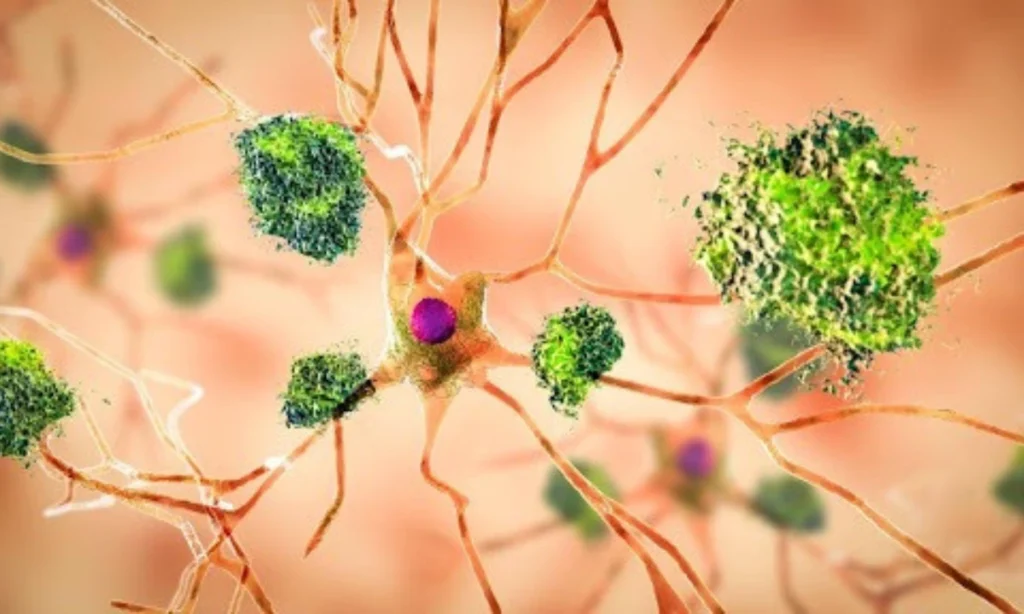
Summary: New studies show that people make more amyloid-beta protein when their astrocytes (support cells in the brain) make more cholesterol and ship it out with the protein apoE. So controlling how astrocytes make and ship cholesterol may help stop amyloid-beta overproduction and plaque buildup. That could be a way to prevent Alzheimer’s or slow it down. Buildup of amyloid-beta seems to play a central role in Alzheimer’s. But researchers know little about how brain cells make amyloid protein. Amyloid-beta buildup could also be just a marker of disease. It may pile up because of local inflammation and poor cleanup.
Alzheimer’s is the top cause of dementia in older adults. Researchers have studied it for more than 100 years. Still, much about it is poorly understood. Researchers know that in this disease, amyloid-beta and tau proteins build up.
But researchers are not sure why amyloid and tau plaques build up. They don’t know if the plaques cause Alzheimer’s, or if something else causes the plaques. Solving this puzzle may help find a treatment.
Researchers know that many metabolic disorders come from changes in how we live over the last century or so. They also know those changes threw off how the body handles cholesterol. That led to more heart disease and stroke. Now a new study shows that cholesterol may play a role in Alzheimer’s, too. This finding opens doors to new approaches, with input from chronic pain specialists who understand how metabolism and the nervous system work together.
Researchers have also studied the role of the most abundant cells in the brain: astrocytes. They almost tile the whole brain and are about five times more than neurons. They are needed for the working of brain cells neurons. They provide brain cells with vital support. Nonetheless, when we talk about the brain, we often forget about them, only considering neurons1.
The brain needs lots of cholesterol, because a big part of the brain is made of it. But as people age, neurons (nerve cells) lose their ability to make cholesterol. So in adults, astrocytes make most of it. These brain cells then ship the cholesterol to neurons with the help of a protein called apolipoprotein E (apoE).
Early studies showed that people born with apoE defects get Alzheimer’s more often. But researchers did not know why a defect in apoE, the carrier protein, raises the risk of Alzheimer’s2.
In the new finding, the researcher found that more apoE meant more cholesterol shipped to the neurons. Brain cells need cholesterol to make amyloid. But too much cholesterol may lead to too much amyloid, and that builds plaques. So astrocytes, by over-supplying neurons, may build and grow plaques and cause Alzheimer’s.
Studies show the brains of people with Alzheimer’s hold a lot of cholesterol. So if astrocytes make less of it, the brain may make less amyloid. Slowing apoE, the main cholesterol carrier, may also help stop plaques.
In the lab, researchers turned down the carrier protein apoE. Less cholesterol got through, and fewer plaques formed.
So researchers think astrocytes may drive amyloid-beta buildup and Alzheimer’s. They make and ship too much cholesterol to neurons. In animal tests, stopping astrocytes from making or shipping cholesterol may help prevent Alzheimer’s3.
Researchers also think cutting cholesterol overproduction may be the right way to prevent Alzheimer’s. Amyloid-beta buildup does cause Alzheimer’s in the end. But blocking amyloid production is not an option. The brain tightly controls how much amyloid protein it makes, because the protein matters so much for brain health. So blocking it directly could have results no one can predict. And researchers still know little about how brain cells make amyloid protein. It could also be that too much cholesterol is a reaction to hidden metabolic inflammation. And the amyloid-beta tangles may pile up because the brain’s cleanup system is blocked.
In short, the key to stopping or slowing Alzheimer’s may be how much cholesterol astrocytes make and ship.
Frequently asked questions
What does it mean when you have cholesterol in your brain?
Cholesterol in the brain is normal and necessary. The brain needs a lot of it, and a considerable part of the brain is made of cholesterol. In adults, most of it is made by astrocytes, the brain’s support cells, and carried to neurons by a protein called apoE. The problem starts when that supply runs too high, which is what researchers found in Alzheimer’s.
Does too much cholesterol in the brain cause Alzheimer’s?
The brains of people with Alzheimer’s hold a lot of cholesterol. Neurons use cholesterol to make amyloid. So too much cholesterol from astrocytes means too much amyloid, and plaques build. There is a second way to read it. The extra cholesterol may be a reaction to hidden metabolic inflammation. Then amyloid-beta piles up because the brain’s cleanup crew is blocked.
What does apoE have to do with Alzheimer’s?
ApoE (apolipoprotein E) is the protein that carries cholesterol from astrocytes to neurons. People born with apoE defects get Alzheimer’s more often. In the new work, more apoE meant more cholesterol sent to neurons. Less apoE meant less cholesterol and fewer plaques. That makes apoE a target to slow plaque growth.
What are astrocytes?
Astrocytes are the most common cells in the brain. They almost tile the whole brain and outnumber neurons about five to one. They give neurons the support they need to work. As people age, neurons lose much of their ability to make cholesterol. So in adults, astrocytes make most of the brain’s supply. Controlling how much they make and ship may help prevent or slow Alzheimer’s.
References
- Sofroniew MV, Vinters HV. Astrocytes: biology and pathology. Acta Neuropathol. 2010;119(1):7-35. doi:10.1007/s00401-009-0619-8
- Yamazaki Y, Painter MM, Bu G, Kanekiyo T. Apolipoprotein E as a Therapeutic Target in Alzheimer’s disease: A Review of Basic Research and Clinical Evidence. CNS Drugs. 2016;30(9):773-789. doi:10.1007/s40263-016-0361-4
- Wang H, Kulas JA, Wang C, Holtzman DM, Ferris HA, Hansen SB. Regulation of beta-amyloid production in neurons by astrocyte-derived cholesterol. PNAS. 2021;118(33). doi:10.1073/pnas.2102191118
Dr. Gurpreet Singh Padda, MD, MBA, MHP


