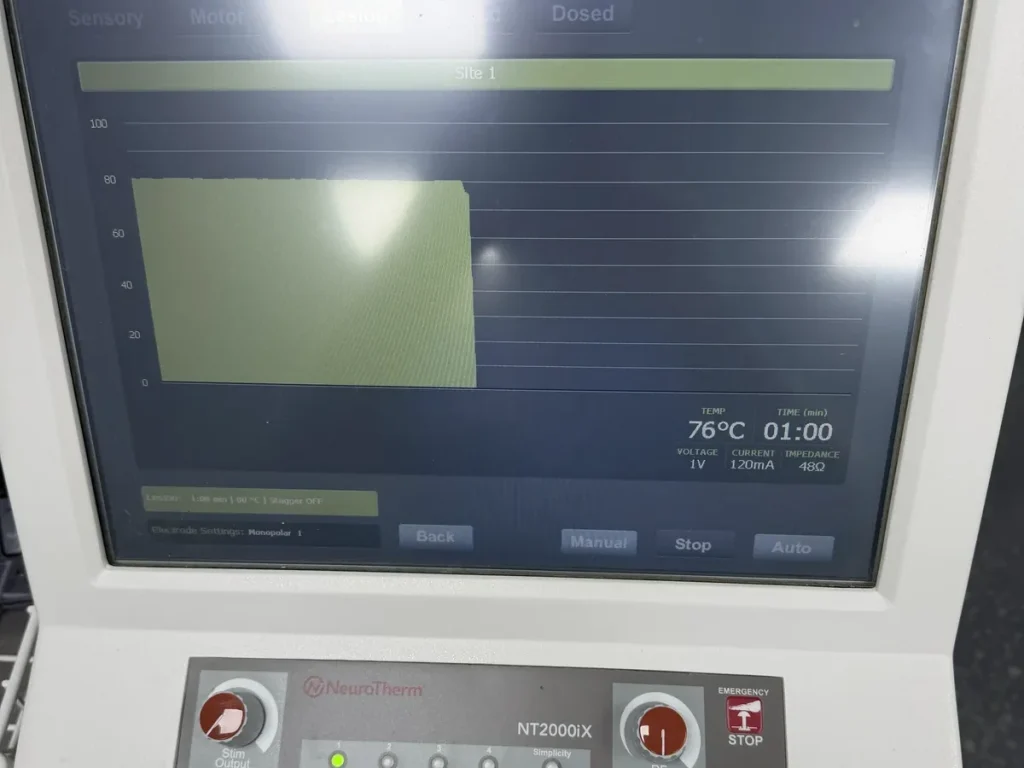
Basivertebral nerve ablation (Intracept) treats vertebrogenic low back pain. That is pain that comes from the endplates of the spine bones (vertebrae) and the marrow next to them. It shows up as Modic-type changes on MRI. It suits back pain that does not shoot down the leg and matches those MRI features. When leg pain or facet joint pain is the main problem, a different target fits.
Intracept basivertebral nerve ablation for vertebrogenic low back pain is getting real attention. That is because the scores patients care about (ODI disability and pain scores) improve early. And the procedure targets one specific pain source instead of treating symptoms forever. The catch: even in 2026, the evidence is narrower than most clinics let on. You earn a sound case with careful patient selection, not marketing.
What causes vertebrogenic low back pain, and why does your MRI matter?
Vertebrogenic pain is classically tied to changes in the endplates of the spine bones and the marrow next to them. These often show up as Modic-type signal changes on MRI. The mechanism is not “you have an abnormal MRI,” it is more specific. Those marrow and endplate changes are thought to reflect active biology that can fire pain signals.
This is also where the assembly line breaks people. The images are normal, so the injury healed, so what is left must be stress, a lawsuit or catastrophizing (expecting the worst). That logic often gets used when the bone biology is still active. The sound approach is to match symptoms to imaging features, not to treat a spine scan like a fortune teller.
In 2026, we still see misfires when doctors chase the wrong structure. If your main complaint is nerve pain shooting down the leg, the targeted talk is different. Sciatica patients usually need a plan built around the nerve root, not a target in the spine bone. If your pain comes mainly from the facet joints, facet joint injection and, when it fits, radiofrequency ablation may make more sense. And if your case is mixed, we treat both the pain source and central sensitization (a nervous system stuck on high alert).
How is basivertebral nerve ablation planned, not just scheduled?
Diagnosis here means spotting the pattern and matching it to imaging. Then we choose treatment based on the evidence. We look for a history that fits vertebrogenic low back pain. Then we confirm MRI features that support the idea that the endplate and marrow are the source.
The planning stage is where your doctor has to be honest. If nobody told you that, you were not consented, you were recruited. You should know why this choice was made and what else could explain your symptoms. You should also know why other options fit your pain source less well. Those include epidural steroid injections for nerve pain down the leg, and facet joint injection diagnostic blocks for facet joint pain.
At the visit, expect a structured exam, a review of past treatments and a procedure plan. If other pain sources need to be ruled out first, the plan may include image-guided diagnostic injections. They are an add-on, not a detour.
Patients often ask how care works in 2026. Our pain process lines up scans and planning with the same story. So you are not stuck in endless trial and error.
How does basivertebral nerve ablation compare with other back pain treatments?
Patients come in with mixed histories. Some tried physical therapy years ago and are still disabled. Others had nerve block procedures with no clear plan aimed at a specific pain source. Some had epidural steroid injections and still say their pain pattern never matched where the shot was aimed.
This is where we avoid the assembly line. We decide whether the spine bone target is the logical next step. And we also treat the way the whole body and nervous system turn pain up.
Examples of where the sequence might differ:
- Matching vertebrogenic MRI + pain that does not shoot down the leg: basivertebral nerve ablation may be chosen earlier in the plan matched to the pain source.
- Nerve pain down the leg: an epidural steroid injection path may fit when the pain pattern matches. Then a recheck can show which ablation targets, if any, remain.
- Facet pain confirmed: diagnostic blocks first, then radiofrequency ablation when it fits.
Some patients ask about spinal cord stimulators. A stimulator is not a default swap for basivertebral ablation, and it should not be treated as one more knob to turn. Spinal cord stimulation has its own rules for who fits and its own risks. We discuss it when the clinical picture lines up. If your pain includes nerve damage and a turned-up nervous system, chronic pain treatment needs a broader plan with add-ons, not just devices.
For some patients, Acceptance and Commitment Therapy for chronic pain can help reset the threat response and behavior loops that keep symptoms turned up. It is not a “nice extra.” When central sensitization is strong, it becomes part of the mechanism you can actually change.
Frequently asked questions
How do I know if basivertebral nerve ablation is right for me?
Basivertebral nerve ablation makes the most sense in three cases together. You have chronic low back pain that does not shoot down the leg. You have tried conservative care long enough. And your MRI shows features that fit Modic changes. Before going ahead, your doctor should explain why your pain source looks vertebrogenic, not facet-driven or nerve-root driven. See also facet joint injection.
What does success look like for basivertebral nerve ablation?
It is often judged by ODI and pain score cutoffs. Many patients show real gains by about 3 months. Success is not “no pain at all,” it is less disability and less pain, enough to cross meaningful cutoffs for your situation. See also facet joint radiofrequency ablation.
Is basivertebral nerve ablation better than epidural steroid injection for chronic low back pain?
It targets a different pain source than epidural steroid shots. Those mostly aim at irritated or inflamed nerve roots. Is your pain vertebrogenic low back pain that stays in the back, with Modic-type MRI changes? Then this ablation may fit better than repeat epidurals. See also discogram testing.
How long does basivertebral nerve ablation take, and how many levels can be treated?
It usually takes about 60-90 minutes, based on how many levels are treated. Each level can take about 7 to 15 minutes. So the number of spine bones treated sets the total time. See also epidural steroid injection.
What are the realistic risks of basivertebral nerve ablation?
It is minimally invasive, but it is still a procedure. Risks include problems where the needle goes in, infection and soreness after. Serious problems are rare. Still, ask what your clinic watches for and how they handle side effects. See also failed back surgery syndrome.
To discuss your own case, request an appointment through the appointment request form, call (314) 481-5000, or text (314) 886-5902. You can review the full range of pain treatments, read about the pain management doctors in St. Louis, or find both offices on the locations page.
Dr. Gurpreet Singh Padda, MD, MBA, MHP


