The long-term NSAID side effect your stomach will not warn you about is injury to the small intestine. Across the research, about half of long-term users show visible small-bowel injury. Most of them have no symptoms. Coated pills and acid blockers protect the stomach, not the bowel below it.
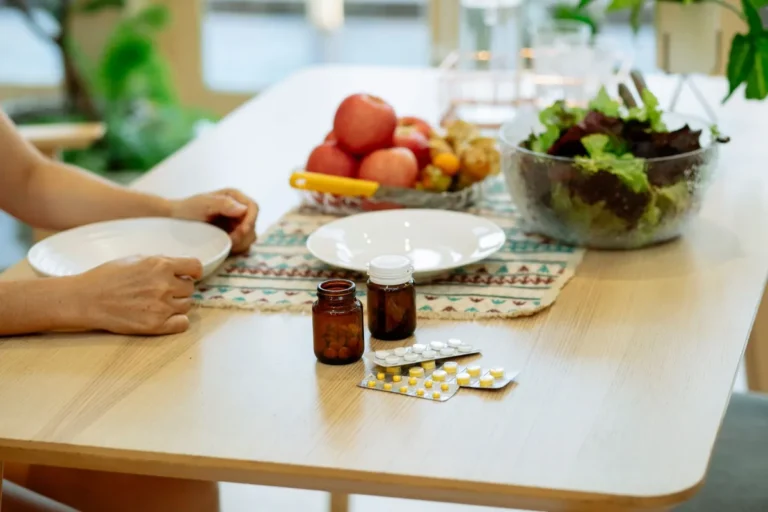
He is sixty-eight and carries his prescriptions in a plastic bag. Nine bottles, including a daily anti-inflammatory for his knees and a low-dose aspirin for his heart. He also carries bloating, bowels that swing between loose and stuck, and a tiredness written off as age. Nobody had linked the knee pill to the belly. Nobody looks at the small intestine of a man whose stomach feels fine.
That blind spot is where most long-term NSAID side effects live. The video Two-Thirds of Your Pill Is Not the Drug walks through his whole bag. Here I want to stay with the one bottle nearly every pain patient has owned. And with the injury it causes where nobody is looking.
A good drug with a blind spot
An anti-inflammatory quiets an angry joint fast. That is why it ends up in so many bags. It is also why the talk about it tends to stop at the joint. The Angry Gut, by Dr. Gurpreet Singh Padda, MD, MBA, MHP, and Ami Michelle Grimes, calls the gut the first brain. It is a living surface of about thirty-two square meters that meets every pill at full strength on the way through. The second brain, in the skull, hears about the damage late or never.
What a capsule camera found after two weeks
Researchers gave 40 healthy volunteers a normal anti-inflammatory dose for two weeks. Then the volunteers swallowed a capsule camera. New damage showed up in 27 of them. A stool marker of gut inflammation rose above normal in 30. And 16 had clear breaks in the lining.
The details rarely get quoted. Reddened folds showed up in 14 people, pinpoint red spots in 13, stripped lining in 8, and blood with no visible source in 3. Fifteen of the 27 affected volunteers had more than one kind of damage at once. None of them came in with a complaint.
A normal-feeling belly is not a normal-looking bowel.
Long-term NSAID use side effects build with time
Two weeks is the short version. In long-term users, visible small-bowel injury showed up in 71%, against 10% of controls. How severe it was matters more. Ten users had mild injury, and five had major damage, meaning more than four erosions or large ulcers. Controls had two mild cases and no major ones. It was a small study. The users had arthritis, while the controls did not.
Time pushes the numbers up. Among rheumatoid arthritis patients on an anti-inflammatory for more than 12 months, 13 of 16 had breaks in the lining. That compares with 4 of 12 not taking one. Among heart patients on coated low-dose aspirin, 10 of 11 had breaks, and one person had 33 of them.
Across the research, the summary figure is about half of long-term users with visible injury. Most have no symptoms. A coated pill is the protection people believe they have. It protects the stomach.
Two other drivers sat right beside the drug. In a health-check group of 1,599 people, aspirin users had small-bowel breaks at 36.9% against 6.3%. In that same group, obesity carried an odds ratio of 2.30 and smoking 1.85, apart from the pill. Location differed too. Aspirin injury clustered in the upper small intestine (jejunum). Background injury sat in the lower part (ileum). A medicine review that ignores weight and tobacco does only part of the job.
The acid blocker guards a different organ
Plenty of people take an anti-inflammatory with an acid blocker to spare the stomach. For the stomach, the logic holds up. Look at 133 patients who came in bleeding from the upper gut. Aspirin users aged 70 and over had about ninefold odds of visible (overt) bleeding. Regular acid blocking cut that risk by 90%. It was a small observational study (it watched patients, it did not test a treatment) of people who had already bled. So it speaks to how bad bleeding gets, not to who bleeds.
Below the stomach, the answer flips. One trial paired celecoxib with rabeprazole or with placebo. Small-bowel injury was 2.7 times higher in the group taking the acid blocker. One drug protects one organ and exposes the next. Only one drug has shown it can heal small-bowel ulcers in aspirin users: misoprostol. It fully healed 28.6% against 9.5% on placebo. That is modest.
None of that is a reason to change a prescription on your own. It is a reason to ask which organ a protective drug was chosen for. And to ask whether anyone has checked the other one.
When the permeability test comes back normal
A 2026 randomized trial gave healthy volunteers indomethacin and found no rise in gut leakiness. That result gets used to call the whole concern overblown. Read the rest of it.
The volunteers felt the drug even though the test missed it. Symptom scores rose from 15.5 to 17.3, and belly pain from 3.0 to 3.7, with ranges that did not cross zero. The placebo groups held 13 and 11 people. Dosing ran six days. The authors suggested that longer use, or a barrier already damaged, might have shown the effect. The barrier test was negative. The patients were not.
The older study that built that test holds a result every pain patient should know. In 23 healthy volunteers, indomethacin pushed the lactulose-to-mannitol ratio to 0.071, against 0.030 in the control condition. Public speaking raised it too, to 0.059. An injected stress hormone did the same, and a mast cell stabilizer blocked it.
Chronic pain is a stress state. A person who hurts every day runs a nervous system on alert. The wall of the first brain answers stress hormones through mast cells. Add a daily anti-inflammatory, and the same lining is being pressed from two sides at once.
Pain medicines leave fingerprints on the flora
The bag does not only touch the lining. A lab screened drugs on the market. It found that 27% of non-antibiotics, 203 drugs aimed at humans in all, blocked at least one gut bacteria species. The authors called that the low end of the estimate.
In people, certain drug classes leave certain marks. Antibiotic-resistance gene counts rose in people taking opiates and tricyclic antidepressants in a disease group. They also rose in metformin and acid-blocker users in the general population. That is a marker of potential, not a resistant infection. And a drop in one gut microbe was once read as a sign of depression. Across 1,802 people, it turned out to be explained by SSRI and SNRI use. The count tallied the prescription and called it the disease.
Different drugs leave different fingerprints, and each can be matched to its bottle. The same logic applies to opioids. A taper managed alongside interventional care is a medical decision, and stopping too fast carries harms of its own.
Bring the bag, not a typed list
For that patient, four things changed, all worked through with his cardiologist. The anti-inflammatory came off, and his knees finally got an exam. The acid blocker was tapered and rechecked. The laxative and multivitamin moved to versions without the fermentable sugars his dietitian had flagged. Everything with a live reason to be there stayed.
Knees are a pain practice’s job. A joint silenced by a daily pill for years usually has a metabolic story too. That is why we treat insulin before we treat the joint. Once the joint is treated directly, the anti-inflammatory can become an occasional tool, not a daily exposure.
- Bring the actual bottles. The same drug from a different maker is a different formula.
- Write the start year beside each daily medicine. An eleven-year prescription is a different question from a two-week course.
- Ask three things of each bottle. What is it for? Is that still true? And what am I accepting in exchange if it stops?
- Keep two weeks of dated symptom notes before any change, and four weeks after.
- Stop nothing alone. Work every change through with the physician who prescribed it.
Every capsule study, and the trial that cuts against the argument, is laid out in the Chapter 2 Deep Dive, with what each study shows and does not show. For the basics on the first brain, start with The Angry Gut, Chapter 1. Next, how the vagus nerve carries the gut’s complaints to the brain.
Frequently asked questions
Does ibuprofen cause bloating?
It can add to it, though bloating is an unreliable warning sign. Small-bowel injury from anti-inflammatories is usually silent. Most people with visible damage on a capsule camera report nothing. Pills also carry fermentable fillers: lactose sits in 45% of solid oral medicines. If bloating began with a daily pill, raise both the drug and its formula with your physician. One medication list can cause problems no single prescriber sees.
Can NSAIDs cause diarrhea?
They can inflame the small intestine fast. Healthy volunteers took a normal anti-inflammatory dose for two weeks. In three out of four, a stool inflammation marker rose above normal. Loose stools alongside a daily anti-inflammatory deserve a look, not another medicine layered on top. Any change belongs with your physician. Some pain medicines quietly make pain and its companions worse.
Does an acid reducer protect my intestines from NSAIDs?
It protects the stomach, not the small intestine. In older aspirin users, regular acid blocking went with far less upper-gut bleeding. Further down, one trial found small-bowel injury 2.7 times higher when an acid blocker was added to celecoxib than when placebo was. Ask your physician which organ your protective drug was chosen for. Gut inflammation feeds the wider metabolic inflammation behind chronic pain.
Is enteric-coated aspirin easier on the gut?
Easier on the stomach, not on the small intestine. Among heart patients taking coated low-dose aspirin, 10 of 11 had small-bowel breaks on a capsule camera. The coating protects the stomach only. Never stop aspirin prescribed for your heart without talking to your cardiologist first. Anti-inflammatories carry a separate heart risk in type 2 diabetes.
How long does it take NSAIDs to damage the small intestine?
Damage can show up within two weeks. Healthy volunteers had new small-bowel findings in 68% after a two-week course. Time makes it more common. Among rheumatoid arthritis patients using an anti-inflammatory for more than 12 months, 13 of 16 had breaks in the lining. Time on the drug is a good reason to review a daily prescription with your physician. Belly fat adds its own inflammatory load to the same picture.
Bring us the whole bag
If a daily anti-inflammatory has been quieting a joint for years, we will examine the joint itself. We will review the whole bag with you and your other doctors.
Request an appointment, or call or text us.
Sources
- Maiden, L., Thjodleifsson, B., Theodors, A., Gonzalez, J., & Bjarnason, I. (2005). A quantitative analysis of NSAID-induced small bowel pathology by capsule enteroscopy. Gastroenterology, 128(5), 1172–1178. https://doi.org/10.1053/j.gastro.2005.03.020
- Graham, D. Y., Opekun, A. R., Willingham, F. F., & Qureshi, W. A. (2005). Visible small-intestinal mucosal injury in chronic NSAID users. Clinical Gastroenterology and Hepatology, 3(1), 55–59. https://doi.org/10.1016/s1542-3565(04)00603-2
- Sun, X., Wang, F., Liu, J., Wu, L., Wang, Z., Chen, X., Wang, M., & Zeng, Q. (2022). Risk factors for small-intestinal mucosal breaks beyond aspirin. Journal of Gastroenterology and Hepatology, 37(8), 1596–1602. https://doi.org/10.1111/jgh.15892
- Watanabe, T., Fujiwara, Y., & Chan, F. K. L. (2019). Current knowledge on non-steroidal anti-inflammatory drug-induced small-bowel damage: a comprehensive review. Journal of Gastroenterology, 55(5), 481–495. https://doi.org/10.1007/s00535-019-01657-8
- Camilleri, M., Busciglio, I., Carlson, P., Dilmaghani, S., Lupianez-Merly, C., Yang, D. Y., Ryks, M., Ferber, M., Houamel, D., Perot, S., & Montestruc, F. (2026). Indomethacin fails to increase intestinal permeability in healthy volunteers. Clinical and Translational Gastroenterology, 17(1), e00944. https://doi.org/10.14309/ctg.0000000000000944
- Maier, L., Pruteanu, M., Kuhn, M., Zeller, G., Telzerow, A., Anderson, E. E., Brochado, A. R., Fernandez, K. C., Dose, H., Mori, H., Patil, K. R., Bork, P., & Typas, A. (2018). Extensive impact of non-antibiotic drugs on human gut bacteria. Nature, 555(7698), 623–628. https://doi.org/10.1038/nature25979
- Natasha, E. E., Mulder, D., Fehse, L., Winter, N. R., Fisch, L., Welzel, M., Bang, C., Meinert, S., Flinkenflügel, K., Borgers, T., Goltermann, J., Leehr, E. J., Culmsee, C., Stein, F., Thomas-Odenthal, F., Usemann, P., Teutenberg, L., Nenadic, I., Straube, B., … Bloemendaal, M. (2026). The effect of SSRI/SNRI antidepressant treatment on the gut microbiota of patients with major depressive disorder. Communications Medicine, 6(1). https://doi.org/10.1038/s43856-026-01782-5
- Vich Vila, A., Collij, V., Sanna, S., Sinha, T., Imhann, F., Bourgonje, A. R., Mujagic, Z., Jonkers, D. M. A. E., Masclee, A. A. M., Fu, J., Kurilshikov, A., Wijmenga, C., Zhernakova, A., & Weersma, R. K. (2020). Impact of commonly used drugs on the composition and metabolic function of the gut microbiota. Nature Communications, 11(1), 362. https://doi.org/10.1038/s41467-019-14177-z
- Vanuytsel, T., van Wanrooy, S., Vanheel, H., Vanormelingen, C., Verschueren, S., Houben, E., Salim Rasoel, S., Tóth, J., Holvoet, L., Farré, R., Van Oudenhove, L., Boeckxstaens, G., Verbeke, K., & Tack, J. (2013). Psychological stress and corticotropin-releasing hormone increase intestinal permeability in humans by a mast cell-dependent mechanism. Gut, 63(8), 1293-1299. https://doi.org/10.1136/gutjnl-2013-305690
- Ayonrinde, O. T., Walldorf, N., Chan, N., Foo, N. Y., Kulkarni, T., Olynyk, J. K., & Sanfilippo, F. M. (2022). Prior oral proton-pump inhibitor use is associated with reduced severity of aspirin-related upper gastrointestinal bleeding in older people. Internal Medicine Journal, 52(4), 663-666. https://doi.org/10.1111/imj.15732
Dr. Gurpreet Singh Padda, MD, MBA, MHP