Mon–Fri: 8 AM – 5 PM
Same-Day & Emergency Visits
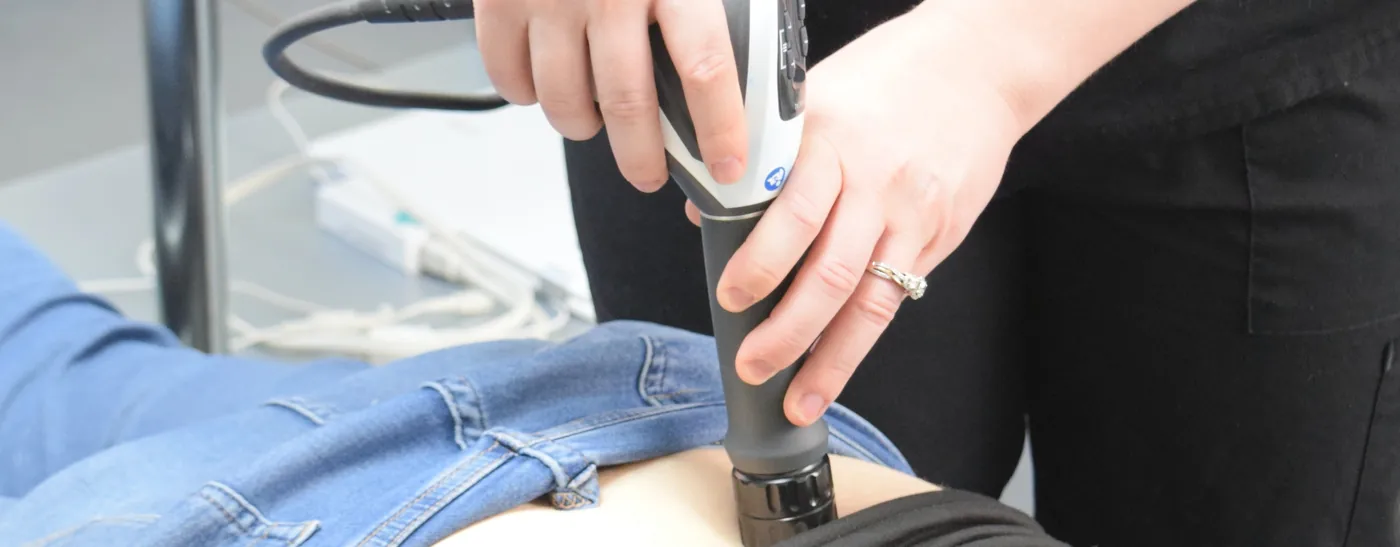
Clinician delivering shockwave therapy to a patient in a treatment room at Padda Institute, St. Louis

Shockwave Therapy in St. Louis

Focused acoustic energy to stimulate repair in tendon and soft tissue that has not resolved. No anesthesia, no downtime.

Prefer not to fill in a form?

Same-day and emergency appointments are available.

What shockwave therapy is

Extracorporeal shockwave therapy delivers focused acoustic pressure waves into injured tissue through the skin. Nothing is cut and nothing is injected. The energy passes through the surface and is concentrated at the depth where the problem sits.

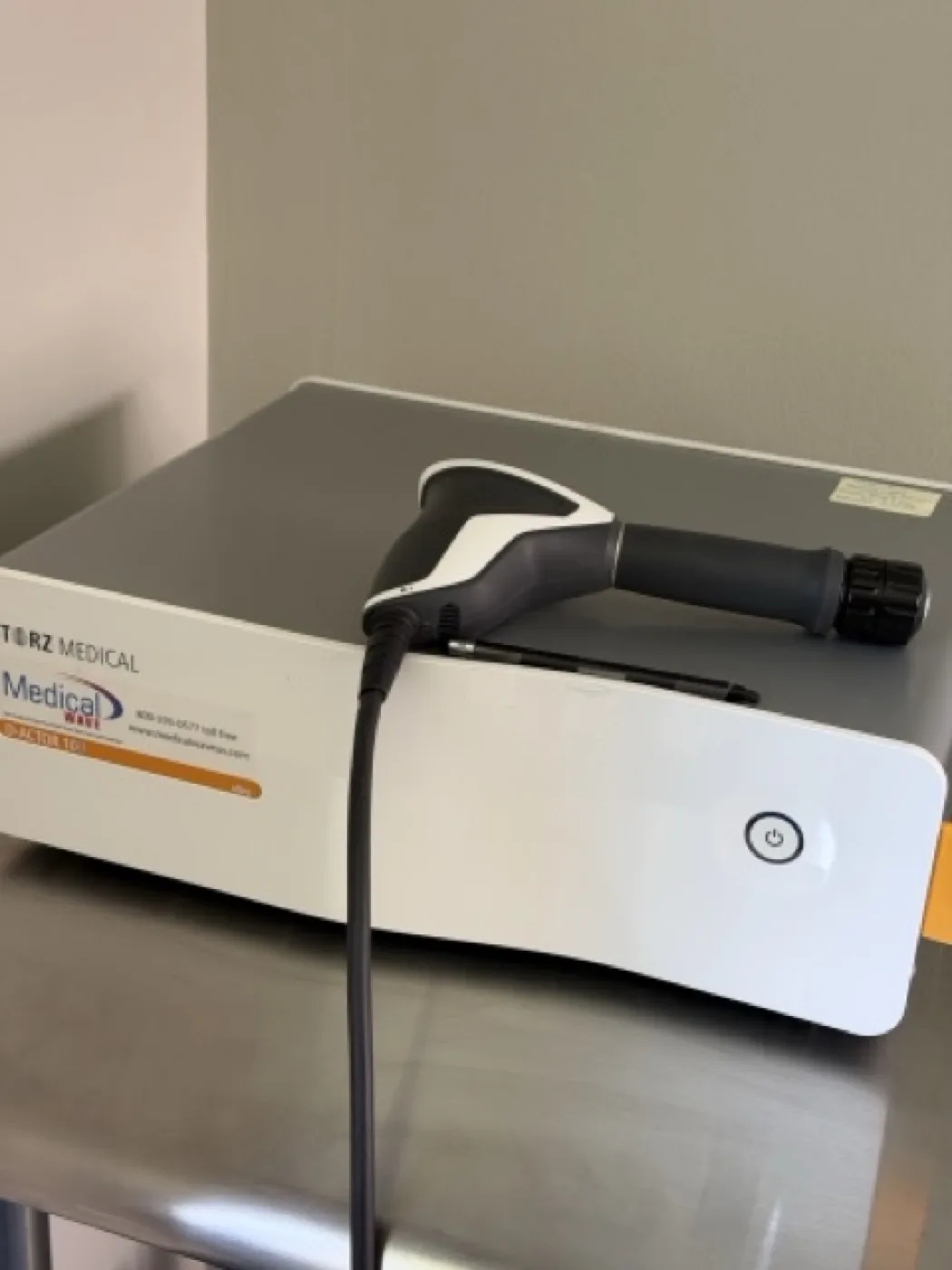
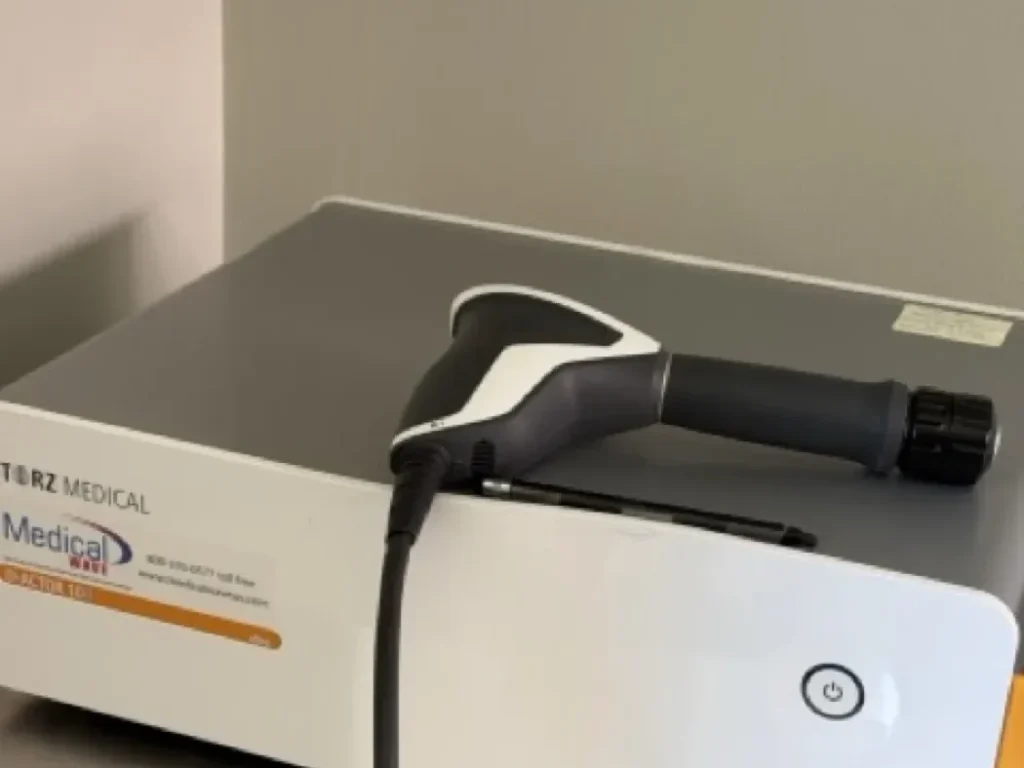
The name is misleading in one respect: this is not electrical shock. It is mechanical — a rapid pressure pulse, closer in physics to focused sound than to anything electrical. We use a STORZ Medical system in-office.

It is used mainly for tendon and soft-tissue problems that have become chronic. Tissue that has been injured for months often stops behaving like healing tissue at all; the inflammatory phase that should resolve into repair stalls, and the area becomes degenerative rather than acutely inflamed. Shockwave is aimed at restarting that stalled process.

STORZ Medical shockwave therapy unit at Padda Institute, St. Louis

How a pressure wave changes tissue behavior

The mechanism is mechanotransduction — cells converting a mechanical signal into a biological response. A controlled pressure pulse applied to degenerative tissue produces several effects at once.

Local blood flow increases, and over a course of treatment new small vessels form in tissue that had become poorly perfused. Perfusion is often the limiting factor in why a chronic tendon problem is not healing: tendon has a marginal blood supply at the best of times.

There is also a measurable effect on pain signaling. Repeated stimulation appears to reduce substance P, one of the neuropeptides involved in transmitting and sustaining pain locally, which is part of why the analgesic effect can outlast the treatment course.

Where calcific deposits are present — most commonly in the shoulder — the mechanical energy can also help break them down so the body can reabsorb them.

What we use it for

Shockwave is most useful where a soft-tissue problem has become chronic and has not responded to rest, activity modification or rehabilitation:

  • Plantar fasciitis and heel pain, including cases that have persisted for many months — see also serious foot pain
  • Tendinopathy at the elbow, patellar tendon, and Achilles
  • Calcific tendinitis of the shoulder
  • Greater trochanteric pain at the outer hip
  • Chronic myofascial pain where trigger point injection has helped but not held

The evidence base is strongest for plantar fasciitis and for calcific shoulder tendinitis. For other indications it is reasonable but less established, and we will tell you which category yours falls into rather than presenting them all as equivalent.

What a session involves

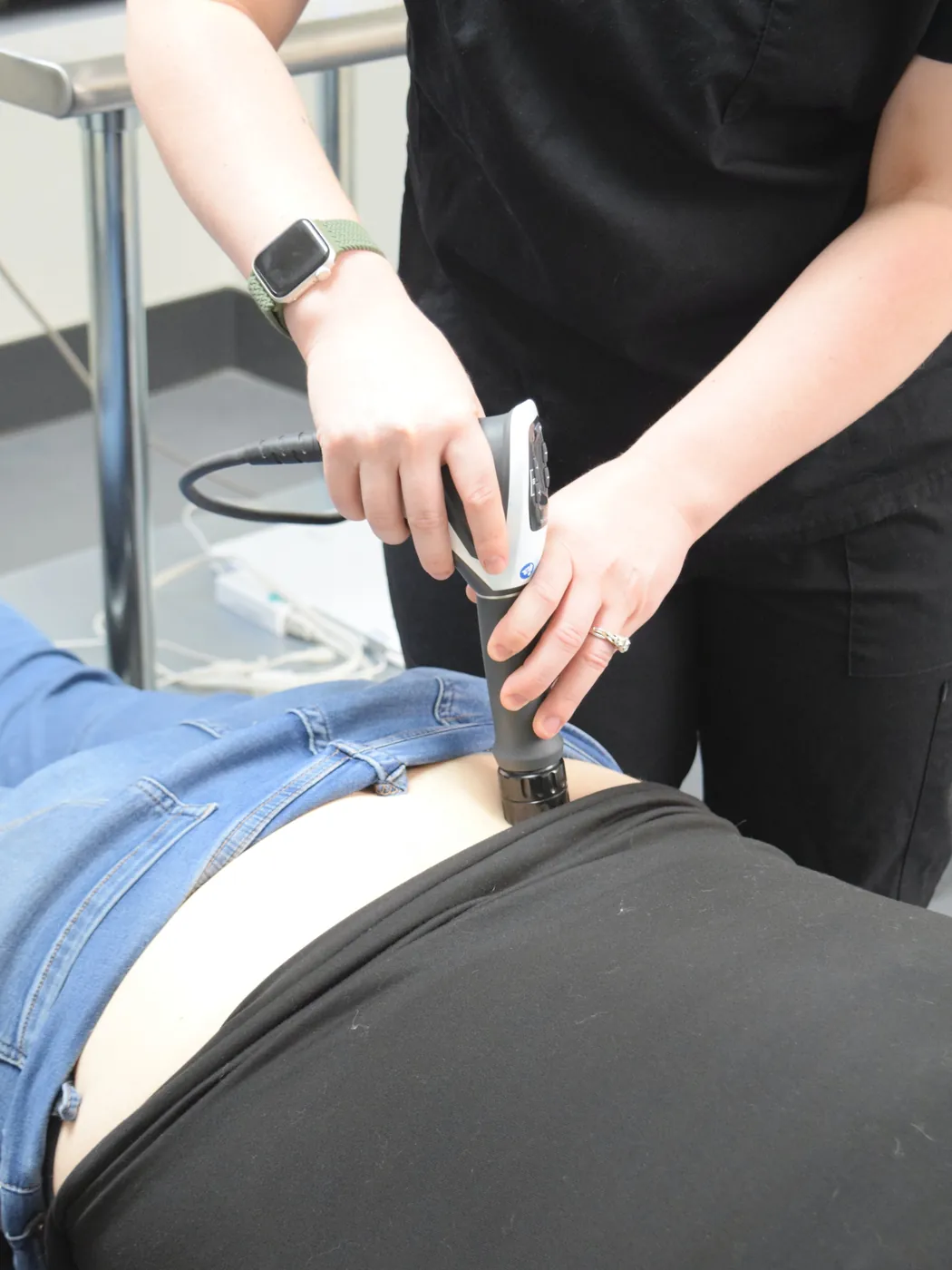
Ultrasound gel is applied and the handpiece is placed over the target area. Treatment takes a few minutes per site. You will feel the pulses — most patients describe it as a deep tapping or thumping that is uncomfortable at higher intensities but tolerable, and intensity is adjusted to what you can manage.

No anesthesia is used, and that is deliberate: your feedback about where the discomfort concentrates helps locate the target accurately. You drive yourself home and return to normal activity the same day.

A course is typically three to five sessions spaced about a week apart. Improvement is usually gradual over the weeks following the course rather than immediate, because what is being stimulated is a repair process rather than a numbing effect.

What shockwave therapy is not

It does not repair a complete tear. A ruptured tendon is a structural problem requiring a structural answer, and stimulating repair in tissue that is no longer in continuity does not work.

It is also not a first-line treatment. For a soft-tissue injury of recent onset, the appropriate sequence is relative rest, load management and rehabilitation. Shockwave is for the problem that has already failed that sequence.

It is generally avoided over an area of active infection, over a known malignancy, in the presence of a significant bleeding disorder or on anticoagulation without discussion, and over growth plates in skeletally immature patients. Tell us your full history.

Clinician delivering shockwave therapy to a patient in a treatment room at Padda Institute, St. Louis

Delivered in-office at Woodson Road

Shockwave is delivered in our treatment rooms at 4477 Woodson Rd #100, not referred out. That matters practically: it means the clinician treating you has your imaging, your electrodiagnostic results and the rest of your treatment plan in front of them, and can adjust the target between sessions based on how you are responding.

It also means shockwave can be sequenced sensibly with everything else — used to prepare tissue before rehabilitation, or alongside photobiomodulation where inflammation and perfusion are both limiting factors.

Chronic Tendon Pain That Has Not Resolved

If rest and rehabilitation have not worked, shockwave may be appropriate. Call to arrange an evaluation.

What Our Patients Say

Individual results vary. These are unpaid patient testimonials shared with permission and are not a guarantee of outcome. See all patient stories.

Shockwave Therapy FAQs

You feel it. Most patients describe a deep tapping or thumping sensation that is uncomfortable at higher intensities but manageable. Intensity is adjusted to your tolerance, and no anesthesia is used because your feedback helps locate the target.

Typically three to five, spaced about a week apart. Improvement tends to be gradual over the weeks after the course rather than immediate, because the therapy stimulates a repair process rather than numbing the area.

No. You drive yourself home and return to normal activity the same day. Some soreness in the treated area for a day or two is common and expected.

No. Therapeutic ultrasound delivers continuous low-intensity energy, largely producing warmth. Shockwave delivers discrete high-energy pressure pulses. The mechanisms and the intensities are different.

It is generally avoided over active infection, over a known malignancy, with a significant bleeding disorder or on anticoagulation without discussion first, and over growth plates in patients who are still skeletally immature.

Coverage varies and shockwave is not universally a covered benefit. We check your specific plan and tell you what applies before you commit to a course.

Send A Message

For questions and concerns, please fill out the form below.

Prefer not to fill in a form?

Same-day and emergency appointments are available.

Pain Conditions We Treat

At Padda Institute, our pain management specialists provide the guidance and treatments tailored to your needs. We diagnose and evaluate to determine your best treatment plan, so that you can experience chronic pain relief like never before.
Serious Foot Pain

Nearly 60% of patient’s with chronic forefoot pain presenting to a podiatry practice have surgical intervention, yet only 50-60% of them..

Trigger Point Injections

A trigger point injection places local anesthetic directly into a taut, painful band of muscle to interrupt the spasm and pain cycle. Padda Institute performs trigger point injections…

Cold Laser Therapy (Photobiomodulation)

Cold laser therapy, also called photobiomodulation, uses red and near-infrared light at 650, 808, 905 and 980 nanometers to reduce inflammation and support tissue repair at the cellular…