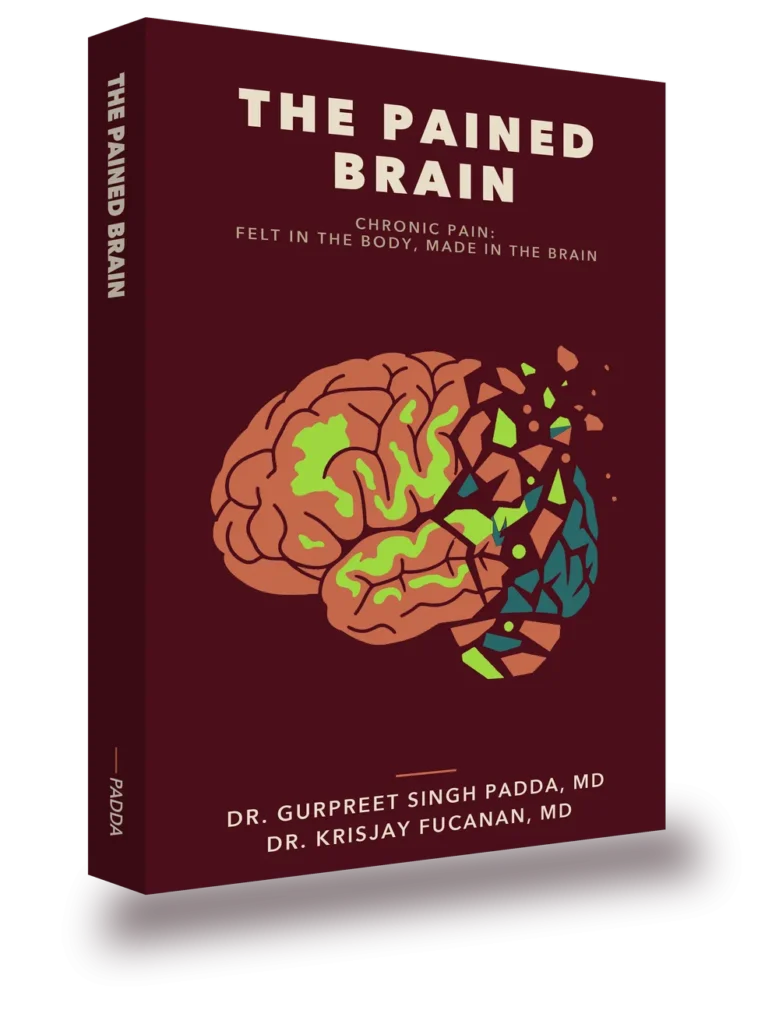
The Pained Brain argues that chronic pain is a centralized nervous-system disease fueled by metabolic inflammation. It is not a local defect a scan can find. The 479-page, 22-chapter book was coauthored with Dr. KrisJay Fucanan, MD. It documents 2,291 references published at thepainedbrain.com.
St. Louis, MO, United States — September 21, 2026
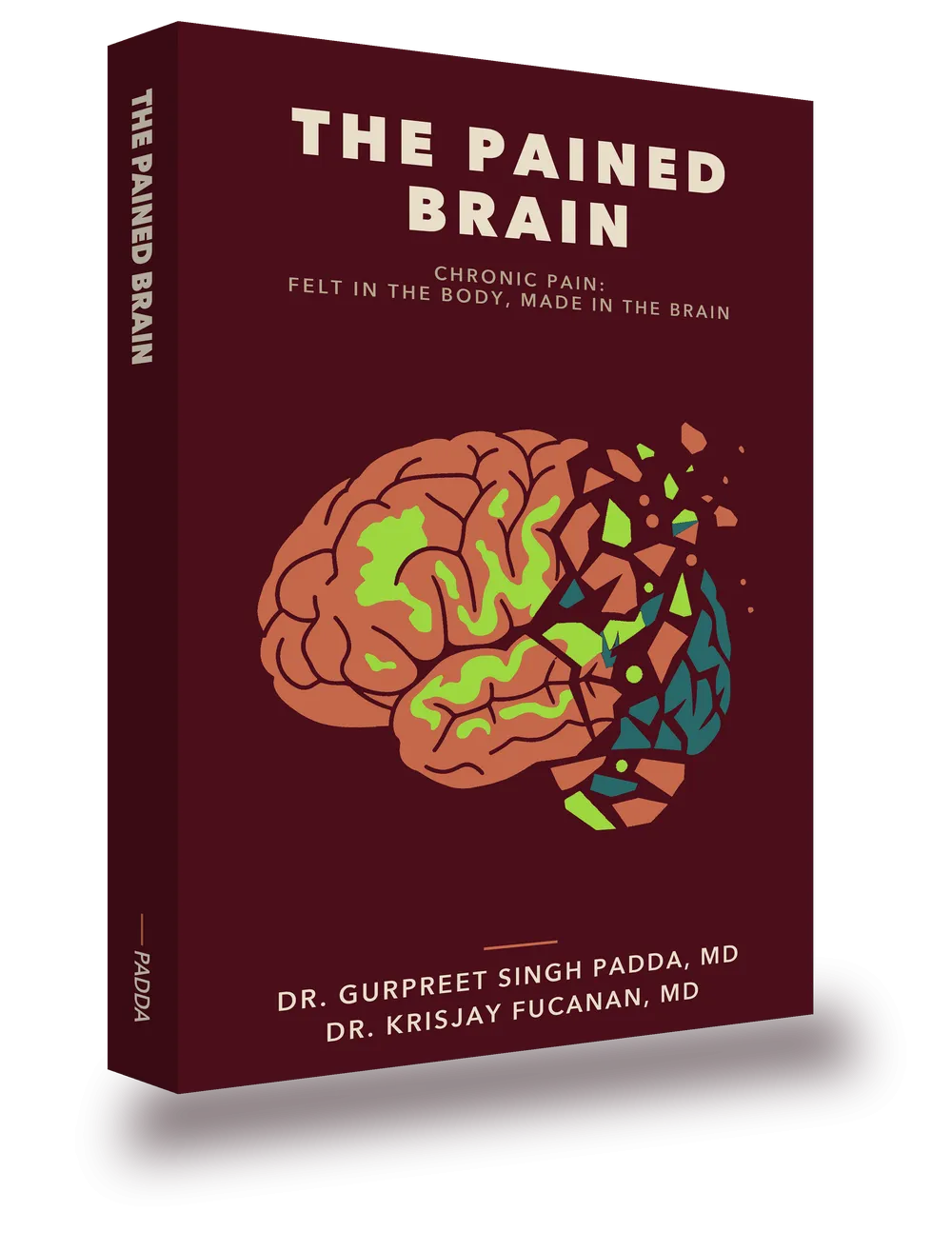
Dr. Gurpreet Singh Padda, MD, MBA, MHP, an interventional pain physician, anesthesiologist, and addiction medicine specialist who has led the Center for Interventional Pain Management in St. Louis since 2001, has published The Pained Brain: Chronic Pain: Felt in the Body, Made in the Brain. The book is the second volume in his series The Brain, and it makes a case that runs against how most American medicine is set up. Chronic pain is not a local structural defect waiting for a local repair. It is a centralized nervous-system disease fueled by whole-body metabolic inflammation. Treat a joint apart from that terrain, and it will keep hurting.
The price of the current model
Dr. Padda opens the book not with anatomy but with arithmetic. Chronic pain costs the United States $722.8 billion a year in medical spending and lost work. A person living with it spends $8,068 a year more on medical care than a person without it (Guy et al., 2025). The human toll is worse. In a Danish population study, people with chronic pain died from lung disease at nearly nine times the rate of those without it. They died from suicide at seven times the rate (Vaegter et al., 2019). A United States review looked at suicide records where a note survived and its contents were recorded. In 67.4 percent of those notes, the pain was named as part of the reason (Petrosky et al., 2018).
“We keep pricing chronic pain as a productivity problem. It is a mortality problem. People are not just unable to work. They are dying earlier, and a meaningful number of them are choosing to. If a cancer therapy produced that record, we would have pulled it. In pain, we call it standard care and schedule the follow-up.”
Pain is a signal, not a diagnosis
The book’s second chapter states the thesis in four words. The rest of the book defends it. Pain is a body alarm. It reports that something has drifted out of balance. Silence the alarm without finding the fire, Dr. Padda writes, and the house still burns down, just later.
Chapter 3 takes that argument to imaging. That is where most patients form their beliefs about their own bodies. The Lancet’s 2018 low back pain series concluded that “for nearly all people with low back pain, it is not possible to identify a specific nociceptive cause” (Hartvigsen et al., 2018). Wear-and-tear findings show up so often in people with no pain that any single scan is a poor witness. The book also shows what the wording of a report does to a patient. People told they had “arthritis,” “degeneration,” or “a disc bulge,” rated their need for more imaging at 5.7 to 6.0 out of 10. People told they had “an episode of back pain,” rated it 4.2 (O’Keeffe et al., 2022). The word chosen in the radiology suite changes what the patient goes on to consume.
The hormone nobody measured
The book’s metabolic spine arrives in Chapter 4. Among nondiabetic United States adults in NHANES, the share with measurable insulin resistance rose from 24.8 percent to 38.4 percent between 1999 and 2018 (Wu, Ke, & Nianogo, 2025). Pain medicine almost entirely missed that shift. In a separate cohort, each unit rise in a bedside measure of insulin resistance raised the odds of new severe chronic pain 1.51-fold (Zhao et al., 2026). From there the book follows the chemistry forward. The omega-6 load of the modern diet feeds the raw material for inflammatory prostaglandins (pain-signaling chemicals). Advanced glycation end products (sugar-damaged proteins) stiffen collagen and trap nerves. A disrupted body clock takes the body’s own pain relief offline. And finally comes central sensitization, the point where the nervous system no longer needs an injury to produce pain.
Later chapters turn to what can be done and what it costs. They cover procedural precision, percutaneous hydro resection, regenerative options weighed against repeat corticosteroid injection, pain in the elderly, the rules that govern care, and the incentives that reward volume over resolution.
Written to be checked
Every figure in The Pained Brain is given as published, with its population named and its paper attached. Each chapter closes with a printed code that opens a free technical supplement. Each one is written so a reader can hand it to their own doctor. Those supplements carry 2,291 documented references. Where the evidence is thin or points the wrong way, the book says so instead of selling past it. The supplements are published at thepainedbrain.com, one chapter at a time. Readers who would rather be walked through the argument can watch it instead. All 22 chapters exist as a video series on the Padda Institute channel.
“I am asking people to distrust a scan they paid for and a story they have been told for years. The only way to earn that is to show every number and name every population, including the studies that cut against me. You are probably going to dislike me somewhere in the middle of this book. I would rather be argued with than believed.”
Availability
The Pained Brain: Chronic Pain: Felt in the Body, Made in the Brain by Dr. Gurpreet Singh Padda, MD, MBA, MHP, and Dr. KrisJay Fucanan, MD, is available now on Amazon in Kindle and paperback editions. Paperback ISBN 978-0-9832058-1-4. Published by Nectar Media Group. 479 pages, 22 chapters. It is the second volume in The Brain, following The Starved Brain and preceding The Angry Gut, The Dopamine Brain, and the forthcoming The Humbled Brain.
Frequently asked questions
What is The Pained Brain about?
The Pained Brain argues that chronic pain is a centralized nervous-system disease fueled by metabolic inflammation. It is not a local defect a scan can find. The book follows the chemistry step by step. It starts with insulin resistance and the omega-6 load of the modern diet. It moves to advanced glycation end products and a disrupted body clock. It ends at central sensitization, the point where the nervous system no longer needs an injury to produce pain.
Who wrote The Pained Brain?
Dr. Gurpreet Singh Padda, MD, MBA, MHP, wrote it with Dr. KrisJay Fucanan, MD. Dr. Padda is an interventional pain physician, anesthesiologist and addiction medicine specialist. He has led the Center for Interventional Pain Management in St. Louis since 2001. The book is the second volume in his series The Brain, following The Starved Brain.
Why does the book say a scan cannot find chronic pain?
Because a single scan is a poor witness. Wear-and-tear findings show up in many people who have no pain at all. The Lancet’s 2018 low back pain series concluded that for nearly all people with low back pain, a specific cause cannot be found. The words on the report matter too. People told they had arthritis, degeneration or a disc bulge wanted more imaging than people told they had an episode of back pain.
Where can I buy The Pained Brain?
The Pained Brain is available now on Amazon in Kindle and paperback editions. The paperback runs 479 pages across 22 chapters, ISBN 978-0-9832058-1-4, published by Nectar Media Group. Each chapter closes with a printed code that opens a free technical supplement. Those supplements hold 2,291 documented references and are published at thepainedbrain.com.
Is there a video version of The Pained Brain?
Yes. All 22 chapters exist as a video series on the Padda Institute channel. It is for readers who would rather be walked through the argument than read it. The written supplements, with the book’s 2,291 documented references, are published one chapter at a time at thepainedbrain.com.
Where this release was carried. Distributed September 21, 2026 by Nectar Media Group through EIN Presswire.
Dr. Gurpreet Singh Padda, MD, MBA, MHP