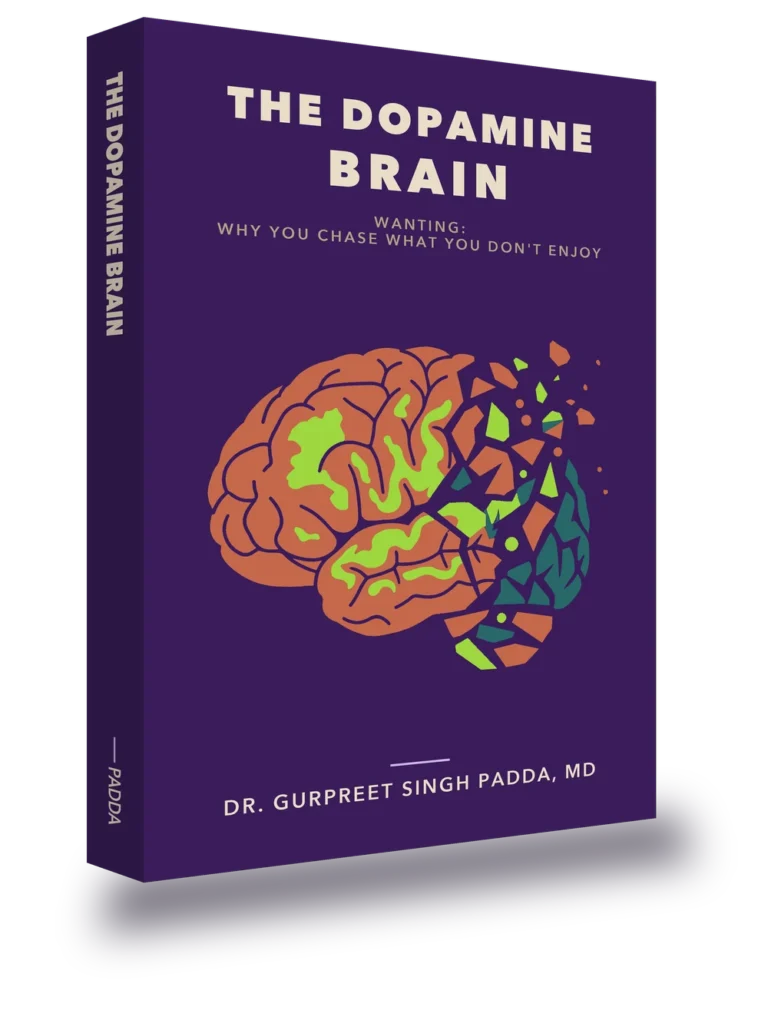
In this podcast talk, Dr. Padda argues that the modern food supply is not neutral background but an active input. It was built to last on the shelf, not to nourish. Growing up in public housing in downtown St. Louis City shaped that view. This is a guest spot, not a medical explainer, and some of it is personal.
The background, because it explains the argument
Dr. Padda was born in India. He came to the United States at eight or nine, in the years after Partition. His family left a country they believed was moving toward communism. His father is a physicist; his mother a mathematician.
The family landed in public housing in downtown St. Louis City. He has said he did not at first realize there was a white population in America. The children around him were Black. He was brown, he wore a turban, and he did not yet speak English. He learned the country from that spot. Later he finished school in the county. He moved between three different communities before he grew up.
That path is where his argument comes from. He watched the same kind of person do better or worse based on the neighborhood: what was sold there, what it cost, what was within walking distance. That teaches you more than reading about health gaps. It is why his view keeps landing on environment rather than individual choice. It is also why he speaks to the community that first took his family in.
His remarks in this interview speak to that audience directly, at the host’s request. We kept that context instead of making it generic.
How does your food environment affect your health?
The core claim is that the modern food supply is not neutral background. It is an active input, and it was built to last on the shelf, not to nourish. We lay out that history in why we treat insulin before we treat the joint.
Several specific mechanisms come up in the talk:
Food reward. Highly processed, calorie-dense food drives dopamine release through the brain’s reward pathways. It does so in a way that overlaps with other habit-forming substances. That reward, not hunger alone, keeps people overeating. Covered in fat is an immune organ.
Leaky gut. A leaky gut (intestinal permeability) lets bacterial toxins (lipopolysaccharide) into the blood and drives inflammation. In chronic pain, gluten and gliadin open the gut wall, and we see more autoimmune trouble in these patients than expected.
Seed oils and bonding. In rodent work, parts of industrial vegetable oil suppress oxytocin signaling, the hormone behind bonding. It is one more reason we tell patients to cut seed oils out.
Fibromyalgia as metabolism. The interview calls fibromyalgia “fundamentally a disorder of metabolism,” with the pain as a side effect, not the main disease.
Many studies now report links between fibromyalgia and broken metabolism, insulin resistance in particular. This is the model we treat by: address the metabolic driver, and the pain follows. That is a real break from the standard view. The standard view treats fibromyalgia mainly as a problem of how the brain and spinal cord process pain.
The practical step is simple. If you have fibromyalgia, your metabolic status is worth measuring. See why we treat insulin before we treat the joint.
What does reversing type 2 diabetes actually mean?
The strongest results in the talk are about type 2 diabetes.
The published figure quoted is about standard advice. One cohort study used routine primary care records from a large group of patients. It found very low odds, each year, that a person with obesity reaches normal weight through standard “eat less, move more” advice. The odds ran about one in a few hundred, and they varied a lot by sex and starting BMI. It is the baseline to measure anything else against.
This practice gets much better results, including patients coming off insulin within a few months. That comes from this clinic’s own patients under its own protocols.
The mechanism is laid out in hyperinsulinemia and chronic pain and in addiction, chronic pain and type 2 diabetes share one substrate.
Why does Dr. Padda decline GLP-1 weight-loss drugs?
In the interview, he declines to use GLP-1 receptor agonists, for a specific reason. They cut food intake across the board, protein included. So muscle is lost along with fat. When the drug stops, fat comes back faster than muscle. That leaves a patient at about the same weight with a worse body makeup than they started with.
The concern behind this is real and talked about more and more: loss of lean mass with GLP-1 therapy is documented. That is why strength training and enough protein are now routinely advised alongside these drugs.
If you take one, this is a talk to have with your prescriber. Do not start, stop, or change any medication without consulting your physician.
Frequently asked questions
Is fibromyalgia really a metabolic disease?
Many studies now report links between fibromyalgia and broken metabolism, mainly insulin resistance. That is the model we treat by: metabolic driver first, pain as the result. Your metabolic status is worth measuring. See why we treat insulin before we treat the joint.
Can type 2 diabetes actually be reversed?
Remission is within reach for a real share of patients, mainly earlier in the disease. The results in this interview come from this practice’s own patients. See addiction, chronic pain and type 2 diabetes share one substrate.
Should I stop my GLP-1 medication after watching this?
No, not without talking to your prescriber. The muscle-loss concern is real and worth discussing. It is usually handled with protein and strength training, not by stopping. Do not start, stop, or change any medication without consulting your physician.
Do vegetable oils really affect bonding?
In rodent work, parts of industrial vegetable oil suppress oxytocin signaling, the hormone behind bonding. It is one more reason we tell patients to cut seed oils out. See fat is an immune organ.
Is processed food addictive?
Highly processed, calorie-dense food drives dopamine release through the brain’s reward pathways. It works in a way that overlaps with other habit-forming substances. That reward, not hunger alone, is what keeps people eating past need. It is why Dr. Padda treats the food supply as an active input built to last on the shelf, not to nourish. It is not neutral background.
Do GLP-1 drugs cause muscle loss?
Loss of lean mass with GLP-1 therapy is documented. These drugs cut intake across the board, protein included. So muscle goes along with fat. When the drug stops, fat tends to come back faster than muscle. That can leave you at a similar weight with a worse body makeup. Do not start, stop, or change any medication without consulting your physician.
Why does the neighborhood you live in change your health?
Because what is sold there, what it costs and what sits within walking distance shape what people actually eat. Dr. Padda watched the same kind of person do better or worse based on the neighborhood. He saw it first from public housing in downtown St. Louis City and later in the county. That is why his view lands on environment rather than willpower.
Where can I be evaluated?
Padda Institute, 4477 Woodson Rd, Suite 100, St. Louis, MO 63134, serving the St. Louis region across Missouri and Illinois. Call (314) 481-5000 or text (314) 886-5902.
Addresses, hours and directions are listed on our Locations page.
Key takeaways
- The environment-over-choice argument comes from what he saw firsthand in three St. Louis communities.
- Processed food drives overeating through the brain’s reward pathways.
- In chronic pain, gluten and gliadin drive a leaky gut and autoimmune trouble.
- In rodent work, industrial vegetable oil suppresses oxytocin signaling.
- Fibromyalgia is driven by metabolism, and that is how we treat it.
- The diabetes reversal results described here come from this practice’s own patients.
- GLP-1 drugs cost muscle along with fat, which is why Dr. Padda declines them.
This article is educational and is not a substitute for evaluation, diagnosis, or treatment by a physician. Individual results vary. Do not start, stop, or change any medication without consulting your physician.
Find out what is actually driving your pain
Evaluation at the Padda Institute starts by finding the source of the pain and the metabolic ground it is running on. Not by adding another prescription.
Book an appointment or call or text us
Padda Institute Center for Interventional Pain Management, 4477 Woodson Rd, Suite 100, St. Louis, MO 63134 — serving the St. Louis region across Missouri and Illinois.
Medically reviewed by Gurpreet Singh Padda, MD, MBA, MHP — Board Certified in Anesthesiology, Pain Medicine, Interventional Pain Management, Addiction Medicine, and Obesity Medicine. Last reviewed August 2026.
Dr. Gurpreet Singh Padda, MD, MBA, MHP