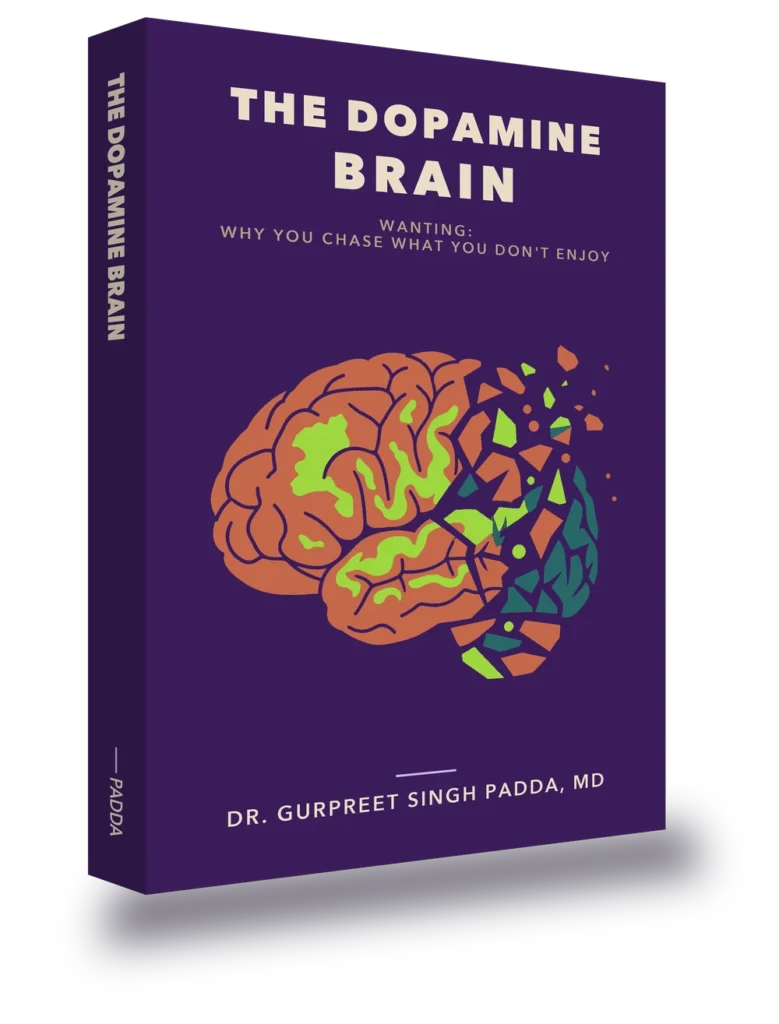
The Dopamine Brain follows a single reversal through food, addiction, Parkinson’s therapy and the intensive care unit. Dopamine is not the pleasure chemical. It tells you what to get. It does not tell you what to enjoy. The 401-page book runs 31 chapters and 98 figures.
St. Louis, MO, United States — October 5, 2026
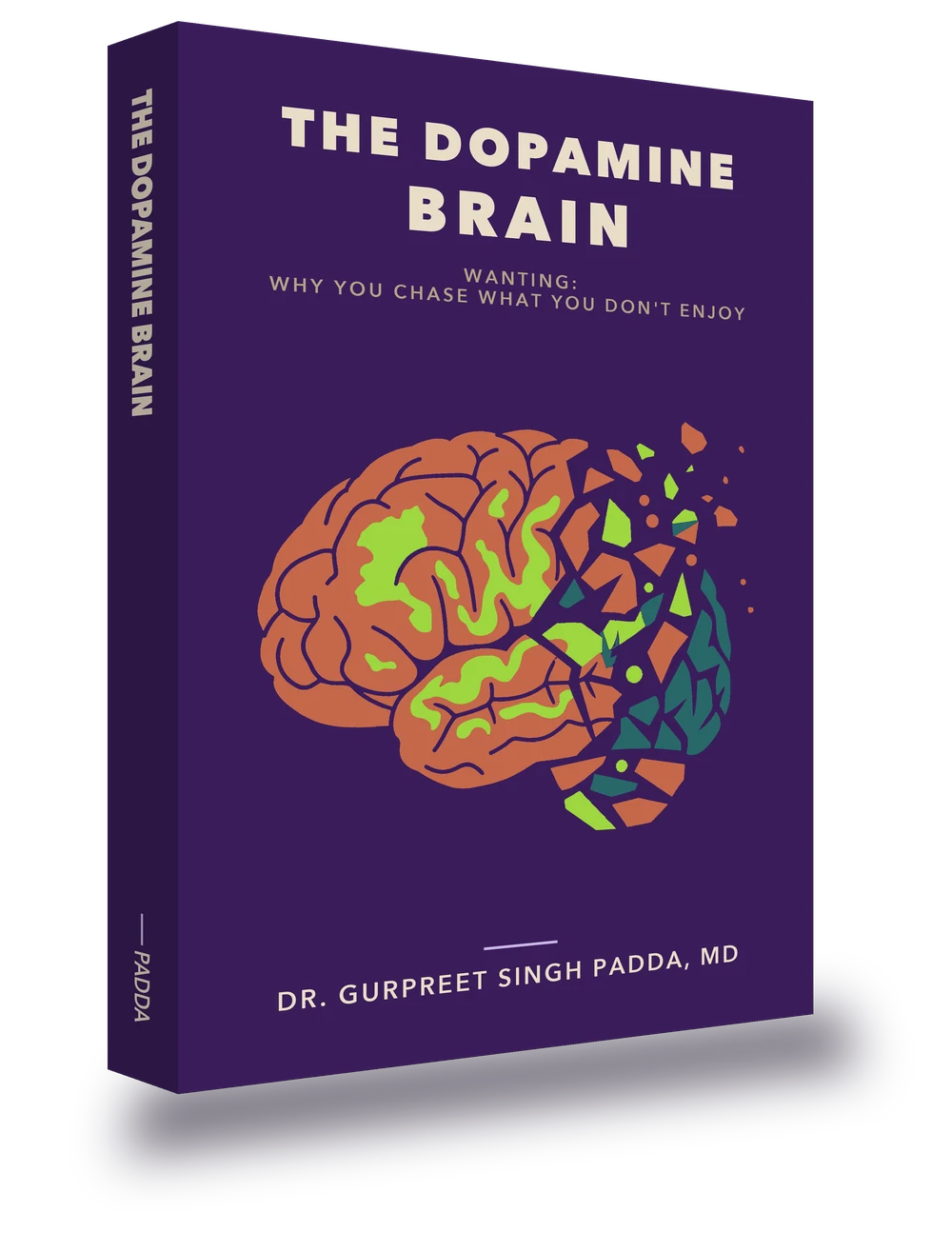
Dr. Gurpreet Singh Padda, MD, MBA, MHP, has published The Dopamine Brain: Wanting: Why You Chase What You Don’t Enjoy. It is the fourth volume in his series The Brain, and the first of them organized around a single sentence that most of medicine and nearly all popular health writing still get backwards. Dopamine is not the pleasure chemical. It tells you what to get. It does not tell you what to enjoy.
The distinction sounds academic for about one paragraph. Then it starts dismantling things. If wanting and liking are separate systems, then a patient who keeps returning to a food, a drug or a behavior they no longer enjoy is not weak, not in denial and not insufficiently motivated. They are running an intact pursuit circuit attached to a pleasure response that has already gone quiet. Every intervention built on the assumption that people chase pleasure is aimed at the wrong target.
The experiment that should have settled it, in 1998
The book’s opening chapters return to a study that has been available for more than twenty-five years and has been absorbed by almost no one. Animals with their dopamine systems disabled still produced normal facial reactions to sweetness. They still learned what they liked and disliked. They stopped pursuing any of it. The authors’ conclusion is quoted in the book as one of the most important sentences in the field: dopamine systems are necessary for wanting incentives, but not for liking them or for learning new likes and dislikes (Berridge & Robinson, 1998).
A second finding from the same year cuts even harder. Rats were shown to self-administer a compound that lowered dopamine in the nucleus accumbens. Those authors concluded that changes in accumbens dopamine do not correlate with a stimulus’s capacity to induce reward or aversion (Marinelli et al., 1998). The chemical the popular account treats as the body’s reward signal does not reliably move in the direction of reward.
Where the error shows up in a clinic
The Dopamine Brain follows the correction into settings where it changes what a physician should do on Monday morning.
In a controlled inpatient study, meals were matched for calories, sugar, fat, fiber and macronutrients. Adults ate 508 calories a day more on the ultra-processed diet and gained weight on it. They did not rate that food as more pleasant (Hall et al., 2019). Liking was not the variable. Something about the delivery was.
In Parkinson’s disease, where dopamine agonists are given deliberately, the same circuit produces documented harm. Among patients who began with no impulse control disorder, 46.1 percent had developed one within five years. By exposure, that was 51.5 percent among patients ever treated with a dopamine agonist, versus 12.4 percent among those never treated (Corvol et al., 2018). Roughly one in two.
In the intensive care unit, the book reconstructs the rise and fall of low-dose “renal dose” dopamine. Across 61 trials and 3,359 patients, the drug raised day-one urine output by 24 percent and changed neither dialysis nor survival (Friedrich et al., 2005). The book declines to stop where standard teaching stops. It keeps the distinction that survives the retraction of the paradigm: inside vascular shock, perfusion pressure still keeps a kidney intact.
“Half of how we counsel patients about food and relapse is built on the wrong verb. We tell people to find something they enjoy more. The circuit that dragged them back was never asking about enjoyment. It was asking what to get. Until we separate those two things, we will keep writing plans that fail and then blaming the patient for the failure. That one is on us.”
A book that publishes its own evidence rule
The Dopamine Brain carries 98 figures across 31 chapters. It was built under an editorial rule Dr. Padda is making public with the book: a chart may only plot numbers already quoted in that chapter’s citation manifest. No derived values, no estimated values, no confidence intervals drawn where the source published none. Four charts were rebuilt during production because they failed that rule, and the book’s own account treats those failures as the reason the rule exists.
A code at the end of every chapter opens the matching technical supplement at no cost. Each one is drafted for the reader to bring to their own physician, and all of them are hosted at thedopaminebrain.com. Quantities in the text carry the population they were measured in. There is no detox, no protocol to buy, no screen-time panic and nothing to sign up for. Every chapter has also been filmed. The 31 episodes run on the Addictionology Center channel, with a mirror on the Padda Institute channel.
Availability
The Dopamine Brain: Wanting: Why You Chase What You Don’t Enjoy by Dr. Gurpreet Singh Padda, MD, MBA, MHP, is available now on Amazon in Kindle and paperback editions. Paperback ISBN 978-0-9832058-3-8. Published by Nectar Media Group. 401 pages, 31 chapters, 98 figures. Book and technical supplements: thedopaminebrain.com. It is the fourth volume in The Brain, following The Starved Brain, The Pained Brain and The Angry Gut, and preceding the forthcoming The Humbled Brain.
Frequently asked questions
What is The Dopamine Brain about?
It is about one correction. Dopamine is not the pleasure chemical. It drives wanting, the pursuit of a thing, and not liking, the enjoyment of it. The book follows that split through food, addiction, Parkinson’s therapy and the intensive care unit, and shows where treatment built on the pleasure model aims at the wrong target.
Who wrote The Dopamine Brain?
Dr. Gurpreet Singh Padda, MD, MBA, MHP. He is an interventional pain physician, anesthesiologist and addiction medicine specialist in St. Louis, and has led the Center for Interventional Pain Management since 2001. The book is the fourth volume in his series The Brain.
If dopamine is not pleasure, why do people relapse to things they no longer enjoy?
Because the pursuit circuit can stay intact after the pleasure response has gone quiet. In 1998, animals with their dopamine systems disabled still showed normal reactions to sweetness and still learned likes and dislikes. They stopped pursuing any of it (Berridge & Robinson, 1998). A person who keeps going back is not weak. They are running an intact pursuit circuit attached to a pleasure response that has already gone quiet.
Where can I buy The Dopamine Brain?
It is available now on Amazon in Kindle and paperback editions. The paperback runs 401 pages across 31 chapters with 98 figures, ISBN 978-0-9832058-3-8, published by Nectar Media Group. Each chapter closes with a code that opens a free technical supplement at thedopaminebrain.com.
Is there a video version of The Dopamine Brain?
Yes. All 31 chapters have been filmed. The episodes run on the Addictionology Center channel, with a mirror on the Padda Institute channel.
Where this release was carried. Distributed October 5, 2026 by Nectar Media Group through EIN Presswire.
Dr. Gurpreet Singh Padda, MD, MBA, MHP