Rib pain that lasts more than 2 months after chest surgery is post-thoracotomy pain syndrome. When it runs as a band of burning or electric pain along one rib space, on one side, it is intercostal neuralgia. Injury to the intercostal nerve (the nerve under each rib) is the single most important cause. Chronic pain follows chest surgery in 25% to 60% of patients.1
Intercostal neuralgia and persistent rib pain after chest surgery is not “just soreness that takes time.” Do not accept vague reassurance when the pain acts like nerve pain. Pain around the wound that lasts past normal healing is common. It deserves an honest plan based on what is causing it, not an assembly line.
When does rib pain after chest surgery become a chronic pain syndrome?
Most pain after surgery gets better. But some patients keep having pain around the wound past the usual recovery time. There is still no single, set path to recovery, and we will not pretend there is.
PTPS (post-thoracotomy pain syndrome) means pain around the wound that lasts more than 2 months after surgery. That matters. If you are still hurting at month four, the assembly line usually offers two exits. Neither one comes with a diagnosis.
And yes, the numbers can be large. A critical review of pain after chest surgery put chronic pain at 25% to 60% of patients1. A later review found that up to 65% have some lasting pain, and about 10% have pain severe enough to upend their lives.2 Nerve pain is not rare. Injury to the intercostal nerve seems to be the single most important cause.1 Getting diagnosed is also hard. Patients may see several doctors before someone names intercostal neuralgia. The pain map does not always match what scans show.
How is intercostal neuralgia diagnosed?
We diagnose this with your history, the pattern on exam, and targeted tests. The goal is not to “prove surgery caused everything.” The goal is to find out whether intercostal neuralgia and persistent rib pain after chest surgery is the main pain source right now.
Central sensitization (an overactive pain system) can blur the pain map. So we pay close attention to where the pain sits. Intercostal nerve pain often follows a band on one side of the chest. It may get worse with movement, deep breaths, clothing rubbing, or pressing along the rib space. If the pain feels “electrical” or burning, nerve pain is more likely.
Scans help rule out dangerous causes. But a normal CT or X-ray does not rule out a nerve problem. Intercostal nerve injury may exist with nothing visible on routine scans. That is why we use diagnostic procedures when the pattern supports it.
What does a diagnostic nerve block tell you?
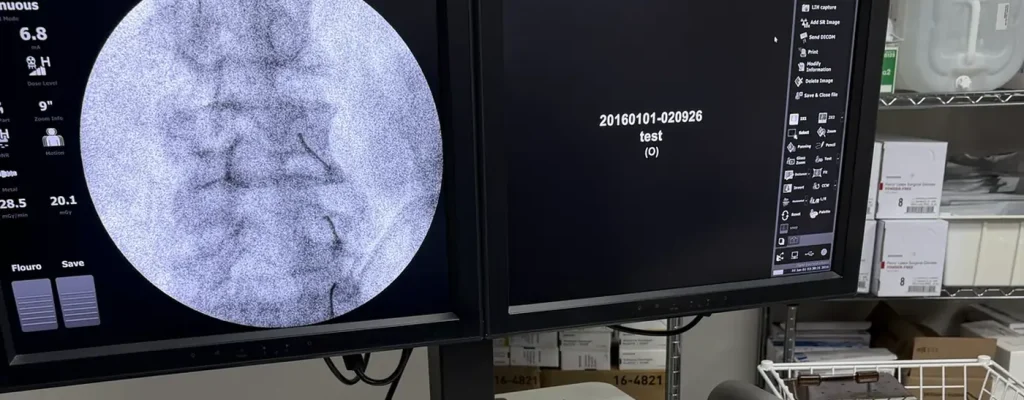
A nerve block can both diagnose and treat. Numbing medicine is placed near the suspected intercostal nerve. If it clearly cuts your usual pain for the expected time, that is evidence the targeted nerve is involved.
In real-world terms, this step turns frustration into a plan. Without it, you are guessing from symptoms alone. Guessing is how you end up bouncing between specialists with no clear next step.
What we look for in the exam
- Band-like pain on one side across a rib space.
- Allodynia (pain from light touch) or tenderness with light touch.
- Pain set off by pressing on specific rib spaces.
- Things like movement, posture, or breathing that make it worse but do not fully explain the nerve-like feel.
If you have not been offered a step-by-step evaluation, start with a visit to a pain management doctor team that routinely runs diagnostic procedures.
How is intercostal neuralgia after chest surgery treated?
No single procedure “turns off” intercostal neuralgia and persistent rib pain after chest surgery for everyone. What we can do in 2026 is be systematic. Confirm the pain source. Step up in a sound order. And skip procedures that do not match the cause.
We usually sort care into five buckets: education and expectations, calming the nerves, function and chest wall mechanics, targeted interventional pain management, and care for central sensitization.
1) Medications and neuropathic modulation, with realistic goals
Medicine choices vary by patient, but the rule is the same. Nerve pain often responds better to drugs that calm nerve firing than to “anti-inflammatory only” plans. We also talk through opioid tapering support when opioids are already in the mix. Long-term opioid use can slow recovery and make the pain system harder to change.
We do not promise medicine will end the pain. We promise it can turn the signal down enough that your nervous system can stop sounding the alarm.
2) Physical therapy and chest wall mechanics
Targeted rehab can cut mechanical triggers and make breathing and movement easier. The mistake is generic rehab that is only gentle stretching. If your therapy ignores the rib space nerve, you can waste months.
3) Interventional options for nerve-mediated pain
This is where patients often feel stuck, because the word “procedure” gets used like a guarantee. We distrust that sales instinct. Procedures make sense when the diagnostic logic supports them.
- nerve block (to diagnose, with possible short-term relief).
- Thoracic or intercostal targeted injections when scans and pattern match.
- radiofrequency ablation when diagnostic blocks have worked and the anatomy supports turning off the nerve.
- facet joint injection only if the exam points to the thoracic facet joints, not just because the pain is in the ribs.
For a clearer map of chest nerve logic, we explain the “band around the chest” idea in our thoracic radiculopathy and intercostal neuralgia overview. It is a framework, not a diagnosis by itself.
4) When surgery-grade options come up (and when they do not)
Some patients ask if more chest surgery is the answer. The honest answer is narrower. If you do not look like the patients in the studies, the benefit is uncertain. We usually put less invasive diagnostic and targeted steps first, unless there is a clear structural problem that needs surgery.
Cryoablation (freezing the nerve) has been used in some surgical groups. That tells us the idea matters for controlling the intercostal nerve. But use in a group is not proof that every patient with intercostal neuralgia and persistent rib pain after chest surgery will get better with one technique.
Frequently asked questions
How do I know if my rib pain after chest surgery is intercostal neuralgia and not something else?
Intercostal neuralgia and persistent rib pain after chest surgery often follows a band. It may include burning, electric feelings, or pain with light touch along rib spaces. Scans can be normal. So diagnosis relies on the exam pattern and sometimes a nerve block response to confirm the nerve involved. See diagnostic nerve blocks for how this is evaluated.
What diagnostic tests are used for intercostal neuralgia after thoracic surgery?
Tests usually start with scans to rule out dangerous causes. Then they focus on a targeted exam. When the pain pattern supports it, doctors may use image-guided diagnostic injections to see if they relieve your usual pain. That tells more than scans alone. See image-guided procedures for how this is evaluated.
Is a nerve block procedure the same thing as treatment for intercostal neuralgia?
Not exactly. A nerve block can diagnose, and any short-term relief can guide the next step. But it is not always a lasting cure. Whether to step up to options like radiofrequency ablation depends on your response and the nerve target. See nerve blocks for how this is evaluated.
Are radiofrequency ablation options appropriate for persistent rib pain after chest surgery?
They can be, when the pain source is confirmed and your diagnostic response supports turning off the nerve. Pain in the ribs alone is not enough. Evidence varies. We take a sound position instead of promising results the data cannot back. See radiofrequency ablation for how this is evaluated.
Does epidural steroid injection ever help with intercostal neuralgia?
An epidural steroid injection may be considered in some thoracic patterns, especially if a pinched nerve root is suspected. For pain driven mainly by the intercostal nerve, targeted intercostal or thoracic approaches usually fit the cause better than low-back-style thinking. See epidural steroid injections for how this is evaluated.
Is rib pain after chest surgery normal?
Some soreness is. Most pain after surgery gets better on its own. Pain around the wound that is still there more than 2 months after surgery is post-thoracotomy pain syndrome. It is not rare. A critical review put chronic pain after chest surgery at 25% to 60% of patients. About 10% have pain severe enough to change their lives. Past that 2-month line, it deserves a diagnosis, not more waiting.
How long does intercostal neuralgia last after surgery?
There is no fixed timeline, and no one should promise you one. Recovery after chest surgery does not follow one set path. What the definition gives you is a line. Pain that lasts more than 2 months after surgery has become a persistent pain syndrome. If you are still hurting at month four, the next step is finding the pain source, not more waiting.
What causes nerve pain after chest surgery?
Injury to the intercostal nerve, the nerve that runs along each rib space, is the single most important cause. That is why the pain so often feels like nerve pain: burning, electric, or set off by light touch or clothing. Central sensitization can then amplify the signal and blur the pain map. That is why a normal CT or X-ray does not rule out a nerve problem.
How is nerve pain after chest surgery treated?
Step by step. Care falls into five buckets. Education and expectations. Medicines that calm nerve firing. Physical therapy aimed at chest wall mechanics. Targeted procedures such as a diagnostic nerve block (and radiofrequency ablation when the block response supports it). And care for central sensitization. When opioids are already in the mix, we support tapering. Long-term opioid use can make the pain system harder to change.
To discuss your own case, request an appointment through the appointment request form, call (314) 481-5000, or text (314) 886-5902. You can see the full range of pain treatments, read about the pain management doctors in St. Louis, or find both offices on the locations page.
Sources
- Wildgaard K, Ravn J, Kehlet H. “Chronic post-thoracotomy pain: a critical review of pathogenic mechanisms and strategies for prevention.” European Journal of Cardio-Thoracic Surgery, 2009;36(1):170–180. doi:10.1016/j.ejcts.2009.02.005
- Gupta R, Van de Ven T, Pyati S. “Post-Thoracotomy Pain: Current Strategies for Prevention and Treatment.” Drugs, 2020;80(16):1677–1684. doi:10.1007/s40265-020-01390-0
Dr. Gurpreet Singh Padda, MD, MBA, MHP