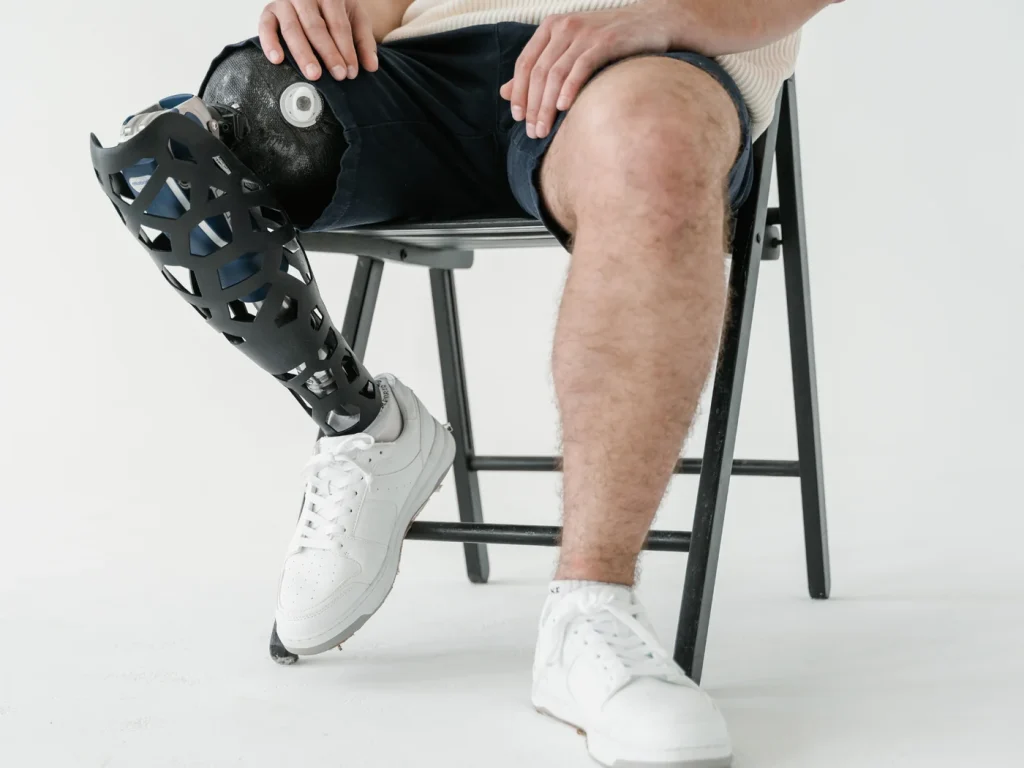
Phantom limb pain is pain felt in a limb that is no longer there. It is one of the most doubted symptoms in medicine, yet one of the best documented. It affects an estimated 40% to 80% of people who have had a limb amputated.1 That is not a rare side problem. Most people get it after amputation. Calling it imaginary is wrong, and it blocks care.
Why does phantom limb pain happen?
The cause is not one thing. It comes from the brain, the spinal cord and the peripheral nerves (the nerves outside the spine) all at once. That is exactly why one treatment rarely fixes it. It is also why the condition has been so hard to treat.1
Put simply, the limb is gone, but its wiring is not. The nerve endings in the residual limb (what is left of the limb) are still there. So are the spinal cord segments that served the limb. So is the patch of brain that mapped it. All of them stay active. Pain made at any of those levels is felt where the brain thinks the signal comes from. That is the missing limb.
How many people live with limb loss?
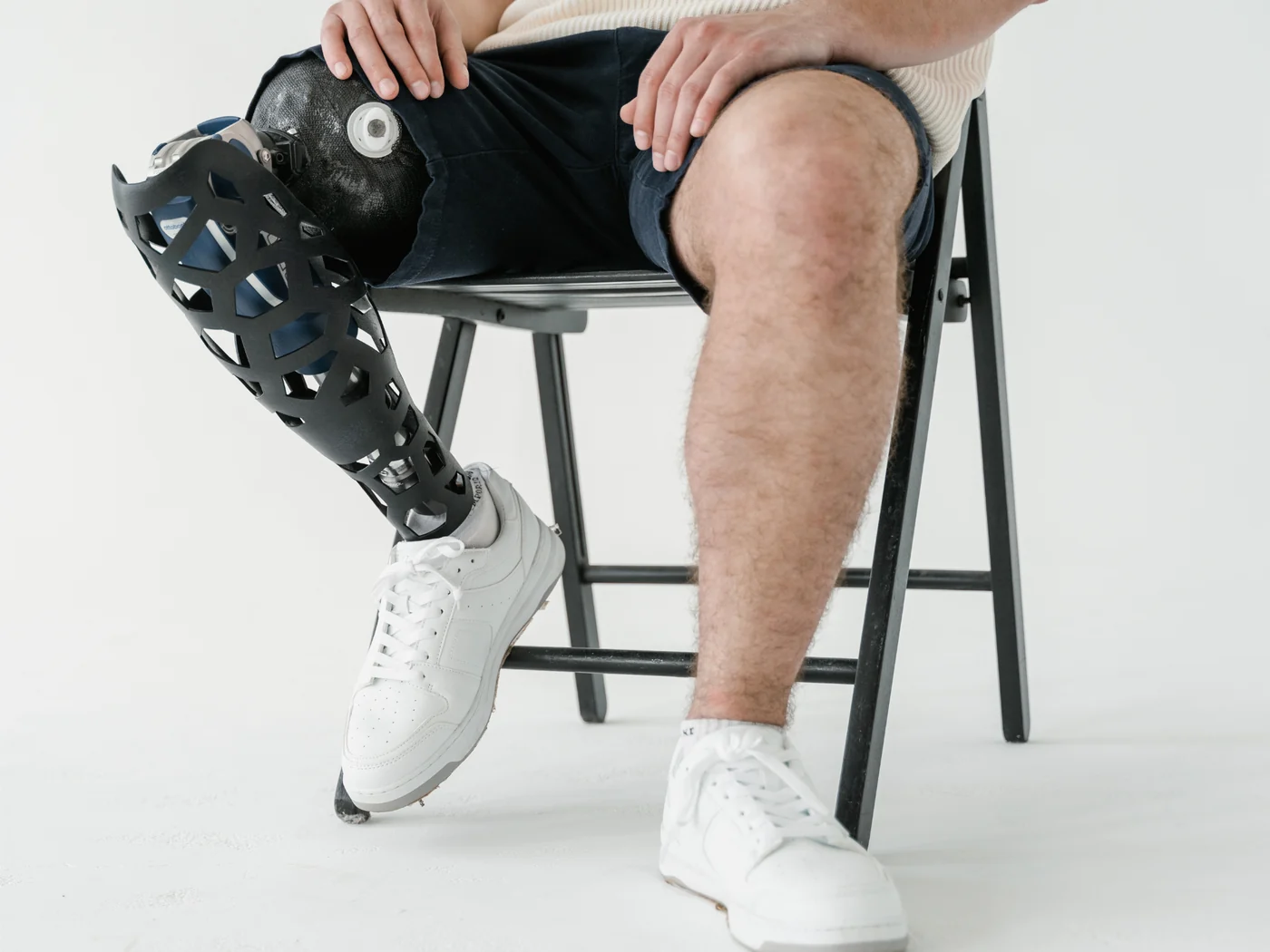
In the United States, an estimated 2 million people live with major limb amputation. That number is projected to reach 3.6 million by 2050.1 As that group grows, so does the number of people with a pain problem. Many doctors still treat it as an afterthought.
What is the treatment for phantom limb pain?
Treatment includes drugs, non-surgical methods such as mirror therapy, and surgery.1 The evidence is uneven. So it pays to be exact about what has actually been measured.
Mirror therapy
A systematic review and meta-analysis screened 2,094 articles and included 10 randomized controlled trials. Mirror therapy gave a statistically significant drop in pain compared with control within one month (standardized mean difference −0.46, 95% CI −0.79 to −0.13; P = .007). Patients whose pain had lasted longer than a year gained more (SMD −0.46, 95% CI −0.85 to −0.07; P = .02).2
The authors were careful about the limits. The therapy helped in the short term. There was no proof of a long-term effect. They noted this may reflect thin data, not a lack of benefit.2 That is an honest reading. Bring it to any talk about treatment.
Mirror therapy compared with virtual reality
A separate meta-analysis pooled 15 studies. There were 8 of mirror therapy with 214 people and 7 of virtual reality with 86. That is 300 people in all, mean age 36 to 63, 77% male, 61% lower-limb amputees. Both cut pain in a real way on a visual analogue scale (a simple line for rating pain). Mirror therapy cut it by a mean of 2.54 points (95% CI 1.42 to 3.66; p < 0.001). Virtual reality cut it by 2.24 points (95% CI 1.28 to 3.20; p < 0.001). There was no statistically significant difference between them (p = 0.69).3
The authors noted the studies were small. So they could not test factors such as the cause of amputation, where the limb was lost and time since amputation.3 So these are real effects in small studies. They are not settled dosing rules.
Which procedures can help phantom limb pain?
The pain comes from the nerves, the spinal cord and the brain at the same time. So treatment aimed at only one level often lets people down. If a nerve source in the residual limb is adding to the pain, a targeted treatment is worth a look. If the brain and spinal cord turning up the volume is the main driver, that needs its own treatment.
Options at this practice include peripheral nerve stimulation, spinal cord stimulation, targeted nerve blocks, and counseling for chronic pain done in-house. Sometimes the pain burns and acts like CRPS. Then the pages to read are CRPS and RSD treatment and ketamine therapy.
Frequently asked questions
Is phantom limb pain common, or am I unusual?
It is common. An estimated 40% to 80% of people who have had a limb amputated get it. Most amputees have it. It is not a rare side problem. Ways to evaluate it are described across the range of pain treatments.
How can something hurt when the limb is not there?
Because the pain comes from three levels that all stay intact. These are the nerve endings in the residual limb, the spinal cord segments that served the limb, and the patch of brain that mapped it. Pain from any of them is felt where the brain places the signal. See peripheral nerve stimulation.
Does mirror therapy actually work?
Pooled randomized trials show a statistically significant short-term drop in pain. People whose pain has lasted more than a year gain more. No long-term effect has been shown yet, which may reflect thin data. Weigh it with other options on the pain treatments page.
Is virtual reality better than mirror therapy?
On current evidence, no. A meta-analysis of 300 people found both cut pain scores in a real way. There was no statistically significant difference between them. The studies were small. So questions like amputation site and time since surgery are still open. See pain management doctors in St. Louis.
Why has nothing I have tried worked so far?
Often because a treatment aimed at one level cannot address a problem made at three. So find out which level drives your pain. Do not keep repeating the same approach. You can set that up through the appointment request form.
Is phantom limb pain all in your head?
No. It is one of the most doubted symptoms in medicine, and one of the best documented. The nerve endings in the residual limb are still active. So are the spinal cord segments that served the limb and the brain region that mapped it. Pain from any of them is felt where the limb used to be. Treating it as imaginary is wrong and blocks care.
What does the Padda Institute offer for phantom limb pain?
The first step is to find which level drives your pain: the residual limb, the spinal cord or the brain. Options here include peripheral nerve stimulation, spinal cord stimulation, targeted nerve blocks and in-house counseling for chronic pain. If the pain burns and overlaps with CRPS, CRPS treatment and ketamine therapy are also on the table.
To have phantom limb pain evaluated, request an appointment, call (314) 481-5000, or text (314) 886-5902.
Sources
- Spezia MC, Dy CJ, Brogan DM. Phantom Limb Pain Management. The Journal of Hand Surgery. 2024;50(2):208–215. doi:10.1016/j.jhsa.2024.09.007. Retrieved via PubMed. DOI
- Xie HM, Zhang KX, Wang S, Wang N, Wang N, Li X, Huang LP. Effectiveness of Mirror Therapy for Phantom Limb Pain: A Systematic Review and Meta-analysis. Archives of Physical Medicine and Rehabilitation. 2021;103(5):988–997. doi:10.1016/j.apmr.2021.07.810. Retrieved via PubMed. DOI
- Rajendram C, Ken-Dror G, Han T, Sharma P. Efficacy of mirror therapy and virtual reality therapy in alleviating phantom limb pain: a meta-analysis and systematic review. BMJ Military Health. 2022;168(2):173–177. doi:10.1136/bmjmilitary-2021-002018. Retrieved via PubMed. DOI
Dr. Gurpreet Singh Padda, MD, MBA, MHP