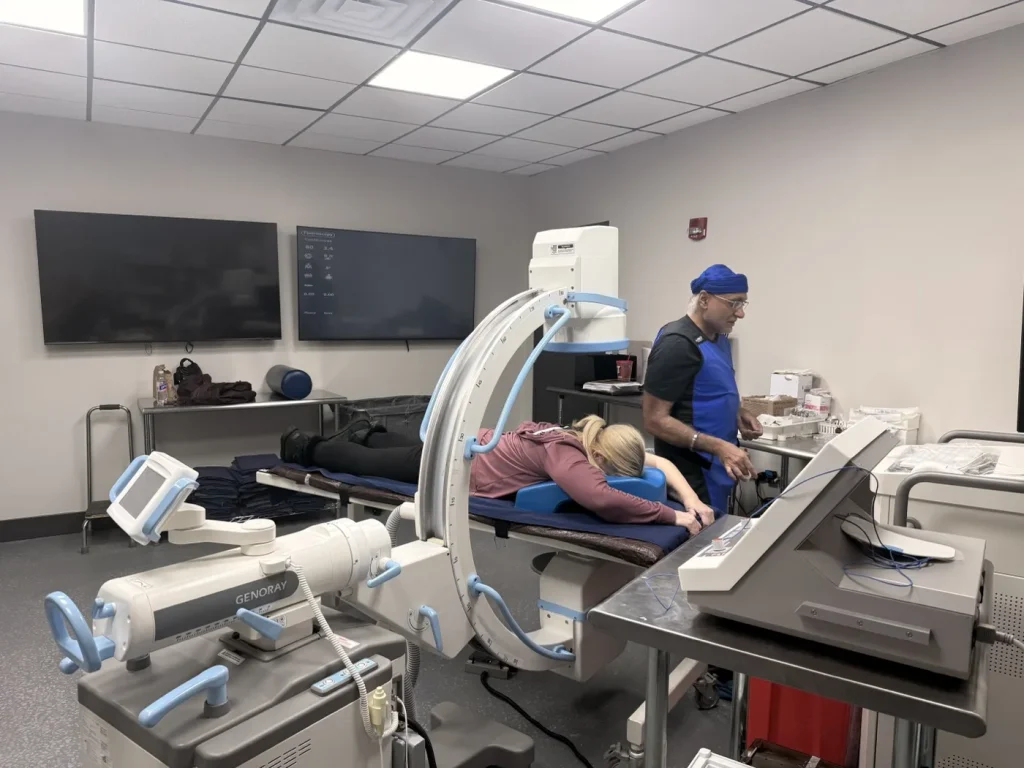
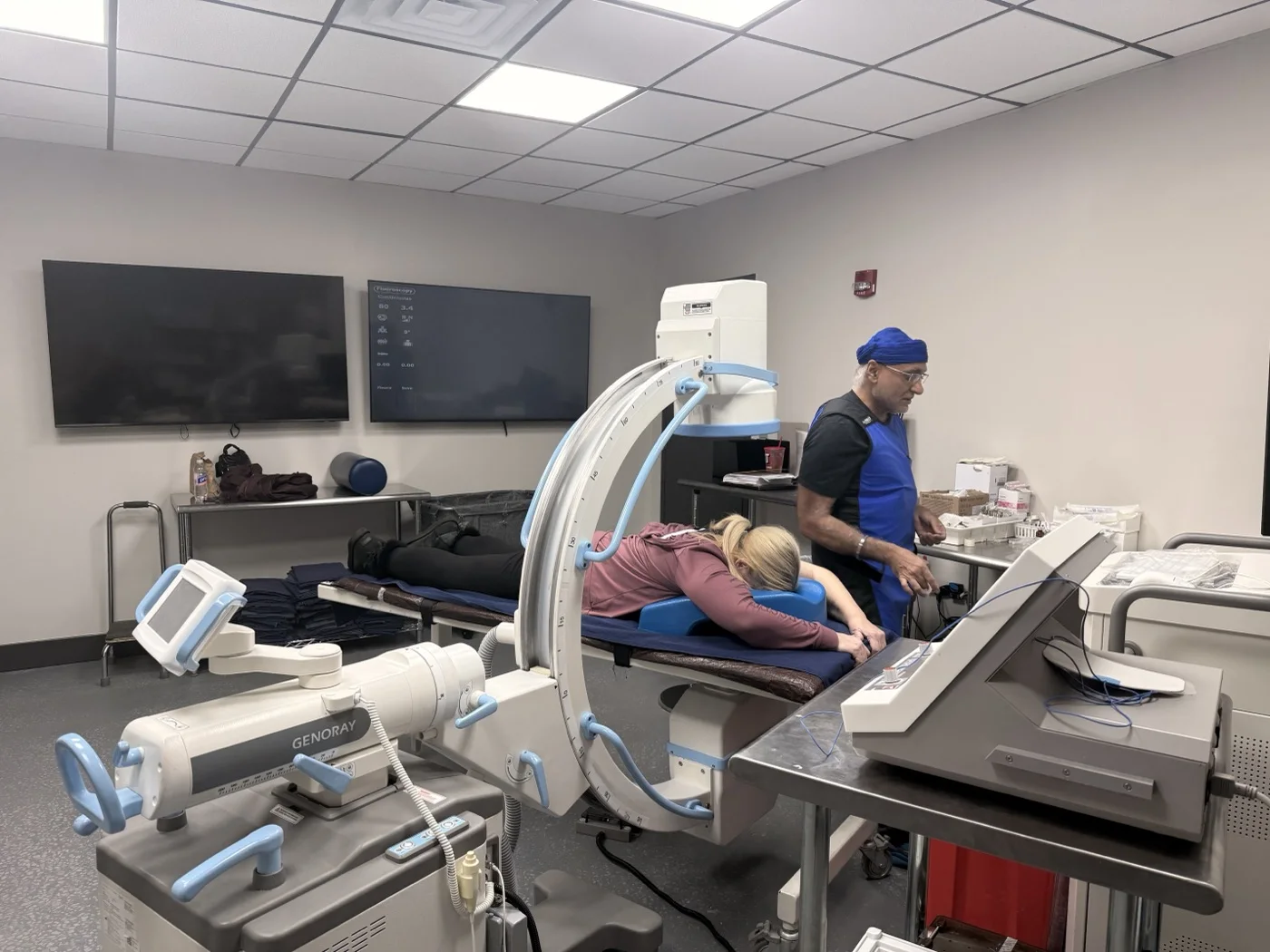
A spinal cord stimulator trial is a test, not a small version of the treatment. Temporary leads (thin wires) are placed. You live with the stimulation for a short time. The question is narrow: does this change your pain enough, and in the right way, to justify implanting a device? It exists because stimulation cannot be predicted from any scan or exam. The only reliable way to find out if your nervous system responds is to try it and measure what happens.
What the trial is screening for
Choosing patients for spinal cord stimulation means checking two separate things. First, is the pain problem a good fit for the device? Second, do patient factors predict a poor response? Those factors include mood and mental state, smoking, and opioid use. A trial adds to that screening. It does not replace it.1
Expert consensus guidance also says a formal process should be considered before proceeding to stimulation. That process gathers the patient’s story and gauges how well they accept living with chronic pain. It runs within a team of different specialists.1 In practice, the talk before the trial matters as much as the trial itself.
What the numbers actually look like
One center reported results for 505 consecutive stimulator trials (every trial, in order). Keep the patient group in mind when you read these figures. The average age was 67.5 years, and 64.2% of the patients were female.2
In that series, 86.1% of patients achieved trial success and 77.0% went on to permanent implantation.2 The gap between those two numbers is worth a closer look. A successful trial and a decision to implant are not the same event. Some people who respond still choose not to go ahead.
Response is not uniform across diagnoses
In the same series, patients with diabetic neuropathy had the highest trial success rate, at 83.3%. Patients with CRPS had the lowest, at 67.6%.2 That is not a reason to rule out a trial for CRPS, also called reflex sympathetic dystrophy or RSD. It is a reason to go in with realistic expectations. It is also a reason to have the rest of the plan already on the table, not held in reserve. That includes ketamine therapy where it fits.
Benefit is durable for most, but not all
At follow-up from 3 to 34 months, 76.6% of implanted patients kept significant improvement.2 The overall explant rate (devices removed) was 14.1%. The top cause was that the device stopped working well. Lead migration (the wires shifting) and infection were the most common complications.2
Tobacco use, depression, chronic opioid use, and falls after implant were statistically significant predictors of removal.2 You can change three of those four before a trial is ever booked. That is a reason to treat the time before the trial as part of the treatment.
Opioid use and what the trial can change
In that series, opioid use decreased in 58.9% of patients.2 That figure matters if you hope to cut back on medication. But it is a goal you work toward with a prescriber. It is not a switch the device flips. How that cutback is managed is covered under opioid stewardship.
Questions worth asking before you consent
A trial that is not clearly defined up front gives an unclear result. An unclear result is hard to act on. Before the leads go in, ask:
- What threshold are we using to call this a success, and how will it be measured?
- Besides how strong the pain is, what function are we tracking? Walking, standing time, sleep?
- What happens if I respond only partly? Is the answer more programming, a different target, or a different treatment?
- Which of my own risk factors should we address first? Smoking, mood, medication, past falls?
If a partial response changes the plan, the other options are the same image-guided treatments used across the practice, including epidural steroid injection, nerve blocks, and peripheral nerve stimulation.
Frequently asked questions
What counts as a successful spinal cord stimulator trial?
A set level of improvement, agreed on before the trial starts. It is measured against how you actually did during the trial, not what you recall later. The procedure is described on the spinal cord stimulation page.
If my trial succeeds, will the benefit last?
Often, though not always. In a series of 505 trials in a row, 76.6% of implanted patients still had significant improvement at follow-up between 3 and 34 months. The overall explant rate was 14.1%, most often because the device stopped working well. Other options, if the benefit fades, are on the pain treatments page.
Does having CRPS make a stimulator trial pointless?
No. CRPS had the lowest trial success rate in that series, at 67.6%. That is still a majority. But it calls for realistic expectations and a layered plan. See CRPS and RSD treatment.
Can anything I do beforehand improve the odds?
Possibly. Tobacco use, depression, chronic opioid use and falls after implant were each significant predictors of the device later being removed. Raise them early. One route is counseling for chronic pain.
What happens if the trial does not work?
It has still answered the question. And it prevents an implant that would not have helped. The plan then moves to other targets, which may include nerve blocks or peripheral nerve stimulation.
To discuss whether a stimulator trial fits your situation, request an appointment, call (314) 481-5000, or text (314) 886-5902.
Sources
- Shanthanna H, Eldabe S, Provenzano DA, et al. Evidence-based consensus guidelines on patient selection and trial stimulation for spinal cord stimulation therapy for chronic non-cancer pain. Regional Anesthesia & Pain Medicine. 2023;48(6):273. doi:10.1136/rapm-2022-104097. PMC10370290
- Gheith R, Wortmann M, Najjar M, Oliver C, Whitlow B, Raterman B, Shackelford KR. Real-World Outcomes of Spinal Cord Stimulation: A Consecutive Institutional Experience with 505 Trials, Trial-to-Implant Ratio, Long-Term Efficacy, and Explantation Risk Factors. Journal of Pain Research. 2025;18:6381–6395. doi:10.2147/JPR.S552361. PMC12672166
Dr. Gurpreet Singh Padda, MD, MBA, MHP