Padda Institute Center for Interventional Pain Management is a physician-owned interventional pain practice serving the greater St. Louis metropolitan area, with offices on Woodson and on Natural Bridge Road, both in St. Louis. Care is led by Dr. Gurpreet Singh Padda, MD, MBA, MHP.
Dr. Gurpreet Singh Padda, MD, MBA, MHP — Interventional Pain Management Physician
For a plain-language overview of how care is organized here — first visit, diagnosis, insurance and what happens next — see pain management in St. Louis.
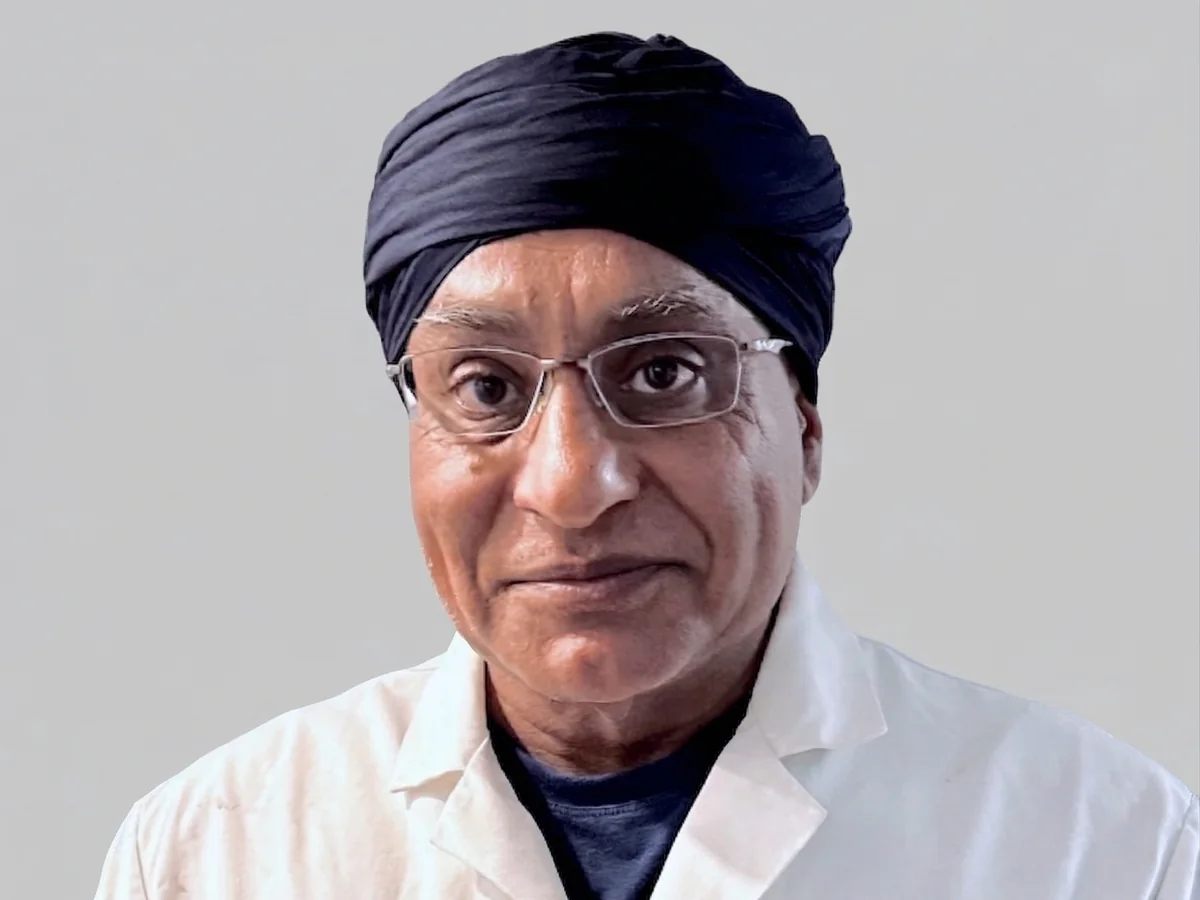
Dr. Padda has practiced interventional pain medicine in the St. Louis region for more than three decades. He completed his anesthesiology residency at Washington University–Barnes Hospital, spent seven years on the faculty of Saint Louis University School of Medicine, and holds diplomate status with five American specialty boards. A full professional profile, including publications and national presentations, is available separately.
Board certifications you can verify independently
Board certification in pain medicine is common among physicians advertising pain management. This particular combination is not.
- American Board of Anesthesiology — Diplomate
- American Board of Interventional Pain Physicians (ABIPP) — Diplomate
- American Board of Pain Medicine — Diplomate
- American Board of Addiction Medicine — Diplomate
- American Board of Obesity Medicine — Diplomate
Identifiers you can check rather than take our word for:
- Individual NPI: 1427035955 — verify in the CMS national provider registry
- Practice NPI: 1508067208
- Missouri medical license: MD 100572
Training and background
- Doctor of Medicine — University of Missouri–Kansas City School of Medicine
- Anesthesiology residency — Washington University / Barnes Hospital, St. Louis
- Master of Business Administration — Saint Louis University
The anesthesiology background is the clinically relevant one. Interventional pain medicine grew out of anesthesiology because the underlying skill — placing a needle precisely against a named anatomical target, under imaging, safely — is an anesthesiology skill.
What an interventional pain physician actually does
“Pain management doctor” covers several very different kinds of clinician, and the distinction matters when you are choosing one. A primary care physician manages pain mostly through medication. A physical therapist or chiropractor treats it through movement and manual therapy. A spine surgeon treats structural problems that require an operation.
An interventional pain physician occupies the space between those. The work is diagnostic first: identifying which specific structure — a facet joint, a nerve root, a sacroiliac joint, an entrapped peripheral nerve — is generating the pain, using image-guided injections that double as tests. Only then does treatment follow, targeted at the structure the diagnosis identified. It is a specialty built on the premise that “back pain” is a symptom, not a diagnosis.
Why the addiction and obesity board certifications matter here
These two look out of place on a pain practice until you consider what walks through the door. A meaningful share of chronic pain patients arrive already on long-term opioids, sometimes at doses that are no longer helping and cannot be stopped abruptly. Managing that safely — tapering down without putting someone into withdrawal, while interventional procedures take over the work the medication was doing — is addiction medicine, not pain medicine, and most interventional practices refer it out.
The metabolic side is less obvious and more interesting. Adipose tissue is not inert storage; it is endocrine tissue that releases inflammatory cytokines. Insulin resistance, visceral adiposity and chronic inflammation change how the nervous system processes pain signals, which is why some patients hurt more than their imaging suggests they should. Treating the joint while ignoring the metabolic environment it sits in is treating half the problem.
Conditions we treat
Each condition below links to a detailed explanation of how it is diagnosed and what treatment involves.
- Sciatica and radicular leg pain
- Complex regional pain syndrome (CRPS/RSD)
- Diabetic and peripheral neuropathy
- Failed back surgery syndrome
- Car accident and injury pain
- Severe head and neck pain
- Migraine and cluster headache
- Piriformis syndrome and cluneal neuropathy
- Serious foot pain
- Chronic pancreatitis pain
- Cancer pain
- Anxiety, PTSD and chronic pain
Interventional pain procedures we perform in St. Louis
Every procedure is performed on site, on an outpatient basis, under ultrasound or fluoroscopic guidance.
- Epidural steroid injection, selective nerve root block and epiduroplasty
- Facet joint injection and facet joint radiofrequency ablation
- Sacroiliac joint injection and hip joint injection
- Genicular nerve block, genicular radiofrequency ablation and knee gel injections
- Diagnostic and therapeutic nerve blocks, including stellate ganglion, lumbar sympathetic, celiac plexus and sphenopalatine ganglion blocks
- Spinal cord stimulation and peripheral nerve stimulation
- Kyphoplasty and vertebroplasty for compression fractures
- Nerve hydrodissection and trigger point injections
- Botox for chronic migraine
- Ketamine for RSD, CRPS and refractory nerve pain
- Discogram and electrodiagnostic testing
A complete index is on the interventional pain management guide.
How to choose a pain management doctor in St. Louis
Four questions separate practices more reliably than any ranking or advertisement:
- Is every procedure image-guided? A landmark-based injection placed by feel is not a diagnostic test, because you cannot know where the medication went.
- Does a diagnostic step come before a therapeutic one? If the plan is the same injection regardless of what is found, nothing is being diagnosed.
- Are the credentials verifiable? Board certifications, NPI and state license numbers are all public. Ask for them and check.
- What happens if the first procedure does not work? A practice with one technique will repeat it. A practice with a full range will change the target.
Choosing a pain physician: what the title actually tells you
“Pain specialist” is not a protected term. Physicians from anesthesiology, physical medicine, neurology and psychiatry all treat pain, and so do practitioners with no formal pain training at all. The distinction that matters is not the label — it is the training behind it and what the practice is actually equipped to do.
Who actually treats pain, and what each brings
Chronic pain is treated across several specialties, and the differences are real rather than cosmetic.
- Anesthesiology-trained pain physicians come from the specialty that developed nerve blocks and image-guided injection. The procedural depth is the strength.
- Physical medicine and rehabilitation physicians approach the same problems through function and movement, and often carry the same pain subspecialty certification.
- Neurologists lead where the problem is the nerve itself — neuropathies, headache syndromes, central sensitization.
- Psychiatrists hold the pain subspecialty in smaller numbers, and matter more than most patients expect, because chronic pain and mood are biologically entangled rather than merely correlated.
- Surgeons address structural problems that need structural correction, which is a smaller share of chronic pain than the surgical framing suggests.
- Non-physician practitioners — chiropractors, physical therapists, nurse practitioners — deliver a great deal of legitimate and useful pain care. What they cannot do is the diagnostic interventional work that establishes which structure is generating the pain.
None of these is the correct answer in the abstract. The correct answer depends on what is generating your pain, which is precisely the thing that has usually not been established yet.
Fellowship training is the dividing line
In the United States, pain medicine is a recognized subspecialty entered after a full residency. A physician completes residency in anesthesiology, physical medicine and rehabilitation, neurology, psychiatry or emergency medicine, then undertakes an additional accredited fellowship dedicated to pain medicine before sitting for subspecialty certification.
This is the single most useful thing to ask about, and it is more informative than the words on the door. A practice may advertise pain management without any physician on site who completed that fellowship. That is not necessarily disqualifying — but you should know it, because it tells you what the practice can and cannot investigate.
Specialist, primary care, or surgeon?
Primary care is the right starting point for most new pain, and a good primary physician resolves a great deal of it. The reason to move on is not dissatisfaction — it is a stall. When the plan has become “continue and review” for months at a time, the question has changed from how to manage the pain to what is causing it, and that is a different kind of work.
A surgical opinion is the right call when there is a structural problem a surgeon can correct, and when conservative and interventional care have been genuinely exhausted rather than merely tried. Dr. Gurpreet Singh Padda, MD, MBA, MHP is a licensed physician and surgeon with surgical privileges, and this practice does perform surgery — but it leads with the least invasive option that can answer the question, and reserves surgery for when it is the right answer rather than the next step.
Questions worth asking on the first call
- Will a physician perform the procedure, or someone else?
- Is imaging guidance used, and which kind?
- What happens if the first treatment does not work?
- Is the goal to reduce my medication, or to continue it?
That last question matters more than most patients realize. This practice reduces opioid burden rather than sustaining it, and says so up front.
Signs a practice may not be the right fit
None of these is proof of poor care. Each is worth a direct question.
- A fixed series of injections booked in advance. A course of three, scheduled before anyone knows how you responded to the first, is a billing pattern rather than a clinical one. How many injections you need is decided by what the first one does — there is nothing magic about three.
- Injections without image guidance. Landmark-based injection into a joint or around a nerve is a reasonable technique in some settings, but for spinal targets, guidance is how you know where the medication actually went.
- No diagnostic step. If nothing is ever done to establish which structure hurts, every treatment is a guess with a needle attached.
- Medication as the whole plan. Particularly where the dose has been climbing and the relief has not.
- No interest in the rest of your health. Uncontrolled blood sugar, poor sleep and inflammatory load all change how pain behaves, and a plan that ignores them is working with one hand tied.
Same-day and urgent pain appointments
Acute pain does not wait for the next available opening. The practice holds same-day and urgent appointments open at the Woodson office, and no referral is required to be seen. Call (314) 481-5000 or text (314) 886-5902. Full details are on the same-day and emergency visits page, which also lists the symptoms that belong in an emergency department rather than a pain clinic.
What patients say
Independently collected patient reviews aggregated through ReviewHub and Google total 1,551 five-star reviews across both offices. You can also watch patient video testimonials rather than read a curated selection of quotes.
Our two St. Louis offices
- St. Louis (primary): 4477 Woodson Rd, Suite 100, St. Louis, MO 63134 — minutes from St. Louis Lambert International Airport
- Natural Bridge Road: 12174 Natural Bridge Rd, St. Louis, MO 63044
Monday–Friday, 8:00 AM – 5:00 PM. Phone (314) 481-5000 · Fax (314) 481-3037 · info@painmd.tv. Directions and maps are on the locations page.
Insurance and what your visit will cost
The practice accepts all commercial health insurance plans. Copays, deductibles and each carrier’s policies on specific treatments vary, so we verify your individual benefits before scheduling anything rather than after. Because procedures are performed in an outpatient office rather than a hospital outpatient department, the facility component of the cost is generally lower.
Frequently asked questions about pain management doctors in St. Louis
Who are the best pain management doctors in St. Louis?
No physician can honestly claim to be the best, and any practice that does should be read carefully. What you can compare objectively is verifiable: board certification and in which specialties, fellowship training, whether every procedure is performed under image guidance, whether a diagnostic step precedes a therapeutic one, and whether the NPI and state license check out in public registries. Those criteria narrow the field faster than any ranked list.
That is the subject of SPG and Stellate Ganglion Blocks for Cluster Headache and Migraine.
What is the best doctor to see for pain?
It depends on what is generating the pain. New pain after an injury usually starts with primary care or urgent care. Pain from a structural problem that clearly requires surgery belongs with a surgeon. Pain that has persisted beyond normal healing time, or that imaging does not explain, is where an interventional pain physician is most useful, because the diagnostic tools in this specialty are designed for exactly that gap.
See SPG and Stellate Ganglion Blocks for Cluster Headache and Migraine.
Do pain management doctors give you pain meds?
At this practice, medication is a bridge and not a destination. We do not accept patients seeking opioids as the treatment. What we do is the opposite: for patients already on long-term opioids, we use interventional procedures to take over the work the medication was doing, so the dose can be tapered down safely without putting you into withdrawal. If you are looking for a prescriber, we are not the right practice. If you are looking for a way off, we are.
There is more on this in Which Pain Specialist Should You See When Treatment Has Not Helped?.
Do I need a referral to see a pain management doctor in St. Louis?
No referral is required to be seen at the Padda Institute. Some insurance plans require one for coverage, which is separate from whether we can schedule you, and we verify your individual benefits before your visit so there are no surprises.
Which Pain Specialist Should You See When Treatment Has Not Helped? explains what that looks like.
What should I tell a pain management doctor at my first visit?
Be specific and be complete. Where the pain is, what it feels like, what makes it better or worse, what time of day it is worst, and what you have already tried, including what did not work. Bring your imaging on a disc or portal login rather than just the report, a current medication list, and the names of other clinicians treating you. Understating pain and overstating it both lead to the wrong diagnosis.
This is set out in Which Pain Specialist Should You See When Treatment Has Not Helped?.
What is the golden rule of pain management?
Treat the generator, not the sensation. Pain is a signal, and the useful question is always which structure is producing it. That is why the first procedure is often diagnostic as much as therapeutic, and why a well-designed plan changes target when the evidence says the first target was wrong.
The detail is in SPG and Stellate Ganglion Blocks for Cluster Headache and Migraine.
How soon can I be seen?
The practice holds same-day and urgent appointments open at the Woodson office for acute pain problems. Call (314) 481-5000 or text (314) 886-5902 and we will find a slot.
The detail is in SPG and Stellate Ganglion Blocks for Cluster Headache and Migraine.
Is a pain specialist the same as a pain management doctor?
In ordinary use, yes — the terms are used interchangeably by patients and practices alike. Neither one tells you about training on its own, which is why the fellowship and certification questions above matter more than the title. Our physicians are listed on the pain management doctors page.
Request an appointment
If you have been managing chronic pain with medication alone, or you have had injections that were never image-guided and never told you anything diagnostic, a consultation is worth the visit. Request an appointment or call (314) 481-5000.