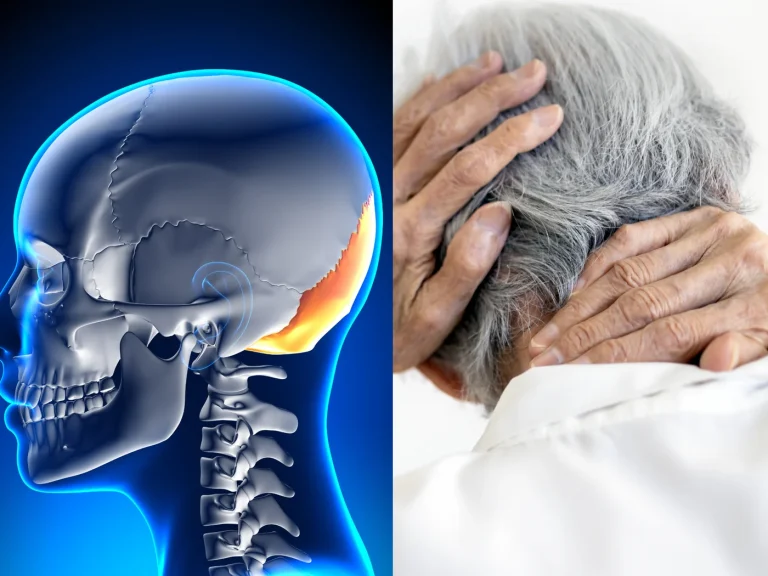
When pain refuses to settle despite technically correct treatment, the reason is rarely that the diagnosis was wrong. It is usually that the pain has more than one driver and only one of them is being addressed.
The one that goes unmeasured most often is social isolation.
Pain that has outlived its function
Acute pain has a job. Walking under a tree, struck by a falling branch, the immediate pain forces you to stop moving — which is exactly right, because if the injury involves the spine, continued movement is how a survivable injury becomes a catastrophic one. Pain, spasm and guarding are protective, and they resolve as the tissue heals.
Chronic pain is what happens when that system does not stand down. The signal persists after the tissue has healed, and it no longer restricts movement usefully — it restricts it destructively. Muscles deconditioned. Activity narrowed. World smaller.
That narrowing is the mechanism by which pain produces isolation. Nobody decides to withdraw. It happens one cancelled arrangement at a time.
Why isolation feeds back into the pain
Clinically, this is one of the most consistent patterns we see: patients whose pain will not respond are very often patients who are alone.
The relationship runs both ways. Pain shrinks the social world, and a shrunken social world worsens pain — through disrupted sleep, lost routine, reduced movement, and the absence of the ordinary distraction and meaning that make discomfort tolerable. Loneliness is also a physiological stressor in its own right, sustaining the same stress-axis activation described in what untreated chronic pain does to the brain.
There is a further observation from this practice worth stating plainly, and labelling as what it is — a clinical observation across many patients rather than a published trial finding: we do not typically encounter addiction without also encountering loneliness. The two travel together with a consistency that is hard to ignore.
If that is right, the implication is uncomfortable. A substance that reliably relieves both physical pain and the distress of isolation is doing two jobs, and only one of them is the one it was prescribed for. Escalation then looks like tolerance when it may partly be something else. We wrote about the pharmacological half of that in why opioids stop working.
Medication also tends to deepen the isolation it is medicating — sedation reduces the energy and initiative that going out requires. The loop closes.
The other drivers in the same picture
Isolation is one factor among several, and treating any of them alone tends to disappoint:
- Neuroinflammation from diet. What a patient eats sets the inflammatory baseline their pain runs on. See why we treat insulin before we treat the joint and visceral fat and the metabolic problem you cannot see.
- Economic consequence. Lost income and accumulating bills are not background context to a pain problem; they are a continuous stressor with measurable physiological effects.
- Relationships under strain. Chronic pain is hard on the people around it, and the erosion is gradual enough that patients often do not register it until it is advanced.
- How the past is being read. Covered separately in trauma, memory and pain perception.
The direction that actually helps
The instinct is to work backward — identify what went wrong, and fix it in order. That rarely moves a patient who has been stuck for years.
What tends to move them is having something ahead worth reaching. Not optimism as a mood, but a concrete expectation: a specific thing to be able to do, with a specific person, by a specific time. Expectation of the future measurably shapes present pain perception, and it supplies the motivation that rehabilitation requires.
This is the clinical reason we ask what patients want to be able to do again, rather than only asking where it hurts. The answer is usually social — hold a grandchild, return to work, get back to a table with other people. That is the target, and the pain treatment is the route to it rather than the destination.
Purposeful activity alongside other people does more here than insight alone. See Valor Villages for what that looks like in practice.
What we do with this
None of it replaces treating the pain generator. Interventional work is what creates the room for any of the rest to matter, and a patient in severe uncontrolled pain has no capacity for reconnection.
The sequence is: reduce the pain enough to make movement and contact possible, address the metabolic terrain so the reduction holds, and use the resulting room to rebuild activity and connection — which in turn lowers what the medication has to do. Each step makes the next one work better.
Frequently asked questions
Are you saying my pain is caused by being lonely?
No. Isolation is one driver among several, and it is usually a consequence of the pain before it becomes a contributor to it. But it is a real contributor, and it is the one that most often goes unaddressed while everything else is treated.
Why does my doctor ask what I want to be able to do?
Because expectation of the future shapes present pain perception, and because a concrete goal supplies the motivation rehabilitation needs. It is a clinical question, not small talk. See trauma, memory and pain perception.
Is the link between loneliness and addiction proven?
The association between social isolation and substance use is described in the research literature; the strength of it that we observe in our own patients is a clinical observation rather than a trial result, and we present it as such. See why opioids stop working.
My medication helps me cope with being alone. Is that a problem?
It is worth discussing openly rather than judging yourself for. A medication doing two jobs can look like tolerance when the dose stops holding. Do not start, stop, or change any medication without consulting your physician.
Where can I be evaluated?
Padda Institute, 4477 Woodson Rd, Suite 100, St. Louis, MO 63134, serving the St. Louis region across Missouri and Illinois. Call (314) 481-5000 or text (314) 886-5902.
Key takeaways
- Acute pain protects by restricting movement; chronic pain restricts it destructively and shrinks the social world.
- Isolation both follows from pain and feeds back into it.
- Addiction and loneliness travel together in this practice’s experience — a clinical observation, not a trial finding.
- Diet, economic strain and relationship erosion are drivers in the same picture.
- A concrete future goal moves patients further than working backward through the history.
- Treating the pain generator is what creates room for any of this to work.
Medically reviewed by Gurpreet Singh Padda, MD, MBA, MHP — Board Certified in Anesthesiology, Pain Medicine, Interventional Pain Management, Addiction Medicine, and Obesity Medicine. Last reviewed August 2026.
This article is educational and is not a substitute for evaluation, diagnosis, or treatment by a physician. Individual results vary. Do not start, stop, or change any medication without consulting your physician.
Find out what is actually driving your pain
Evaluation at the Padda Institute starts by identifying the pain generator and the metabolic terrain it is running on — not by adding another prescription.
Book an appointment or call (314) 481-5000 · text (314) 886-5902
Padda Institute Center for Interventional Pain Management, 4477 Woodson Rd, Suite 100, St. Louis, MO 63134 — serving the St. Louis region across Missouri and Illinois.
Dr. Gurpreet Singh Padda, MD, MBA, MHP