Many of you have asked why I’ve been limping since October 11. I was hit by a car on the highway, and I declined opioids in the emergency room. That was my own choice for my own body, not advice for you. Every patient is different, and good opioid stewardship means treating you as we find you, not as we expect you to be.
Why have I been limping?
Around 5:50 a.m. on Sunday, October 11, on my way to the gym, I stopped on the highway to help a woman get out of a car that was on fire. While I was getting her to the shoulder, another car hit me and kept going. It was a hit and run. She did well.
My injuries:
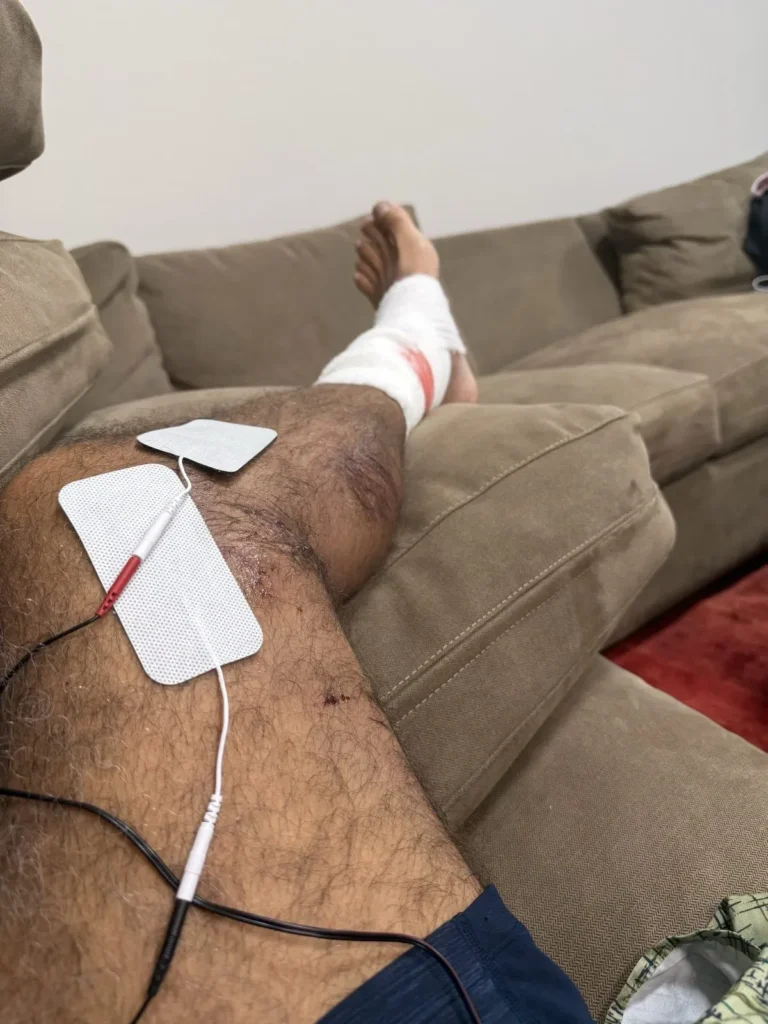
- a fracture of the medial malleolus (the inner ankle bone) and a fibula fracture, both on my left leg
- a cut about 15 centimeters long at the ankle, with a torn tibial artery
- the loss of about 40% of my blood volume, enough that the trauma team was activated
- two broken ribs
None of it needed surgery. The wound was closed, and the rest is healing on its own.
I tell you this so the limp makes sense, not to make a story of it. Plenty of my patients have lived through worse.
Have I been missing work?
No. I haven’t missed a day. What I can’t do yet is stand for long stretches, so for the last week and a half I haven’t been at full capacity for procedures. I expect to be back to full function by Monday, October 26.
Why did I turn down opioids in the ER?
I was offered opioids several times in the emergency room, and I said no each time. This was my personal decision, made with my own history and my own physiology. It is not a recommendation for you. I had two reasons, and both rest on research.
Reason 1: the first exposure is the on-ramp
Long-term opioid use rarely starts with a plan to take opioids for years. It usually starts with a reasonable prescription after a real injury or surgery.
- A CDC analysis of first opioid prescriptions found that the chance of still taking opioids a year later rose with every extra day supplied. The biggest jumps came after the fifth day and the thirty-first day of therapy, and with a second prescription. The patients were commercially insured, cancer-free adults who had not been taking opioids.1
- Among Medicare patients seen in the emergency department, those who happened to see a high-intensity opioid prescriber had 30% higher odds of becoming long-term users over the next year than those who saw a low-intensity prescriber in the same hospital.2
- At a Colorado emergency department, opioid-naive patients who filled an opioid prescription for acute pain had 1.8 times the odds of opioid use again a year later. Patients who got a prescription but never filled it showed no significant increase.3
- After surgery, about 6% of adults who had not used opioids before were still filling prescriptions three to six months later, after minor and major operations alike. The size of the operation didn’t predict it. Smoking, mood and anxiety disorders, and pain that was there before surgery did.4
That last point matters most. The risk isn’t only in the drug. It’s in the person and the terrain the drug lands on. I know my own terrain, and I didn’t want to give my nervous system a starting dose of something I might not need later.
Reason 2: my body was already doing the work
After trauma, the brain switches on its own pain-suppression system, driven by endorphins (the body’s own opioids), adrenaline and related signals. Researchers call this stress-induced analgesia. How strongly it kicks in varies a great deal from person to person.5 In 1946, Henry Beecher described badly wounded soldiers who reported surprisingly little pain and often did not ask for pain medication.6 My endorphins and epinephrine were running high, and I wasn’t feeling as much pain as the injury list suggests.
What did I use for pain instead?
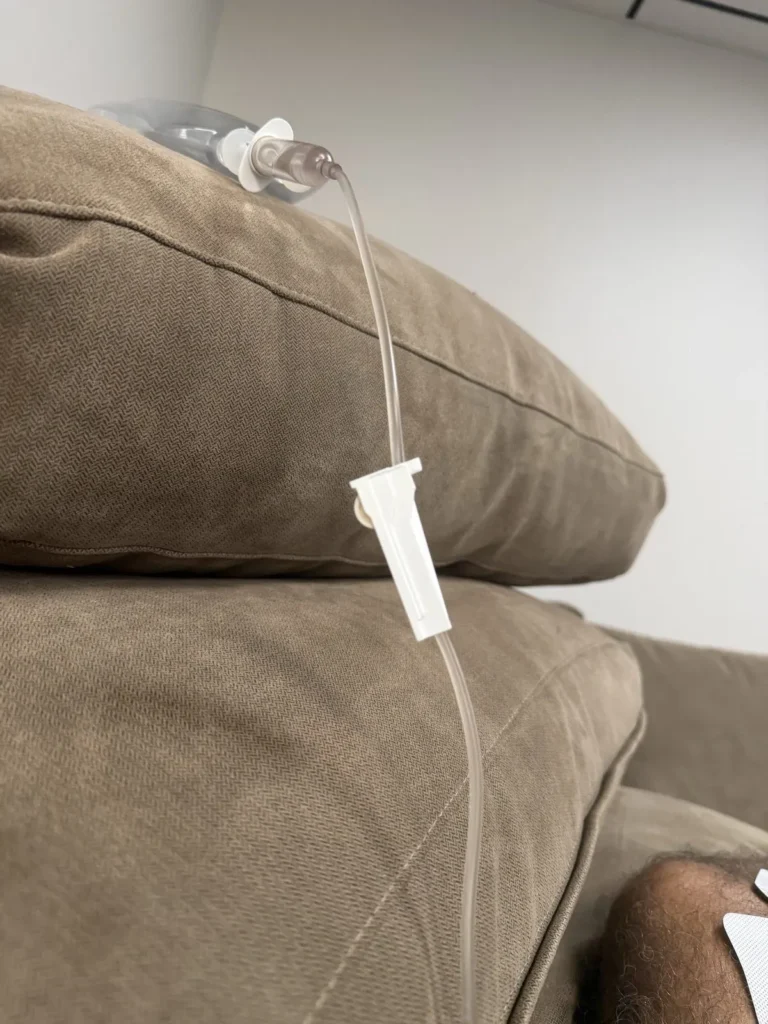
I used ibuprofen and acetaminophen, plus a set of physical tools: TENS, EMS (electrical muscle stimulation), a localized vibration plate and infrared light. Together they got me through the first couple of days. Nothing about this is mystical. The tools work by giving the nervous system something else to listen to.
- Ibuprofen plus acetaminophen. In a randomized trial of 411 adults with moderate to severe arm or leg pain in the emergency department, one dose of ibuprofen plus acetaminophen relieved pain about as well as three different opioid combinations at two hours.7
- TENS and EMS. Pain signals travel up thin, slow nerve fibers. Touch, pressure and vibration travel up thick, fast ones. In the spinal cord, the fast signals compete with the slow ones for the same gate, which is the idea behind the gate control theory of pain.8 TENS feeds the gate a steady, non-painful signal. A review of 381 randomized trials found that pain was lower during or right after TENS than with a placebo, with moderate-certainty evidence and no serious side effects.9 See what a TENS therapy session looks like, or read about a home TENS unit.
- Localized vibration. Vibration fires the same thick touch fibers, so it competes at the same gate. Here is what a vibration therapy session involves.
- Infrared light. Red and near-infrared light is absorbed by an enzyme in the mitochondria called cytochrome c oxidase. That raises cellular energy (ATP) and, in inflamed tissue, lowers inflammatory markers. Most of that evidence comes from laboratory and animal work, including models of traumatic injury.10 Our version is laser therapy.
None of these replaced the care I got in the trauma bay. What they did was cover the gap, so I didn’t need an opioid to get through those first days.
Should you refuse opioids after an injury?
Not necessarily. This was my personal path, and it may not be the right one for you. Some injuries and some patients need opioids, and severe pain left untreated has its own costs: it keeps you from moving, sleeping and healing. My situation had features yours may not share, including a big adrenaline surge, the training to judge what I was feeling, and a team watching me closely.
My point is narrower. Declining opioids, or keeping the first exposure as small and short as possible, is an option that sometimes works, and we skip past it too often. It belongs in the conversation in every ER and every clinic. The decision belongs to you and the clinician treating you.
What does this have to do with opioid stewardship?
Everything. Opioid stewardship is not a blanket rule that nobody gets opioids. It’s also not a blanket rule that everybody does. It’s harm reduction for real people in hard situations, and it starts with treating the patient in front of us as we find them, not as we expect them to be.
Two patients can arrive with the same fracture and need completely different plans. One has a strong stress response, no prior pain and a job that keeps them moving. The other has years of back pain, poor sleep, anxiety and a past prescription that never really ended. A protocol written for an imagined average patient fails both of them. The research above shows why: risk depends as much on the person as on the drug.
That’s how we practice. For patients who are already on opioids and want to come down, we use interventional procedures, physical tools like the ones above, and a plan built around the person, so the taper doesn’t throw them into withdrawal. Read more in our opioid stewardship articles, in opioid tapering: medication is a bridge, not a destination, and in our opioid stewardship approach for pharmacists and physicians.
What can you ask if you’re injured?
- Do I need an opioid right now, or am I taking it because it was offered?
- What is the smallest amount and the shortest course that keeps me moving?
- What else can carry the load: ibuprofen, acetaminophen, ice, elevation, TENS, nerve blocks, sleep, and movement as soon as it’s safe?
Thank you to everyone who asked. I’ll be back on my feet soon.
Sources
- Shah, A., Hayes, C. J., & Martin, B. C. (2017). Characteristics of initial prescription episodes and likelihood of long-term opioid use: United States, 2006-2015. MMWR Morbidity and Mortality Weekly Report, 66(10), 265-269. https://doi.org/10.15585/mmwr.mm6610a1
- Barnett, M. L., Olenski, A. R., & Jena, A. B. (2017). Opioid-prescribing patterns of emergency physicians and risk of long-term use. New England Journal of Medicine, 376(7), 663-673. https://doi.org/10.1056/NEJMsa1610524
- Hoppe, J. A., Kim, H., & Heard, K. (2015). Association of emergency department opioid initiation with recurrent opioid use. Annals of Emergency Medicine, 65(5), 493-499. https://doi.org/10.1016/j.annemergmed.2014.11.015
- Brummett, C. M., Waljee, J. F., Goesling, J., et al. (2017). New persistent opioid use after minor and major surgical procedures in US adults. JAMA Surgery, 152(6), e170504. https://doi.org/10.1001/jamasurg.2017.0504
- Butler, R. K., & Finn, D. P. (2009). Stress-induced analgesia. Progress in Neurobiology, 88(3), 184-202. https://doi.org/10.1016/j.pneurobio.2009.04.003
- Beecher, H. K. (1946). Pain in men wounded in battle. Annals of Surgery, 123(1), 96-105. https://pmc.ncbi.nlm.nih.gov/articles/PMC1803463/
- Chang, A. K., Bijur, P. E., Esses, D., Barnaby, D. P., & Baer, J. (2017). Effect of a single dose of oral opioid and nonopioid analgesics on acute extremity pain in the emergency department: A randomized clinical trial. JAMA, 318(17), 1661-1667. https://doi.org/10.1001/jama.2017.16190
- Melzack, R., & Wall, P. D. (1965). Pain mechanisms: A new theory. Science, 150(3699), 971-979. https://doi.org/10.1126/science.150.3699.971
- Johnson, M. I., Paley, C. A., Jones, G., Mulvey, M. R., & Wittkopf, P. G. (2022). Efficacy and safety of transcutaneous electrical nerve stimulation (TENS) for acute and chronic pain in adults: A systematic review and meta-analysis of 381 studies (the meta-TENS study). BMJ Open, 12(2), e051073. https://doi.org/10.1136/bmjopen-2021-051073
- Hamblin, M. R. (2017). Mechanisms and applications of the anti-inflammatory effects of photobiomodulation. AIMS Biophysics, 4(3), 337-361. https://doi.org/10.3934/biophy.2017.3.337
Dr. Gurpreet Singh Padda, MD, MBA, MHP