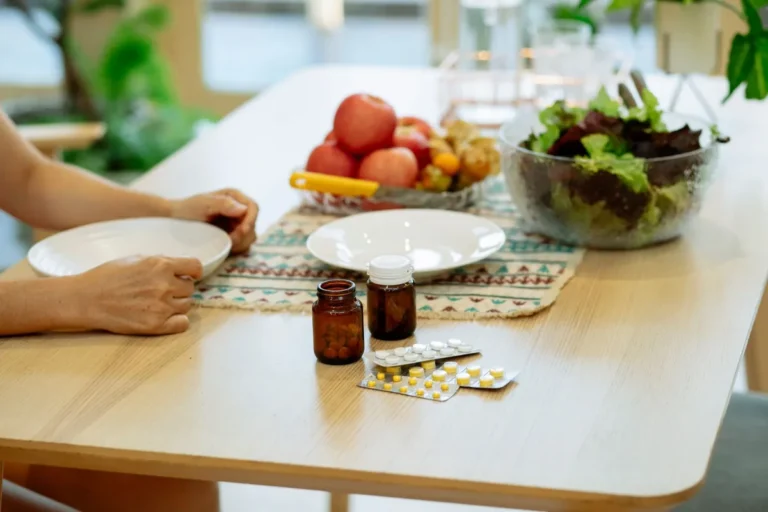
Fish oil reaches the gut wall within a week, but in the large trials it did not change the disease: across 738 patients with Crohn’s disease, relapse on 4 g a day was nearly the same as on placebo. What your gut lining is built from depends more on the fryer at dinner than on any capsule at breakfast.
If you live with chronic pain, someone has probably told you to take fish oil for inflammation. Almost nobody has asked what your gut wall is built from. That is the better question, because the lining of your intestine rebuilds itself every few days out of the fat you sent it.
The video above, Your Gut Wall Is What You Fried Last Week, lays out the argument from The Angry Gut, by Dr. Gurpreet Singh Padda, MD, MBA, MHP, and Ami Michelle Grimes. What follows is the part a pain patient needs and the video had no room for: what the capsule trials really showed, what the dose costs, and what we change instead.
Why a pain practice cares what your gut wall is made of
Your gut is the first brain. The second brain sits in your skull, and the vagus nerve tethers the two. A nervous system already turned up for pain does not need a gut sending it a steady stream of alarm traffic.
Every cell membrane in that lining is made of fatty acids. So is part of the mucus that keeps the contents of the bowel off the wall. When tissue raises an alarm, an enzyme snips a fatty acid out of the membrane to build the signal, and the fat it happens to grab decides the message. Membrane fat is not fuel sitting in storage. It is the parts bin for inflammation, for the signals that start it and the ones that end it.
That is why gut chemistry and pain keep colliding in our practice. Metabolic inflammation and chronic pain share one engine, and part of that engine is what your membranes are made of. The Pained Brain covers how your diet manufactures pain chemistry head on. The protein scaffold of the same wall is its own story, told in why collagen is the wall and not the paint.
The omega-6 supply chain runs through the fryer
Industrial seed oils are omega-6 oils. Omega-6 fats oxidize easily and supply the raw material for the signals that switch inflammation on. Build a membrane mostly out of them and the tissue ignites easily. Push the omega-6 to omega-3 ratio far enough and inflammation stops being a risk and becomes the resting state.
Metaflammation, the low and constant inflammation of a strained metabolism, has a supply chain, and it starts with economics. Fryer oil is cheap because the crop it is pressed from is subsidized. A hospital cafeteria buys the cheap oil. A night-shift worker with a commute and two children eats whatever sits under the heat lamp. None of those were her decisions, and all of them end up in her gut wall within days.
She came to us at forty-four. Two years of loose stools and belly pain, three normal workups, and a letter suggesting stress. Breakfast was a granola bar and dinner was usually fried. Nobody had asked what the food was cooked in.
The mechanism behind seed oil harm is laid out elsewhere on this site. The point here is narrower. A pain patient who eats fried food most days is rebuilding a combustible gut lining on a loop, and no capsule at breakfast outruns a fryer at dinner.
Does fish oil help inflammation? What the gut trials actually showed
Fish oil does reach the gut wall, and fast. Patients waiting for bowel surgery took 2.0 g of EPA and 1.0 g of DHA a day for seven days. When their colon was sampled in the operating room, EPA was higher in the lining and in the muscle layer underneath (Sorensen et al., 2013). One week changed a human colon.
Changing a membrane is not the same as changing a disease, and inflammatory bowel disease is where that difference was tested hardest. In 1996 a small Italian trial gave enteric-coated fish oil to people whose Crohn’s disease was in remission. Over a year, 11 of 39 relapsed on fish oil against 27 of 39 on placebo (Belluzzi et al., 1996). That result made fish oil famous.
Then came the big trials. EPIC-1 and EPIC-2 gave 4 g a day to 738 patients at 98 centers, with no other treatment allowed. Relapse at one year was 31.6% against 35.7% on placebo in the first trial, and 47.8% against 48.8% in the second (Feagan et al., 2008). The effect had vanished.
The Cochrane reviewers then did something every patient should copy. Pooling all six Crohn’s trials, 1,039 patients, omega-3 looked helpful at a relapse risk ratio of 0.77. Keeping only the two large trials at low risk of bias, 738 patients, the estimate slid to 0.88, with a confidence interval of 0.74 to 1.05 that crosses one (Lev-Tzion et al., 2014). The better the trials got, the smaller the benefit became.
Read the design before the verdict. Those trials enrolled one clean disease and screened out everyone else. The person in my office with chronic pain, poor sleep and a bowel that will not settle would have been excluded. The nulls are real, but they answer a question about a capsule in a clean patient.
Is high-dose fish oil safe for your heart rhythm and bowel?
The fish oil side effects people worry about are usually the wrong ones. In an independent analysis of 15 trials, bleeding overall was not raised (Yan et al., 2024). The rhythm signal is the one to respect. Pooling seven cardiovascular trials with 81,210 patients, marine omega-3 supplements raised atrial fibrillation with dose: a hazard ratio of 1.12 even at 1 g a day or less, 1.49 above 1 g, and 1.11 for every added gram (Gencer et al., 2021).
The gut trials used 2 to 4 g a day. That is a drug dose sitting squarely in the rhythm-risk band. It also irritates the organ it was meant to help. In the Crohn’s review, omega-3 raised diarrhea at a risk ratio of 1.36 and upper gut symptoms at 1.65. In a year-long polyp prevention trial, 709 people took 2 g of EPA a day; gut side effects ran 146 events against 85 on placebo, and adenomas did not fall (Hull et al., 2018).
A pill that loosens stools is the kind people stop quietly and never mention. If you take fish oil at a high dose, bring the dose and the reason to your physician and decide together.
Does fish oil switch inflammation off?
Inflammation does not simply fade. It is switched off on purpose, by molecules cut from membrane fat: resolvins, protectins, maresins and lipoxins. The supplement pitch says fish oil loads your body with those off switches. In a placebo-controlled human trial, healthy volunteers took fish oil and then received intravenous endotoxin to provoke real inflammation. The omega-3 plainly got into their blood, and the expected resolution molecules still showed no consistent signal in plasma or urine (Skarke et al., 2015).
Resolution is a real biological program. I will not sell you a softgel that claims to run it. What we can measure, and what you control, is the raw material your membranes are built from.
What we changed instead of adding a pill
I believed the other side of this for years. I was a strict vegetarian who cooked with the oils the guidelines approved, and I passed that advice on. What changed my mind was the pathology in front of me, not a trial.
For the woman with the beige diet, I told her she was not going to like me for a while. We changed the oil she cooked in, cut the fried food that made up most of her fat intake, and brought back the marine fat and whole-fat dairy a diet built for speed had dropped. Her symptoms improved over about five months. I cannot tell you which change did it.
A lining that rebuilds every few days needs better material at every meal, not a single pulse. A capsule shifts membrane composition quickly, but it is a bridge, the way a well-chosen procedure buys a window for rehabilitation. The kitchen is the treatment.
This is a mechanism-tier position about food, not a trial-tier claim about a supplement, and it is built for the patient the trials leave out. The Chapter 8 Deep Dive holds every study with its full numbers, what each one shows and does not show, and the strongest case against this position. The low-fat diet trials explain how the fat left the milk in the first place. And rebuilt membranes still need blood to reach them, which is where abdominal pain after eating and the gut’s blood supply picks up.
Frequently asked questions
Does fish oil reduce inflammation in the gut?
It changes what gut membranes are made of within about a week, but that is not the same as calming disease. In Crohn’s disease the large, well-run trials found no meaningful drop in relapse, and the apparent benefit shrank as trial quality improved. Food changes the same membranes every few days without a drug-level dose. Why belly fat behaves like an immune organ covers the other half of the fire.
Can fish oil cause atrial fibrillation?
In pooled cardiovascular trials, marine omega-3 supplements raised the risk of atrial fibrillation, and the risk climbed with dose, reaching a hazard ratio of 1.49 above 1 g a day. Bleeding overall was not raised. Anyone on high-dose fish oil should review the dose and the reason with their physician. Vitamin D is the next supplement worth rethinking, as vitamin D as a hormone, not a vitamin explains.
Are seed oils inflammatory?
Industrial seed oils are rich in omega-6 fats, which oxidize easily and supply the raw material for signals that start inflammation. When those fats dominate the membranes of a gut lining that rebuilds every few days, inflammation becomes the default rather than the exception. The exposure that matters is daily and dietary, which is why the fryer matters more than the bottle. Sugar, refined grain and seed oil, mechanism by mechanism goes deeper.
What are the side effects of fish oil at high doses?
The common ones are digestive. In the Crohn’s trials pooled by Cochrane, omega-3 raised diarrhea at a risk ratio of 1.36 and upper gut symptoms at 1.65, the kind of effects that make people quietly stop a pill. The less obvious one is heart rhythm, since atrial fibrillation risk rose with dose. Our look at the fish oil shot covers the case made for it.
How fast does fish oil get into the gut lining?
Fast. Patients waiting for bowel surgery took 2.0 g of EPA and 1.0 g of DHA a day for seven days. When their colon was sampled in the operating room, EPA was higher in the lining and in the muscle layer underneath. One week changed a human colon. Changing a membrane that quickly is not the same as changing a disease, which is what the larger trials tested.
Is it better to take fish oil or change the oil I cook with?
Change the oil. The lining of your intestine rebuilds itself every few days out of the fat you send it, so what goes into the pan at every meal matters more than one capsule. A capsule shifts membrane composition quickly and can serve as a bridge, but no capsule at breakfast outruns a fryer at dinner. The kitchen is the treatment.
Gut symptoms and chronic pain belong in the same workup
If your pain travels with a bowel that keeps getting blamed on stress, we look at the terrain behind both, starting with what your tissues are being built from.
Request an appointment, or call or text us.
Sources
- Belluzzi, A., Brignola, C., Campieri, M., Pera, A., Boschi, S., & Miglioli, M. (1996). Effect of an enteric-coated fish-oil preparation on relapses in Crohn’s disease. The New England Journal of Medicine, 334(24), 1557–1560. https://doi.org/10.1056/NEJM199606133342401
- Feagan, B. G., Sandborn, W. J., Mittmann, U., Bar-Meir, S., D’Haens, G., Bradette, M., Cohen, A., Dallaire, C., Ponich, T. P., McDonald, J. W. D., Hébuterne, X., Paré, P., Klvana, P., Niv, Y., Ardizzone, S., Alexeeva, O., Rostom, A., Kiudelis, G., Spleiss, J., … Greenberg, G. R. (2008). Omega-3 free fatty acids for the maintenance of remission in Crohn disease: the EPIC randomized controlled trials. JAMA, 299(14), 1690–1697. https://doi.org/10.1001/jama.299.14.1690
- Gencer, B., Djousse, L., Al-Ramady, O. T., Cook, N. R., Manson, J. E., & Albert, C. M. (2021). Effect of long-term marine ɷ-3 fatty acids supplementation on the risk of atrial fibrillation in randomized controlled trials of cardiovascular outcomes: A systematic review and meta-analysis. Circulation, 144(25), 1981–1990. https://doi.org/10.1161/CIRCULATIONAHA.121.055654
- Lev-Tzion, R., Griffiths, A. M., Leder, O., & Turner, D. (2014). Omega 3 fatty acids (fish oil) for maintenance of remission in Crohn’s disease. Cochrane Database of Systematic Reviews, 2014(2), CD006320. https://doi.org/10.1002/14651858.CD006320.pub4
- Sorensen, L. S., Rasmussen, H. H., Aardestrup, I. V., Thorlacius-Ussing, O., Lindorff-Larsen, K., Schmidt, E. B., & Calder, P. C. (2013). Rapid incorporation of omega-3 fatty acids into colonic tissue after oral supplementation in patients with colorectal cancer: a randomized, placebo-controlled intervention trial. JPEN. Journal of Parenteral and Enteral Nutrition, 38(5), 617-24. https://doi.org/10.1177/0148607113491782
- Hull, M. A., Sprange, K., Hepburn, T., Tan, W., Shafayat, A., Rees, C. J., Clifford, G., Logan, R. F., Loadman, P. M., Williams, E. A., Whitham, D., & Montgomery, A. A. (2018). Eicosapentaenoic acid and aspirin, alone and in combination, for the prevention of colorectal adenomas (seAFOod Polyp Prevention trial): a multicentre, randomised, double-blind, placebo-controlled, 2 x 2 factorial trial. Lancet, 392(10164), 2583-2594. https://doi.org/10.1016/S0140-6736(18)31775-6
- Skarke, C., Alamuddin, N., Lawson, J. A., Li, X., Ferguson, J. F., Reilly, M. P., & FitzGerald, G. A. (2015). Bioactive products formed in humans from fish oils. Journal of Lipid Research, 56(9), 1808-1820. https://doi.org/10.1194/jlr.M060392
- Yan, J., Liu, M., Yang, D., Zhang, Y., & An, F. (2024). Efficacy and safety of omega-3 fatty acids in the prevention of cardiovascular disease: A systematic review and meta-analysis. Cardiovascular Drugs and Therapy, 38(4), 799-817. https://doi.org/10.1007/s10557-022-07379-z
Dr. Gurpreet Singh Padda, MD, MBA, MHP