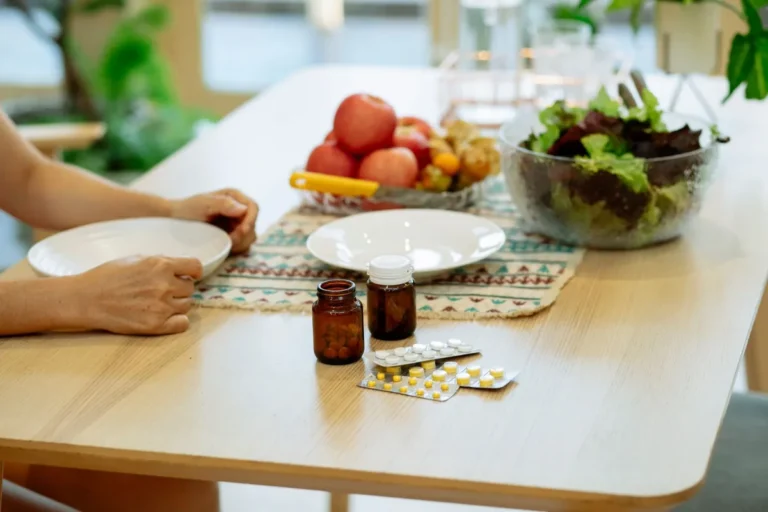
Abdominal pain after eating usually gets blamed on acid, the gallbladder or nerves. Sometimes the trouble sits behind the gut wall. It sits in arteries that cannot open wide enough to meet a meal. No amount of looking at the lining will find it.
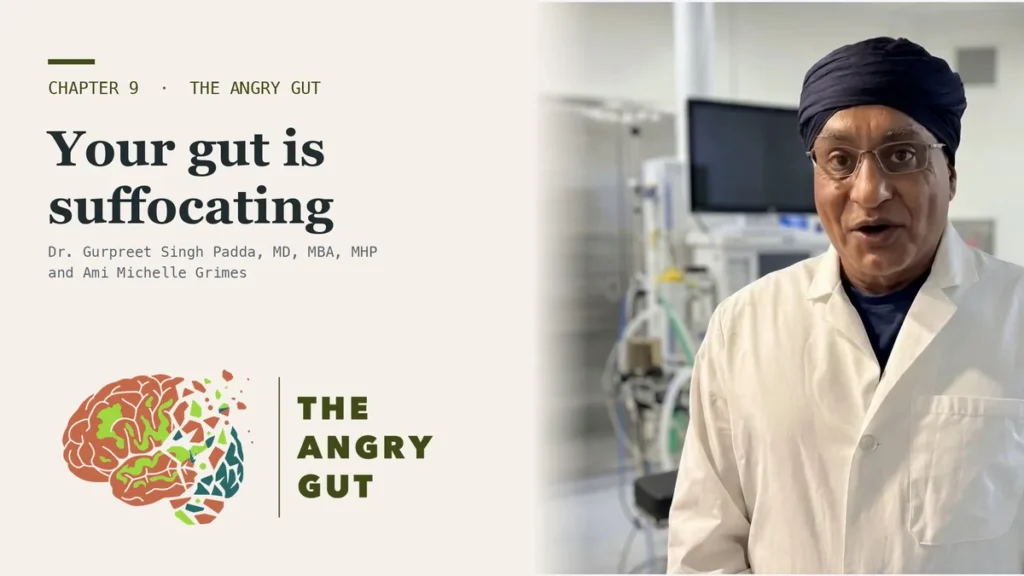
In the video above, titled Your Gut Is Suffocating, I walk through an argument from The Angry Gut, written by Dr. Gurpreet Singh Padda, MD, MBA, MHP, and Ami Michelle Grimes. Below is what a pain patient needs beyond the video: why this pain gets missed, why the tests are weaker than they sound, and why the drugs that tinker with nitric oxide teach caution.
Can abdominal pain after eating be a blood flow problem?
Digestion makes a demand on blood flow. Blood flow to the bowel rises by up to 30-150% after eating (Terlouw et al., 2020). An artery that keeps up at rest can fall short at the table. And narrow gut arteries are common. In autopsy and ultrasound studies, significant narrowing shows up in 6-29% of people, rising possibly to 67% after age 80.
A mildly narrowed artery does not kill bowel. It produces pain on a schedule. The meal arrives, demand rises, supply stalls, and the gut hurts. People learn quickly. They eat smaller meals, eat later, then skip meals entirely, and the avoidance gets read as a mood problem or an eating problem rather than a circulation problem.
One patient of mine was seventy-three. He had stopped eating lunch about a year earlier, because pain came twenty minutes after food. He had atrial fibrillation, high blood pressure and a normal body weight. He had four scopes. Nobody had imaged an artery. The European guideline now names a trap: expecting a wasted, starving patient. That expectation delays the diagnosis in people who look like him.
The villus tip is the first place to run short
Your gut is the first brain, and it is fed from behind. The tiny fronds that absorb food, the villi, receive blood through an arteriole that runs up beside a venule, and oxygen leaks across before it reaches the top. The tip lives at the end of the supply line.
Clamp a segment of human small bowel for thirty minutes and an enterocyte damage marker climbs from 290 pg/ml to 3,997 pg/ml. Gaps opened first at the villus tips. The injured cells were shed during reperfusion, and the barrier resealed within 60 minutes (Derikx et al., 2008). The lining repairs quickly when blood comes back. It cannot repair while blood stays short.
You do not need surgery to see the effect. Healthy young men exercising hard divert blood away from the bowel, and their damage marker roughly doubled, 615 ± 118 against 309 ± 46 pg/ml (van Wijck et al., 2011). A gut that is never infarcted but never quite fed is a gut that stays sore, slow to heal, and reactive to every meal. That is a delivery problem, not a wound problem.
Can a normal endoscopy miss the cause of pain after eating?
A scope looks at the inner surface. The shortfall is in the supply behind it, so a normal scope answers a different question. Imaging the mesenteric arteries is where the vascular workup starts.
Measuring the oxygen that actually reaches the lining is harder than it sounds. A light probe passed through the scope reads how much oxygen the tissue holds. In one study it read 67 ± 9% in chronic mesenteric ischemia (gut starved of blood) against 81 ± 4% in healthy controls. At a cutoff of 78% it caught 94% of cases. But it mislabeled about one healthy person in four, with specificity of 72%. And the cutoff was set in the same group it was tested on (Berge et al., 2019). Later work found two operators disagreed often enough to flip the answer. The honest position: this injury is easy to cause and hard to see.
For pain patients this matters in a specific way. A normal test often gets treated as permission to stop looking. A person who has stopped eating to avoid pain gets filed under anxiety. If meals always hurt and you are eating less or losing weight, ask whether anyone has looked at the arteries.
Nitric oxide: the molecule that opens vessels and the one that inflames them
The endothelium, the lining of your vessels, makes nitric oxide all day long. That keeps small arteries open. When its raw materials run short, the enzyme breaks down (uncouples). It makes superoxide instead, which helps wreck the vessel lining (Janaszak-Jasiecka et al., 2021). The enzyme built to open your vessels starts to rust them.
A different enzyme floods inflamed tissue. Rectal nitric oxide sat at a median of 45 parts per billion in healthy people. In active inflammatory bowel disease it sat at 3,475 ppb. Irritable bowel syndrome sat at 150 ppb, close to healthy (Reinders et al., 2005). If you live with gut pain, that split is useful. The painful bowel of irritable bowel syndrome is not burning the same inflammatory fire.
Medicine has tried to tune this molecule directly, and pain patients meet the results. Topical glyceryl trinitrate gives off nitric oxide. It heals anal fissures better than placebo at a relative risk of 1.96. It causes headache at a relative risk of 2.73. And the harm is graded more certain than the benefit (Jin et al., 2021). Bolting a nitric oxide donor onto naproxen changed what the painkiller did to blood pressure. Plain naproxen raised the top blood pressure number 1.4 mmHg against placebo. The nitric oxide version moved it by minus 0.4 (White et al., 2011). That drug never reached the American market. The lesson is not that more nitric oxide fixes the gut. The lesson is that a working vessel lining is the target. And the cardiovascular cost of common painkillers belongs in the same talk.
One endothelium, three specialists
The man with lunch pain had also told a different doctor about erectile dysfunction. That doctor wrote a script and asked nothing else. An erection is a nitric oxide event in a small artery, so it fails early. Across 14 studies and 92,757 people, erectile dysfunction predicted heart and blood vessel events at 1.44 and heart attack at 1.62 (Vlachopoulos et al., 2013). In men with heart artery disease who had both, the sexual symptom came first in 93%. It came first by an average of 24 months (Montorsi et al., 2006).
The system is organized against seeing this. Erections go to urology, lunch pain to gastroenterology, blood pressure to cardiology, and each visit closes around its own organ. I was trained the same way. Three silos, one vessel lining, and a patient left to connect them himself.
We apply the same logic to microvascular dysfunction as a hidden cause of chronic pain. The small vessels fail before any scan shows it. The symptom shows up in whatever tissue has the least in reserve.
What changed for him, and what it means for you
Here is the humbling part. The first brain cannot be rescued from inside the first brain. We imaged his mesenteric arteries (the arteries to his gut). We swapped out the antiseptic mouthwash he had used twice a day since 2009. That is because the bacteria it kills turn nitrate from food into a backup supply of nitric oxide. He started eating green leafy vegetables daily for that nitrate. His household stopped reusing frying oil, because oxidized fat damages the same enzyme.
None of those is a treatment on its own. Each one sits upstream of the same molecule. He had been losing it several ways at once. For the combination, the evidence rests on how the body works. No trial has enrolled a patient like him and tested all of it together. The two body drivers are a failing vessel lining and a lost bacterial backup. The third driver is a care system that splits one blood vessel problem across three offices.
Your part is concrete. Tell every physician about every symptom, including the embarrassing one. If meals hurt, ask about the arteries. Do not change any medication on your own; work it through with the physician who prescribed it. The Chapter 9 Deep Dive lays out every study behind this, with full numbers and what each does and does not show. The membranes these vessels feed are built from diet, as fish oil, seed oils and the gut wall explains, and vitamin D as a hormone follows the immune cells that blood delivers.
Frequently asked questions
What causes abdominal pain after eating?
Most causes live in the gut itself, including acid, gallbladder disease and irritable bowel syndrome. A less known cause is poor blood flow. Digestion sharply raises the gut’s demand for blood. A narrowed artery that keeps up at rest can fall short after a meal. Pain that shows up reliably after food, with eating less over time, deserves a look at the arteries. How upper abdominal pain is traced to its pathway covers another route.
What are the symptoms of chronic mesenteric ischemia?
The classic pattern is pain after meals, often worse after large ones. It leads people to eat less or skip meals. The European guideline warns that expecting a thin, wasted patient is a trap, because many people with the condition have a normal weight. Normal scopes do not rule it out, since the problem is in the arteries. Why pain is a signal and not a diagnosis explains the broader principle.
Is erectile dysfunction an early sign of heart disease?
It often is. Across 14 studies and 92,757 people, erectile dysfunction predicted heart and blood vessel events, including heart attack. In men with heart artery disease who had both, the sexual symptom usually came first, by about two years. It reflects how well small arteries make nitric oxide. That is why it deserves a heart question, not just a script. How high insulin damages the terrain behind pain connects the metabolic side.
Can hard exercise reduce blood flow to the gut?
Yes. In healthy young men, hard exercise pulled blood away from the bowel. It roughly doubled a marker of gut lining damage. In healthy people the lining repairs fast once flow returns, so this is no reason to stop exercising. It shows how sensitive the villus tip is to supply. Why muscle is your own anti-inflammatory medicine covers what exercise gives back.
Is high nitric oxide in the gut a sign of inflammation?
Inside the bowel, yes. Rectal nitric oxide runs about a hundred times higher in active inflammatory bowel disease than in healthy people. An inflammatory enzyme drives it. Irritable bowel syndrome sits near normal. That is different from the steady nitric oxide your vessel lining makes to stay open. That steady kind is worth protecting. Why we treat insulin before we treat the joint shows the terrain-first approach.
How common is narrowing of the arteries to the gut?
More common than most people expect. In autopsy and ultrasound studies, significant narrowing of the gut arteries shows up in 6-29% of people, rising possibly to 67% after age 80. A mildly narrowed artery does not kill bowel. It makes pain on a schedule. The meal arrives, demand rises, supply stalls, and the gut hurts.
What test checks blood flow to the intestines?
Imaging the mesenteric arteries is where the blood vessel workup starts, because a scope only looks at the inner surface. Measuring the oxygen that actually reaches the lining is harder. In one study, a light probe passed through the scope caught 94% of cases. But it mislabeled about one healthy person in four, and two operators often disagreed. This injury is easy to cause and hard to see.
Pain after meals deserves more than another scope
When eating hurts and the workup keeps coming back normal, we look behind the gut wall. We look at the blood supply and the metabolic terrain that feeds it.
Request an appointment, or call or text us.
Sources
- Terlouw, L. G., Moelker, A., Abrahamsen, J., Acosta, S., Bakker, O. J., Baumgartner, I., Boyer, L., Corcos, O., van Dijk, L. J., Duran, M., Geelkerken, R. H., Illuminati, G., Jackson, R. W., Kärkkäinen, J. M., Kolkman, J. J., Lönn, L., Mazzei, M. A., Nuzzo, A., Pecoraro, F., … Bruno, M. J. (2020). European guidelines on chronic mesenteric ischaemia – joint United European Gastroenterology, European Association for Gastroenterology, Endoscopy and Nutrition, European Society of Gastrointestinal and Abdominal Radiology, Netherlands Association of Hepatogastroenterologists, Hellenic Society of Gastroenterology, Cardiovascular and Interventional Radiological Society of Europe, and Dutch Mesenteric Ischemia Study group clinical guidelines on the diagnosis and treatment of patients with chronic mesenteric ischaemia. United European Gastroenterology Journal, 8(4), 371-395. https://doi.org/10.1177/2050640620916681
- Derikx, J. P. M., Matthijsen, R. A., de Bruïne, A. P., van Bijnen, A. A., Heineman, E., van Dam, R. M., Dejong, C. H. C., & Buurman, W. A. (2008). Rapid reversal of human intestinal ischemia-reperfusion induced damage by shedding of injured enterocytes and reepithelialisation. PLoS ONE, 3(10), e3428. https://doi.org/10.1371/journal.pone.0003428
- van Wijck, K., Lenaerts, K., van Loon, L. J., Peters, W. H., Buurman, W. A., & Dejong, C. H. (2011). Exercise-induced splanchnic hypoperfusion results in gut dysfunction in healthy men. PLoS ONE, 6(7), e22366. https://doi.org/10.1371/journal.pone.0022366
- Berge, S. T., Safi, N., Medhus, A. W., Ånonsen, K., Sundhagen, J. O., Hisdal, J., & Kazmi, S. S. H. (2019). Gastroscopy assisted laser Doppler flowmetry and visible light spectroscopy in patients with chronic mesenteric ischemia. Scandinavian Journal of Clinical and Laboratory Investigation, 79(7), 541-549. https://doi.org/10.1080/00365513.2019.1672084
- Janaszak-Jasiecka, A., Siekierzycka, A., Płoska, A., Dobrucki, I. T., & Kalinowski, L. (2021). Endothelial dysfunction driven by hypoxia—The influence of oxygen deficiency on NO bioavailability. Biomolecules, 11(7), 982. https://doi.org/10.3390/biom11070982
- Reinders, C. I., Herulf, M., Ljung, T., Hollenberg, J., Weitzberg, E., Lundberg, J. O., & Hellström, P. M. (2005). Rectal mucosal nitric oxide in differentiation of inflammatory bowel disease and irritable bowel syndrome. Clinical Gastroenterology and Hepatology, 3(8), 777-783. https://doi.org/10.1016/s1542-3565(05)00182-5
- Jin, J. Z., Hardy, M. O., Unasa, H., Mauiliu-Wallis, M., Weston, M., Connolly, A., Singh, P. P., & Hill, A. G. (2021). A systematic review and meta-analysis of the efficacy of topical sphincterotomy treatments for anal fissure. International Journal of Colorectal Disease, 37(1), 1-15. https://doi.org/10.1007/s00384-021-04040-3
- White, W. B., Schnitzer, T. J., Bakris, G. L., Frayssinet, H., Duquesroix, B., & Weber, M. (2011). Effects of naproxcinod on blood pressure in patients with osteoarthritis. The American Journal of Cardiology, 107(9), 1338-1345. https://doi.org/10.1016/j.amjcard.2010.12.046
- Vlachopoulos, C. V., Terentes-Printzios, D. G., Ioakeimidis, N. K., Aznaouridis, K. A., & Stefanadis, C. I. (2013). Prediction of cardiovascular events and all-cause mortality with erectile dysfunction: A systematic review and meta-analysis of cohort studies. Circulation: Cardiovascular Quality and Outcomes, 6(1), 99-109. https://doi.org/10.1161/CIRCOUTCOMES.112.966903
- Montorsi, P., Ravagnani, P. M., Galli, S., Rotatori, F., Veglia, F., Briganti, A., Salonia, A., Dehò, F., Rigatti, P., Montorsi, F., & Fiorentini, C. (2006). Association between erectile dysfunction and coronary artery disease. Role of coronary clinical presentation and extent of coronary vessels involvement: The COBRA trial. European Heart Journal, 27(22), 2632-2639. https://doi.org/10.1093/eurheartj/ehl142
Dr. Gurpreet Singh Padda, MD, MBA, MHP