Insulin resistance comes years before diabetes because the pancreas makes up for it by making more insulin. That holds blood sugar in the normal range for a decade or more. A fasting glucose test sees only the late stage, when that make-up effort starts to fail. Measuring insulin is what shows the earlier stage.
Your fasting glucose came back normal. Your physician said your labs looked fine. And you still feel exhausted, still carry weight around your middle, and still hurt.
Those things do not conflict. A normal fasting glucose does not mean your metabolism is healthy. It means the late stage of a metabolic problem has not arrived yet. The earlier stage can run for a decade or more under a normal sugar reading. And it is the stage where the damage starts.
This article explains what that earlier stage is, how common it really is, and what can be measured instead.
How many adults are metabolically unhealthy?
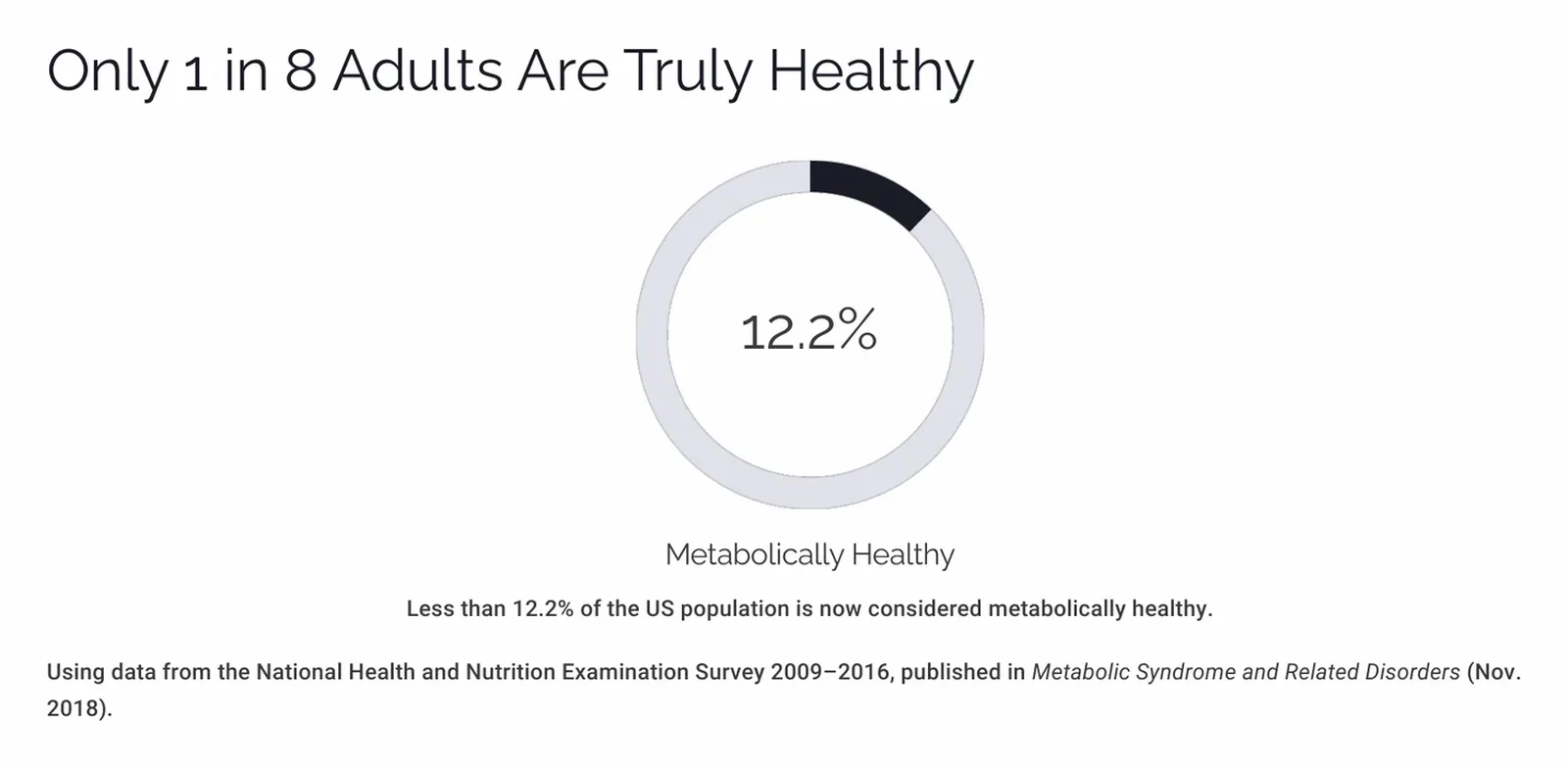
Researchers studied the National Health and Nutrition Examination Survey for 2009 to 2016. They asked a simple question. What share of American adults have healthy blood sugar, blood pressure, triglycerides, HDL cholesterol, and waist size — all five, without medicine?
The answer was under 12.2%, and on the tighter criteria applied after 2021 it is under 7%.1
That means more than nine in ten adults fail at least one of those five measures. That does not mean 88% have diabetes — that is a different, smaller number. But 88% carry some degree of metabolic problem. Most have never been told, because no single test on a routine panel is built to catch the pattern.
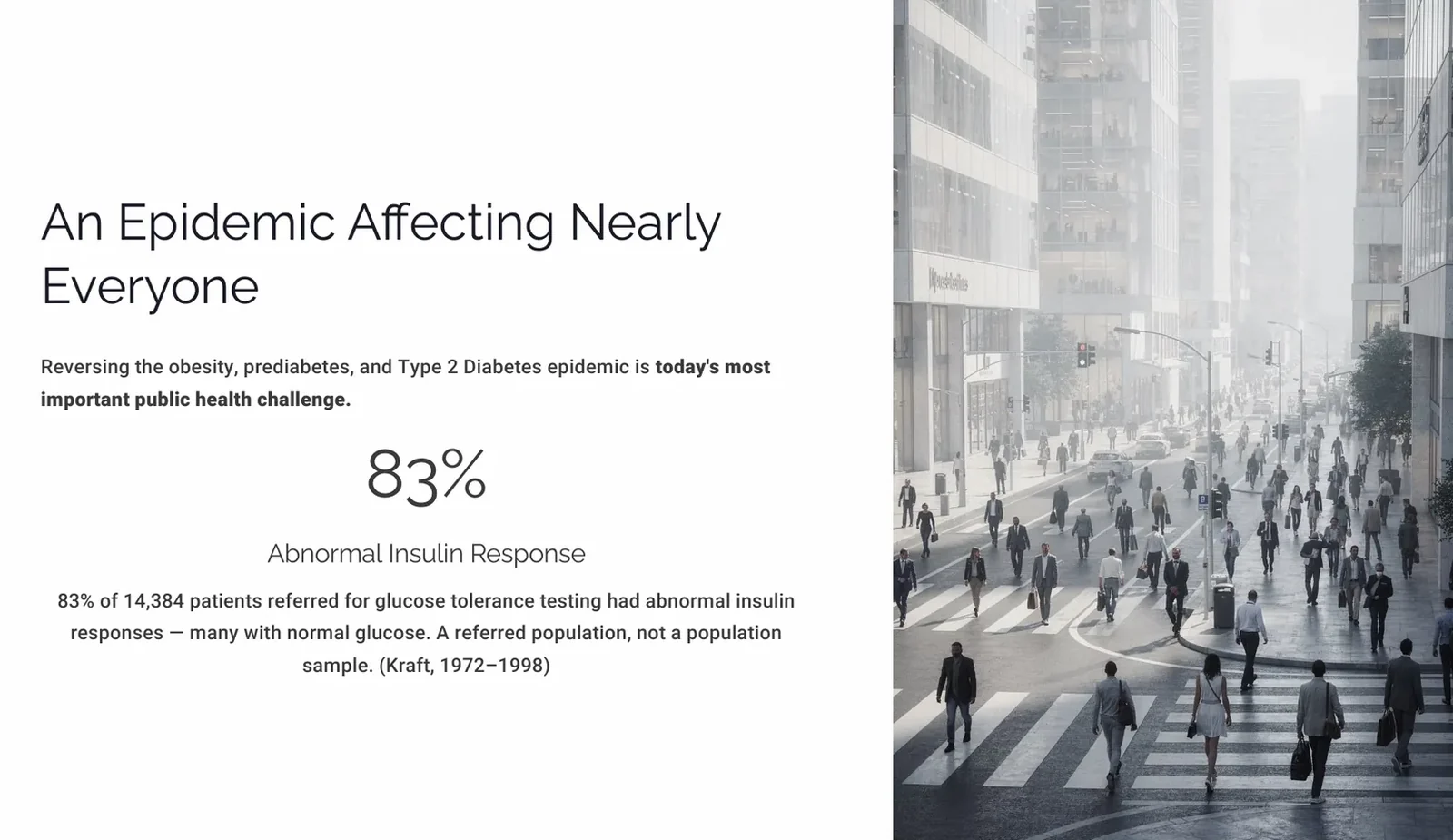
There is an older finding behind this. Between 1972 and 1998, Dr. Joseph Kraft ran more than 14,000 oral glucose tolerance tests with simultaneous insulin measurement. He found that most of the patients he tested had abnormal insulin responses — many of them while their sugar curves looked completely normal.2
One key caveat, because this finding is often overstated. Kraft’s patients were people referred for glucose tolerance testing, not a random sample of the public. His percentages describe a clinic group, not the country. His work did not prove how common the problem is. It proved a principle. You can have high insulin long before you have high blood sugar, and only measuring insulin shows it.

Why does blood sugar stay normal while insulin resistance builds?
Think of insulin as the signal that tells cells to pull sugar out of the blood. When cells respond less to that signal — insulin resistance — the pancreas makes up for it by making more insulin. More signal, same result.
And it works. For years, sometimes decades, blood sugar stays normal because the pancreas keeps raising the dose.
In the clinic, that means glucose is a late symptom. By the time fasting glucose or HbA1c creeps up, the make-up effort has run a long time and started to fail. A doctor who measures only glucose is watching the last domino, not the first.
Meanwhile, the high insulin itself is doing things. Insulin is a storage hormone. While it is high, fat goes into the cell and does not come out easily. It also takes part in inflammation signaling. That is why the phrase “pre-diabetes” misleads. It sounds like a warning about the future. In fact it describes a process already well underway.
How does insulin resistance affect chronic pain?
Almost every patient who comes to our clinic in chronic pain also carries an unnamed metabolic problem.
That is no coincidence, and it changes treatment. Body-wide inflammation makes the nervous system more sensitive. High blood sugar slows tissue healing. Belly fat is active tissue that pumps out inflammation signals. A patient with inflamed terrain will hurt more from the same tissue damage. They will heal more slowly. And they will get less lasting benefit from a procedure.
Treating the pain while ignoring the metabolic terrain treats the loudest part of the problem, not the most fixable part.
What the evidence does and does not support
Here is where honesty matters more than enthusiasm.
Well established: heart and blood vessel risk does not start at the cutoff for a diabetes diagnosis. Risk to small and large blood vessels climbs steadily well below the sugar cutoffs used to diagnose it. Waiting for a formal diagnosis means acting after damage has piled up.
Not established: that treating pre-diabetes cuts heart attacks or death. A meta-analysis of randomized trials in more than 23,000 people with pre-diabetes found that treatment did prevent or delay diabetes — a relative risk of 0.83. But it produced no reduction in mortality or myocardial infarction, with a possible exception for stroke.3
So the case for acting early rests on preventing diabetes itself and on the steady climb in risk. It does not yet rest on a proven drop in deaths. Anyone who tells you otherwise is going beyond the evidence.
How do you test for insulin resistance?
If a standard panel is not built to catch this, what is? These are the measures worth discussing with your own doctor:
- Fasting insulin, alongside fasting glucose rather than instead of it.
- Triglyceride-to-HDL ratio, a widely used stand-in marker of insulin resistance.
- HbA1c, which shows roughly three months of average blood sugar.
- Waist circumference, which tracks belly fat better than weight alone.
None of these is rare or costly. They are just not on the default panel, so you have to ask for them.
Frequently asked questions
Can I have insulin resistance with a completely normal fasting glucose?
Yes, and this is the main point. The pancreas makes up for insulin resistance by making more insulin. That holds blood sugar in the normal range — often for years. Sugar only rises once that effort starts to fail. That is why measuring insulin along with glucose gives a much earlier picture than glucose alone.
Is “pre-diabetes” the same as being fine for now?
No. Immune cells already work differently in the pre-diabetic state. Inflammatory cells move into tissue, and cytokine (immune signal) production rises. Heart and blood vessel risk climbs steadily below the diagnostic cutoff. It does not switch on at it. It describes a process in progress, not the risk of one in the future.
Does reversing insulin resistance reduce my risk of a heart attack?
That has not been shown in trials, and I want to be straight about it. Randomized trials in pre-diabetes have shown prevention of diabetes but not fewer heart attacks or deaths. The case for acting early rests on preventing the disease itself and on the steady climb in risk. Individual results vary.
Should I stop my diabetes or blood pressure medication if my numbers improve?
No — not on your own, and not based on an article or a video. Metabolic changes can drop blood sugar and blood pressure fast. That is exactly why doses may need supervised changes to avoid low blood sugar or low blood pressure. Do not start, stop, or change any medication without consulting your physician.
What is insulin resistance?
Insulin is the signal that tells your cells to pull sugar out of the blood. Insulin resistance means the cells respond less to that signal. So the pancreas makes more insulin to get the same result. That works for years, sometimes decades. That is why blood sugar can look normal the whole time. Sugar rises only once the make-up effort starts to fail.
How can I know if I am insulin resistant?
Ask for the right tests, because the default panel is not built to catch it. Four measures are worth discussing with your doctor. First, fasting insulin along with fasting glucose. Second, the triglyceride-to-HDL ratio. Third, HbA1c, which shows about three months of average blood sugar. Fourth, waist size, which tracks belly fat better than weight alone. None of them is rare or costly. You just have to ask for them.
What foods drive insulin resistance?
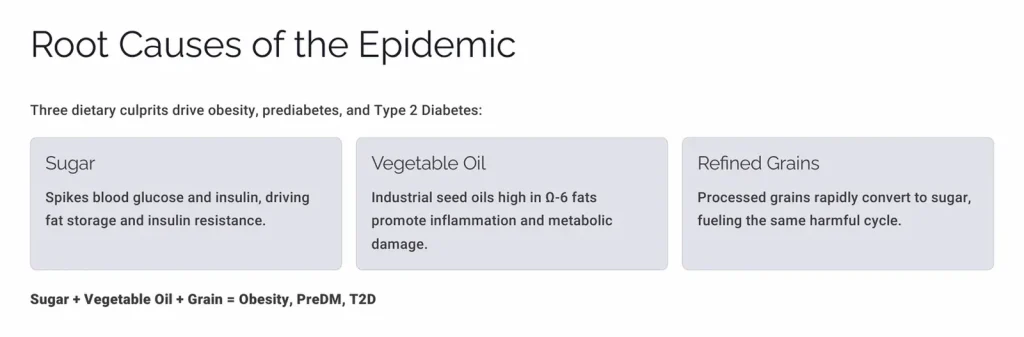
Three diet drivers do the damage: sugar, industrial seed oil and refined grain. That matters because insulin is a storage hormone. While it stays high, fat goes into the cell and does not come out easily. High insulin also takes part in inflammation signaling. That is part of why a pain doctor pays attention to it.
Where can I be evaluated for this in the St. Louis area?
Padda Institute Center for Interventional Pain Management is at 4477 Woodson Rd, Suite 100, St. Louis, MO 63134, next to St. Louis Lambert International Airport. A second location is at 12174 Natural Bridge Rd, St. Louis, MO 63044. The practice serves the St. Louis region across Missouri and Illinois. Call (314) 481-5000 or text (314) 886-5902, Monday to Friday, 8:00 AM to 5:00 PM.
Key takeaways
- Under 12.2% of US adults met all five measures of metabolic health in 2009–2016 and under 7% do today. More than nine in ten fail at least one.
- Insulin rises years to decades before blood sugar does. So a normal fasting glucose does not rule out a metabolic problem.
- Heart and blood vessel risk climbs steadily below the diabetes cutoff — the line is a paperwork line, not a biological one.
- Trials in pre-diabetes have prevented diabetes but have not yet shown fewer heart attacks or deaths. Act early for the right reasons.
- Ask about fasting insulin, triglyceride-to-HDL ratio, HbA1c and waist circumference together.
This article is educational and is not a substitute for evaluation, diagnosis, or treatment by a physician. Individual results vary. Do not start, stop, or change any medication without consulting your physician. To be evaluated, request an appointment or call (314) 481-5000.
References
- Araújo J, Cai J, Stevens J. Prevalence of optimal metabolic health in American adults: National Health and Nutrition Examination Survey 2009–2016. Metabolic Syndrome and Related Disorders. 2019;17(1):46–52.
- Kraft JR. Detection of diabetes mellitus in situ (occult diabetes). Laboratory Medicine. 1975;6(2):10–22. Referred clinical population; not a population prevalence sample.
- Hopper I, Billah B, Skiba M, Krum H. Prevention of diabetes and reduction in major cardiovascular events in studies of subjects with prediabetes: meta-analysis of randomised controlled clinical trials. European Journal of Cardiovascular Prevention & Rehabilitation. 2011;18(6):813–823.
Get evaluated by a physician who treats the terrain, not just the signal
Chronic pain, metabolic disease and trauma physiology reinforce each other. At the Padda Institute they are assessed together, because treating one alone underperforms.
Or call or text us.
Medically reviewed by Dr. Gurpreet Singh Padda, MD, MBA, MHP — Board Certified in Anesthesiology, Pain Medicine, Interventional Pain Management, Addiction Medicine, and Obesity Medicine. Last reviewed July 2026.
Dr. Gurpreet Singh Padda, MD, MBA, MHP