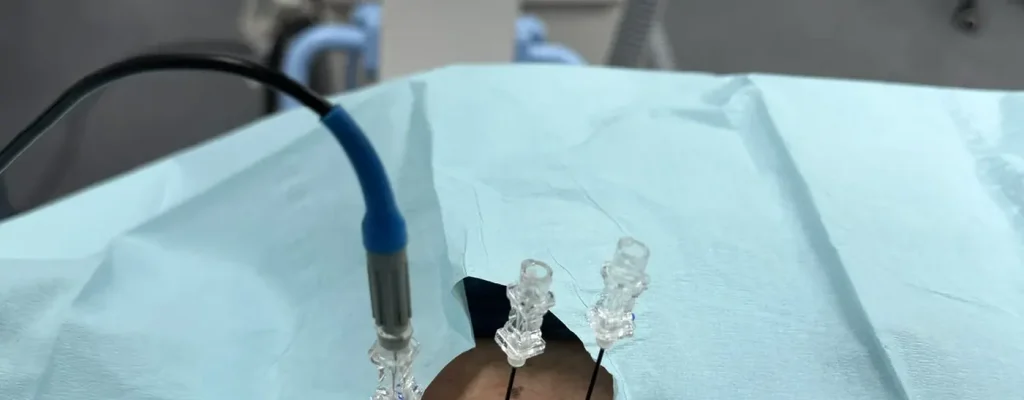
An intrathecal pain pump is an implanted device. It sends medicine straight into the fluid around the spinal cord (the intrathecal space). The effect on the spine is ongoing. It suits hard-to-treat chronic pain where the spinal cord turns pain up. It comes after targeted shots fail. In one single-center survey of 443 pump patients, 38.9% said they stopped oral opioids entirely.1
Thinking about intrathecal pain pump targeted drug delivery for chronic pain? Here is the biggest reality check. One clinic surveyed 443 patients with pumps for non-cancer pain. Of them, 38.9% said they had complete discontinuation of oral opioid intake.1 That is a satisfaction survey from one practice, not a controlled trial. So read it as what those patients reported, not as a rate to expect. It does not mean the pump is right for everyone. But it explains why patients and doctors keep coming back to it when the assembly line keeps failing.
What kind of chronic pain can an intrathecal pain pump help?
Chronic pain is not just one broken part. It also involves muscle control, muscle stamina, and central sensitization (an overactive pain system). The pain can keep signaling even after the first tissue injury settles down. The nervous system learns the pattern and then keeps it going.
That is where the pump can fit. It fits best when step-by-step care has failed. It fits when the spinal cord seems to be amplifying the signal. Some people have mixed tissue and nerve pain. Some have stubborn pain after surgery, or signs of complex regional pain. They sometimes ask about an intrathecal pain pump after several targeted shots fail to give lasting relief.
Maybe the pain story is unclear. Or your symptoms come mainly from unchecked metabolic drivers and poor conditioning. Then a pump can become a costly detour. In 2026, we still see the same failure: the assembly line treats pain as a checklist.
How do you know if you are a candidate for a pain pump?
We diagnose the pain problem you really have, not the MRI report you already got. The most common trap is assuming that “images are normal, therefore the injury healed” means pain should stop too. The images are normal, so the injury healed, so what is left must be stress, a lawsuit, or catastrophizing.
Our evaluation typically includes:
- Pain phenotype (tissue pain, nerve pain, or mixed), and where your usual pain comes from.
- Functional impact: sleep, mood, and how much activity you can handle. And the real daily problem you want solved.
- Response history to past procedures. Think nerve blocks, epidural steroid shots, radiofrequency ablation, and spinal cord stimulator trials.
- Central sensitization clues, because they often predict why “single lesion fixes” disappoint.
- Safety and risk assessment: infection, bleeding, drugs that react with each other, and device limits.
Already looking at nerve stimulation beyond pumps? We also coordinate talks that overlap with interventional pain treatment options. We make sure the plan hangs together instead of being a bundle of unrelated procedures.
How does a pain pump compare with a spinal cord stimulator and other options?
Patients often compare the pump to other options. These include spinal cord stimulators, nerve blocks, ablation, and steroid shots. They are not the same. In 2026 we care less about “which is newest.” We care more about whether your pain type matches how the treatment works.
Interventional steps that may come before (or alongside) a pump
- Nerve block strategies to diagnose and give short-term control, including targeted nerve block pathways.
- Facet joint injection or other image-guided shots for specific pain sources.
- Epidural steroid injection for inflamed nerve root pain or other conditions that respond.
- Radiofrequency ablation for longer relief when the pain source makes you a good fit.
- Spinal cord stimulator talks when the pattern looks like a spinal cord signal problem. That is something medicine is not expected to control.
Weighing a pump for a condition we already cover? We will link to it instead of explaining it again. For example, if your pain overlaps with known nerve or brain-and-spine syndromes, check our targeted resources. For appointments and a clear plan, use our locations and then contact us if you need help pulling records together.
Frequently asked questions
Is an intrathecal pain pump worth it for chronic pain?
An intrathecal pain pump can be worth a look in three cases. Your symptoms resist treatment. The spinal cord truly seems to be amplifying pain. And there is a plan for programming and follow-up. Say your diagnosis is unclear. Or the main driver is metabolic pain management and poor conditioning, with no full rehab plan. Then the pump is harder to justify. See also spinal cord stimulation.
How does intrathecal targeted drug delivery differ from epidural steroid injection treatments?
Epidural steroid injections put medicine into tissue near the epidural space for specific targets. They usually last a short to medium time. An intrathecal pain pump delivers medicine straight into the intrathecal space for an ongoing effect on the spine. That changes both the expected timeline and the weighing of risks and benefits. See also peripheral nerve stimulation.
What side effects should I expect with a spinal cord pump or intrathecal pump?
Side effects depend on the medicine used and how you respond to the dose. They often relate to drug effects and device programming. One key point: the pump needs careful monitoring and dose changes to avoid side effects you cannot tolerate. See also cancer pain management.
Can intrathecal pain pump therapy help with CRPS treatment or reflex sympathetic dystrophy treatment?
Some patients with complex regional pain features ask about an intrathecal pain pump when other targeted options fail. But results are not the same across all pain types. We still evaluate CRPS by looking at the whole pain circuit. When ketamine for RSD is considered, it is part of a wider plan, not a swap-in. See also ketamine therapy.
Will a pump replace other interventional procedures like radiofrequency ablation or nerve block?
Not always. Many people need a combined plan. Radiofrequency ablation or nerve blocks treat specific pain sources in the body or along one spinal level. The pump targets ongoing pain processing in the spine. See also failed back surgery syndrome.
To discuss your own case, request an appointment through the appointment request form, call (314) 481-5000, or text (314) 886-5902. You can see the full range of pain treatments, read about the pain management doctors in St. Louis, or find both offices on the locations page.
Sources
- Schultz DM, Orhurhu V, Khan F, Hagedorn JM, Abd-Elsayed A. “Patient Satisfaction Following Intrathecal Targeted Drug Delivery for Benign Chronic Pain: Results of a Single-Center Survey Study.” Neuromodulation, 2020;23(7):1009–1017. 443 of 610 active patients responded. doi:10.1111/ner.13167
Dr. Gurpreet Singh Padda, MD, MBA, MHP