She is fifty-seven, and her gallbladder came out eleven years ago. The pain it was blamed for did settle. What began about four months later has not: urgent, loose, pale stools after anything fatty, most days of the week, for a decade. Diarrhea after cholecystectomy is the name for that, and in eleven years nobody tested her for it.
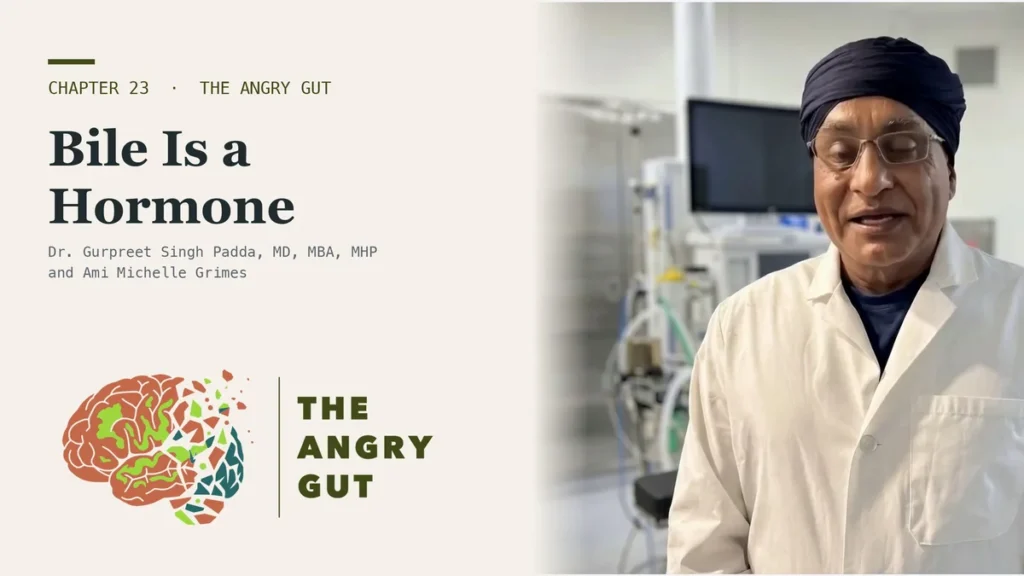
Two colonoscopies, a celiac screen, and a label of irritable bowel syndrome instead. The chapter video, Bile Is a Hormone, Not Soap, walks the physiology. What follows is what a pain practice does with it, because this is a mechanical consequence of an operation, not a personality trait of the bowel.
The operation was reasonable. The follow-up was not.
Start with the audit, because the numbers are the scandal. Of 9,439 people who had a gallbladder removed, 202, or 2.1%, were ever investigated for diarrhea afterward. Among those who were tested, 62.8% had bile acid diarrhea. Published rates for the symptom itself run anywhere from 2.1% to 57.2% depending on the series, which tells you how little anyone has bothered to count.
Read that honestly, because the audit does not say most people who lose a gallbladder get this. Only patients a clinician already suspected were sent for the scan, so the positive rate describes the suspicion rather than the population, and nobody who kept a gallbladder was compared. What it does establish is a condition with a name, a test and a treatment going unexamined in the overwhelming majority of patients who had the operation.
Why is not a mystery. It is categorical. Removing the organ is billable, scheduled and followed up; the consequence gets a syndrome name instead, and irritable bowel syndrome is where investigation goes to stop. Anyone who has lived under a diagnosis of exclusion knows the shape of this, because a bowel blamed on stress stops being examined for anything else.
Diarrhea after cholecystectomy: why a colon answers bile with water
A gallbladder stores bile between meals and fires it as a bolus when fat reaches the duodenum. Without one, bile trickles into a small intestine built to receive it in pulses. More of it travels downstream, and the colon reads bile acids as an instruction to secrete water. That is the diarrhea, and it is a delivery problem.
The amount changes too. Gallbladder epithelium carries the message for fibroblast growth factor 19 at roughly 250 times the level of the distal ileum, so removing it removes the richest source of the hormone that tells the liver when to stop. Plasma bile acid synthesis then rises at least two-fold and the noon peak of the daily rhythm flattens. Everyone in that study had gallstone disease, so the tissue measured was already abnormal before it came out, and the authors call the step from doubled synthesis to any symptom a potential connection rather than a demonstrated one.
Here is the correction that changes how I explain this at the bedside. Somebody tested the tidy version directly, measuring gallbladder hormone content before and after surgery, and found no correlation with bowel habit or stool consistency at all. The hormone-deficiency story failed its own test. The delivery story did not. So the sentence is: more bile, badly timed, into a bowel built for a pulse. Getting that right matters the way it matters when a liver problem hides behind normal labs and the mechanism, not the label, decides the next test.
What gets filed as irritable bowel, counted forward
Most of what is known about symptoms after this operation is remembered rather than measured. One group did it forward, with questionnaires before an elective laparoscopic removal and again at twelve months, against matched people coming through a health check. New functional diarrhea ran 6.6% against 0.2%. New dyspepsia ran 14.8% against 6.9%. New chronic abdominal pain ran 11.9% against 4.4%.
The most useful line in that paper is about which symptoms had a psychological predictor. Somatization predicted the new dyspepsia and the new pain. It did not predict the new diarrhea. Take the direction rather than the decimal, because this is questionnaire data over one year with controls who differ from surgical patients in more than the operation. Still, a symptom that survives every attempt to explain it psychologically is a symptom with plumbing behind it, which is the same argument as a scan that does not match the pain.
The upper gut fills in when the pulse is gone
Bile is also the primary antimicrobial wash for the upper gut, and the mechanism is the receptor rather than the detergent. The human evidence arrived by accident: in 27 patients with obstructive jaundice, bile was not reaching the gut, the wall got leakier, antibodies to endotoxin rose in their blood, and permeability moved back toward normal once a surgeon drained the bile into the bowel.
Downstream of the operation, breath-test-positive overgrowth ran at 46.8% after gallbladder removal, against 26.2% in functional gut disease and 13.3% in controls, with the surgery the only independent predictor in that series. In a larger series of gallstone disease it was the stone-bearing gallbladder, not the surgery, that predicted overgrowth. The two results agree once you ask about timing: a stone that blocks the reservoir and a missing reservoir each stop bile from landing as a bolus.
The counterargument deserves its due. Cultured properly, overgrowth showed up in 4% of irritable bowel patients and 4% of controls, and the mild rise in counts did not map onto symptoms. Fair. A culture is a census: it counts organisms that tolerate a laboratory plate and never reports what the population is doing with your lunch, and the doing is what makes gas, urgency and pain. What the flora do to appetite is the next piece of the same argument.
Bile is a hormone, which is why this reaches your metabolism
Put a primary bile acid on human ileal tissue and the gene for that growth factor switches on 350-fold. The same molecule hits a second receptor on the gut hormone cell, releasing glucagon-like peptide-1 and insulin. And the cleanest proof that this is signaling rather than digestion: bind bile acids in the lumen with a resin that is never absorbed and never reaches the pancreas, and across 17 trials and 2,950 patients it lowered HbA1c by 0.55%, holding up in the trials at low risk of bias.
A molecule you cannot absorb, acting on a receptor in your bowel, moving your blood sugar. That is why a gallbladder argument belongs in a pain practice at all: the same disturbance that gives a patient ten years of urgency sits on the wiring that sets insulin, appetite and the inflammatory tone that makes high insulin a pain problem. Pooled data from a blood marker is a surrogate, and I say so at the point of prescribing.
What we do with a patient like her
My answer to her started with the surgery being defensible, and with the fact that relitigating it eleven years on helps nobody. For a real biliary indication, a stone in the duct, an inflamed gallbladder, classic pain that reproduces on demand, taking the organ out works and works well. The failure sits with the atypical patient sent across that bridge, and with the decade of silence afterward. Treating symptoms after gallbladder surgery comes after the diagnosis is right.
Then we tested instead of assuming, which is the test she should have had a decade ago. Among people with the most severe malabsorption, 96% responded to a bile acid binder; the figure was 80% at the moderate cutoff and 70% at the mild one. In diarrhea-predominant irritable bowel syndrome, 32% of patients clear that moderate cutoff. One caution worth having before you ask: the specific retention scan is not licensed in the United States, so here the honest route is a supervised therapeutic trial with a defined endpoint and a stop date, decided with the physician who prescribes it. Nothing on this page is a reason to start or stop a medication on your own.
There is a behavioral half, and it has a physiological why. For decades the standing advice to anyone with a touchy gallbladder was to keep fat low and the organ quiet. A quiet gallbladder is a full one, because fat in the duodenum is the signal that empties it, and bile that sits concentrates. The advice prescribed the stasis, and surgery collected it. For a patient who still has the organ, that changes what a meal plan is for.
Our position is humbler than a scalpel and humbler than a receptor drug: restore the flow, so bile is made, stored and released in a pulse when food arrives, and can do the two jobs it evolved for. Every study and every number here is laid out in the Chapter 23 Deep Dive, along with what each finding proves and where it falls short. Doing nothing costs another decade under a label.
Frequently asked questions
How long after gallbladder surgery can diarrhea start?
It is not always immediate. In the case that opens this page the stools changed about four months after the operation, which is long enough for most people to stop connecting the two. Counted forward over twelve months, new functional diarrhea appeared in 6.6% of patients against 0.2% of comparison subjects. The order of events is the most useful thing you can bring to an appointment. An exposure history works the same way.
Is diarrhea after gallbladder removal just irritable bowel syndrome?
That label is where most of these patients land, and it is where testing stops. Bile acid diarrhea has a mechanism, a test and a treatment, and 62.8% of the few post-surgical patients who were investigated turned out to have it. Ask specifically whether bile acid handling has been assessed rather than assumed. A diagnosis of exclusion is not the end of the workup.
Does losing a gallbladder cause bacterial overgrowth?
Breath-test-positive overgrowth ran at 46.8% after the operation against 13.3% in controls, and in that series the surgery was the only independent predictor. A stone-bearing gallbladder predicted it too, so the common factor is bile that never arrives as a pulse. Remember that a positive breath test reports a fermentation, not a verdict about your symptoms. Repeat antibiotics are rarely the answer to a flora problem.
Can this affect blood sugar and weight?
The bile acid pathway is endocrine, so yes, in principle. A resin that binds bile acids in the bowel and is never absorbed lowered HbA1c by 0.55% across 17 trials and 2,950 patients with type 2 diabetes. That is a blood marker rather than a hard outcome, and it is not a weight loss claim. It does mean the terrain deserves attention alongside the stools. Food and behavior are treatment here, not aftercare.
Ten years is long enough for a label
If your stools changed after an abdominal operation and the workup stopped at a syndrome name, the mechanism is worth testing rather than assuming. Bring the date of the surgery and the date your symptoms started.
Request an appointment, call (314) 481-5000, or text (314) 886-5902.
Sources
- Barrera, F., Azócar, L., Molina, H., Schalper, K. A., Ocares, M., Liberona, J., Villarroel, L., Pimentel, F., Pérez-Ayuso, R. M., Nervi, F., Groen, A. K., & Miquel, J. F. (2015). Effect of cholecystectomy on bile acid synthesis and circulating levels of fibroblast growth factor 19. Annals of Hepatology, 14(5), 710-721. https://pubmed.ncbi.nlm.nih.gov/26256900/
- Chang, J. Y., Jung, H.-K., Moon, C. M., Kim, S.-E., Shim, K.-N., Jung, S.-A., & Min, S. K. (2023). Development of functional gastrointestinal disorder symptoms following laparoscopic cholecystectomy: A prospective cohort study. Frontiers in Medicine, 10, 1248465. https://doi.org/10.3389/fmed.2023.1248465
- Farrugia, A., Attard, J. A., Hanmer, S., Bullock, S., McKay, S., Al-Azzawi, M., Ali, R., Bond-Smith, G., Colleypriest, B., Dyer, S., Masterman, B., Okocha, M., Osborne, A., Patel, R., Sallam, M., Selveraj, E., Shalaby, S., Sun, W., Todd, F., … Arasaradnam, R. P. (2021). Rates of bile acid diarrhoea after cholecystectomy: A multicentre audit. World Journal of Surgery, 45(8), 2447-2453. https://doi.org/10.1007/s00268-021-06147-8
- Farrugia, A., Williams, N., Khan, S., & Arasaradnam, R. P. (2024). Bile acid diarrhoea and metabolic changes after cholecystectomy: A prospective case-control study. BMC Gastroenterology, 24(1), 282. https://doi.org/10.1186/s12876-024-03368-8
- Hansen, M., Sonne, D. P., Mikkelsen, K. H., Gluud, L. L., Vilsbøll, T., & Knop, F. K. (2017). Bile acid sequestrants for glycemic control in patients with type 2 diabetes: A systematic review with meta-analysis of randomized controlled trials. Journal of Diabetes and Its Complications, 31(5), 918-927. https://doi.org/10.1016/j.jdiacomp.2017.01.011
- Janowitz, P., Kratzer, W., Zemmler, T., Tudyka, J., & Wechsler, J. G. (1994). Gallbladder sludge: spontaneous course and incidence of complications in patients without stones. Hepatology, 20(2), 291-294. https://pubmed.ncbi.nlm.nih.gov/8045489/
- Posserud, I., Stotzer, P.-O., Björnsson, E. S., Abrahamsson, H., & Simrén, M. (2007). Small intestinal bacterial overgrowth in patients with irritable bowel syndrome. Gut, 56(6), 802-808. https://doi.org/10.1136/gut.2006.108712
- Sung, H. J., Paik, C. N., Chung, W. C., Lee, K. M., Yang, J. M., & Choi, M. G. (2015). Small intestinal bacterial overgrowth diagnosed by glucose hydrogen breath test in post-cholecystectomy patients. Journal of Neurogastroenterology and Motility, 21(4), 545-551. https://doi.org/10.5056/jnm15020
- Wedlake, L., A’Hern, R., Russell, D., Thomas, K., Walters, J. R. F., & Andreyev, H. J. N. (2009). Systematic review: The prevalence of idiopathic bile acid malabsorption as diagnosed by SeHCAT scanning in patients with diarrhoea-predominant irritable bowel syndrome. Alimentary Pharmacology & Therapeutics, 30(7), 707-717. https://doi.org/10.1111/j.1365-2036.2009.04081.x
- Welsh, F. K., Ramsden, C. W., MacLennan, K., Sheridan, M. B., Barclay, G. R., Guillou, P. J., & Reynolds, J. V. (1998). Increased intestinal permeability and altered mucosal immunity in cholestatic jaundice. Annals of Surgery, 227(2), 205-212. https://doi.org/10.1097/00000658-199802000-00009
Dr. Gurpreet Singh Padda, MD, MBA, MHP