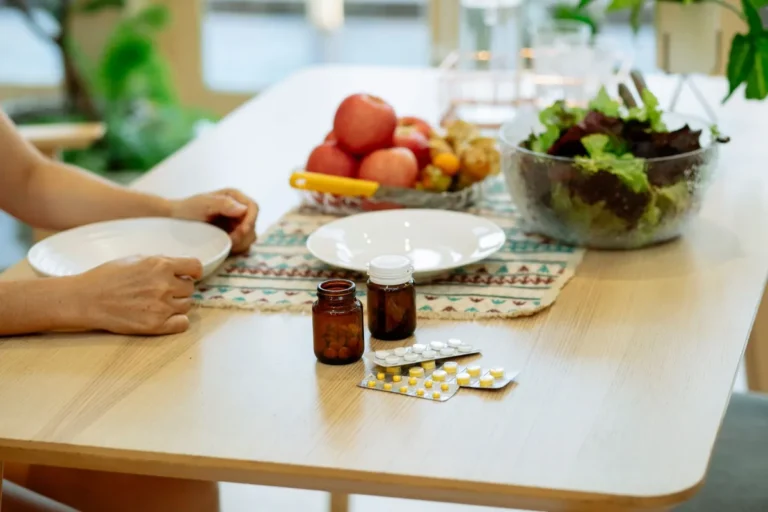
Long term omeprazole side effects start in the gut bacteria. In 1,815 people across three study groups, acid blocker use came with fewer kinds of bacteria and changes in 20% of bacterial groups. Paired with an anti-inflammatory pain pill, an acid blocker raised small bowel injury to 44.4% from 16.7% in a two-week randomized trial.
A fifty-eight-year-old man tracked every calorie for a month to prove to me he was not undereating. He was right. He had also swallowed omeprazole every morning since 2015. His stools had been loose for four years, and his colonoscopy was read as normal. Maybe you live with chronic pain and a medicine cabinet that grew one refill at a time. If so, the long term omeprazole side effects in his story are probably sitting in yours.
My video Full of Calories, Starving One Cell Deep covers the fuel his colon lining stopped getting. Here is the pain patient’s half. What does the acid blocker do to bacteria? What does it do next to an anti-inflammatory? And what should a pain practice do about it?
Why the acid blocker and the pain pill share a cabinet
Fairness first. A proton pump inhibitor is the right drug for erosive esophagitis and for an ulcer that has to heal. It is right for a patient on daily anti-inflammatories whose stomach would otherwise bleed. Anti-inflammatories are real pain medicine. Both buy time for a damaged surface, and time is not a small gift.
The failure is how long they run. The pair often starts during a flare, to protect the stomach while inflammation is treated. The flare ends. The refills do not. No one decided you should be on both for a decade. The incentive decided. Reviewing a prescription pays a clinic nothing. Renewing one pays for the visit. That is the same built-in problem as two doctors managing one bowel with nobody in charge.
Long term omeprazole side effects begin in the bacteria
Researchers studied 1,815 people across three groups. Of them, 211 took a proton pump inhibitor. Use came with much less bacterial variety and changes in 20% of bacterial groups. The germs that rose were Enterococcus, Streptococcus, Staphylococcus and Escherichia coli. The researchers saw this as a shift toward the state that comes before Clostridioides difficile infection. Across whole populations, they wrote, the effect is stronger than antibiotics.
A later analysis went wider. It looked at 1,883 stool samples, with 1,126 people taking at least one drug. 19 of 41 drug types left a signal. Only one drug shifted the whole community in all three groups: the acid blocker. Its single-drug signature covered 40 bacterial groups and 166 microbial pathways. After correcting for everything else people took, 24 groups and 133 pathways remained. Forty-six pathways tracked the dose. People on 40 mg a day or more showed a big drop in one amino acid pathway compared with low-dose users.
The researchers printed their own limits. Overall bacterial richness did not fall with any drug. The study took a single snapshot in time, so the reason for taking the drug could be skewing the results. Neither study measured butyrate. This is observational evidence of an ecosystem being reshaped, not proof of disease.
The drug that guards the stomach and injures the bowel below it
Here is the finding that should change the talk in a pain clinic. Fifty-seven healthy volunteers took celecoxib 200 mg twice a day for two weeks, with either rabeprazole 20 mg or placebo. Small bowel injury showed up in 44.4% against 16.7%. That is a relative risk of 2.67.
The detail is sharper than the headline. Erosions were more common with the acid blocker added. Ulcers were not. The injury had an address. 26% of the acid-blocker group got damage in the jejunum (upper small intestine), and none of the placebo group did. There was no such trend in the ileum (lower small intestine). The authors cite a background rate of 60% to 80% small bowel injury in people taking older anti-inflammatories and acid blockers together.
Grade it honestly. It used a capsule camera, healthy young volunteers, two weeks, and a selective anti-inflammatory. It did not measure bleeding or symptoms. It is a stand-in marker, not a real-world outcome. It is also the only randomized test of a pairing millions of people take.
Why a starved colon matters to a nervous system in pain
The colon lining runs on butyrate, and no human cell makes it. Friendly bacteria build it from the fiber we cannot digest. If they do not, it does not get built. That lining rebuilds itself about every three and a half days, pooled across 85 studies and 265 people. So the supply has to arrive daily.
What the fuel buys is not warmth. It is oxygen use. In mouse and cell work, butyrate raised oxygen use in the lining 4.6-fold. It steadied a low-oxygen sensor (the hypoxia-inducible factor) 11.8-fold. That burning holds the surface below about 10 mmHg. Take the butyrate makers away, and the cell stops burning fat. It turns sugar into lactate and uses far less oxygen. The leftover oxygen leaks into the gut space. A room built to hold no air gets some, and germs that tolerate air move in.
Note the second requirement, because it describes our patients. Losing that signal alone was not enough to raise oxygen in the gut. A second hit of inflammation was needed. Two inputs, not one. This level of evidence is mouse and cell biology. The human version does not exist, because you cannot hold an oxygen probe against a living person’s gut lining for a week.
Now add the body a pain patient really brings: visceral fat pumping out inflammatory signals, insulin running high, and sleep broken most nights by the pain itself. The gut is the first brain. The organ in your skull is the second. The vagus nerve keeps them talking. A patient with an inflamed lining and an overactive spinal cord has two fires burning, and a procedure reaches one of them. That is why metaflammation gets treated as a target rather than a footnote. It is also why we ask what is in the cabinet before planning anything.
The trials that would have excluded you
Every study named here enrolled someone cleaner than the man in my office. The drug-pair trial used healthy young volunteers. The butyrate trials would have turned him away for the loose stools, or the omeprazole, or both. A trial isolates one disease to get a clean answer. The complicated patient is what gets removed to get it. He is the patient I have.
What we changed first, and what it feels like
The plan was food and a review, not another prescription.
- Fiber, raised slowly, weighted toward psyllium. Across 16 trials and 1,251 adults with constipation, 66% responded to fiber against 41% on control. The effect came from psyllium and pectin, above 10 g a day, at four weeks or longer.
- Expect gas, and plan for it. In those trials, gas got worse by more than stool texture got better. Psyllium does not stop fermentation. It changes where and how fast the gas shows up. That is why it softens what inulin does. Bloating early on is expected, not failure. I say that before we start, not after the phone call.
- A current reason for the acid blocker. Not whether to stop it, which is a decision for you and your physician. Instead: what was the first reason, when was it last checked, and is an anti-inflammatory still going down with it?
- Pain control that does not lean on the pair. When a procedure quiets the pain source, the daily anti-inflammatory is often no longer doing the heavy lifting. Then the acid blocker talk gets much easier. Injections follow clinical need, never a calendar.
The body science behind the food is a chain. Fiber feeds the butyrate makers. They make butyrate. The lining burns it to keep its own surface airless. And an airless surface keeps the oxygen-hating bacteria that made it. Nobody has measured that chain end to end in a living person. I would rather call it mechanism than dress it up as proof.
For the man in the opening, it meant thirty grams of fiber a day, reached slowly. It also meant a planned taper of a prescription whose reason had last been checked in 2015. He had been starving his lining from both directions. Nothing was arriving that a bacterium could ferment, and a drug was reshaping the fermenters. Both ends are yours to change. Every study here sits in the companion Deep Dive to the video, with the numbers it does and does not support and the questions to bring your own physician. Next comes what industrial food additives do to the layer this fuel protects.
Frequently asked questions
Can omeprazole cause loose stools after years without trouble?
It can change the ecosystem that governs your stools. Use came with less variety and shifts in 20% of bacterial groups. The germs that rose included Enterococcus and Escherichia coli. That is a link in snapshot human data, not a verdict on your case. Loose stools have other causes worth ruling out first. Bring the symptom and the prescription to one visit. Split care is how a bowel problem goes unowned for years.
Is it safe to take an anti-inflammatory and an acid blocker together for years?
Both drugs have real uses, and the pairing is standard practice for protecting the stomach. The randomized evidence says that protection has a price lower down: jejunal damage in 26% of volunteers given the pair, against none on placebo. Whether the trade suits you depends on your bleeding risk and your other options. That is a talk for your prescriber. Anti-inflammatories carry systemic costs of their own.
Will a butyrate capsule fix a starved colon?
The delivery math is against it. Only 2% of butyrate arriving in the human colon gets into the blood. Enema trials pooled across 227 patients showed nothing in the clinic. The one strong oral trial was done in children with obesity. Fiber has the evidence a capsule does not. This fuel is made on site by bacteria that need something to ferment. The blood supply behind that lining is a separate problem.
Why would a gut problem make my pain worse?
Because pain is not made only where it hurts. A lining under inflammatory stress is one more input to a nervous system already running hot. The insulin resistance and belly fat inflammation that drive joint and nerve pain also shape the gut. We treat that terrain as part of the pain plan, not a side issue. High insulin has a pain mechanism of its own.
How much fiber, and how fast?
The randomized evidence in constipation sits above 10 g a day, kept up for at least four weeks, and favors psyllium and pectin. Thirty grams a day is a fair target for someone eating almost nothing fermentable now. Reach it over weeks, not days, because the gas is the fermentation starting up. If you have inflammatory bowel disease or a known narrowing, that plan goes through your gastroenterologist first. When you eat is a separate lever.
Bring the whole medicine cabinet to the appointment
Maybe you manage chronic pain on a daily anti-inflammatory and an acid blocker you have taken for years. That pairing deserves a real review alongside your pain plan. Our team will look at the drugs, the diet and the pain source together.
Request an appointment, or call or text us.
Sources
- Imhann, F., Bonder, M. J., Vich Vila, A., Fu, J., Mujagic, Z., Vork, L., Tigchelaar, E. F., Jankipersadsing, S. A., Cenit, M. C., Harmsen, H. J., Dijkstra, G., Franke, L., Xavier, R. J., Jonkers, D., Wijmenga, C., Weersma, R. K., & Zhernakova, A. (2016). Proton pump inhibitors affect the gut microbiome. Gut, 65(5), 740-8. https://doi.org/10.1136/gutjnl-2015-310376
- Vich Vila, A., Collij, V., Sanna, S., Sinha, T., Imhann, F., Bourgonje, A. R., Mujagic, Z., Jonkers, D. M. A. E., Masclee, A. A. M., Fu, J., Kurilshikov, A., Wijmenga, C., Zhernakova, A., & Weersma, R. K. (2020). Impact of commonly used drugs on the composition and metabolic function of the gut microbiota. Nature communications, 11(1), 362. https://doi.org/10.1038/s41467-019-14177-z
- Washio, E., Esaki, M., Maehata, Y., Miyazaki, M., Kobayashi, H., Ishikawa, H., Kitazono, T., & Matsumoto, T. (2016). Proton pump inhibitors increase incidence of nonsteroidal anti-inflammatory drug-induced small bowel injury: A randomized, placebo-controlled trial. Clinical gastroenterology and hepatology, 14(6), 809-815.e1. https://doi.org/10.1016/j.cgh.2015.10.022
- Kelly, C. J., Zheng, L., Campbell, E. L., Saeedi, B., Scholz, C. C., Bayless, A. J., Wilson, K. E., Glover, L. E., Kominsky, D. J., Magnuson, A., Weir, T. L., Ehrentraut, S. F., Pickel, C., Kuhn, K. A., Lanis, J. M., Nguyen, V., Taylor, C. T., & Colgan, S. P. (2015). Crosstalk between microbiota-derived short-chain fatty acids and intestinal epithelial HIF augments tissue barrier function. Cell Host & Microbe, 17(5), 662-671. https://doi.org/10.1016/j.chom.2015.03.005
- Byndloss, M. X., Olsan, E. E., Rivera-Chávez, F., Tiffany, C. R., Cevallos, S. A., Lokken, K. L., Torres, T. P., Byndloss, A. J., Faber, F., Gao, Y., Litvak, Y., Lopez, C. A., Xu, G., Napoli, E., Giulivi, C., Tsolis, R. M., Revzin, A., Lebrilla, C. B., & Bäumler, A. J. (2017). Microbiota-activated PPAR-gamma signaling inhibits dysbiotic Enterobacteriaceae expansion. Science, 357(6351), 570-575. https://doi.org/10.1126/science.aam9949
- van der Schoot, A., Drysdale, C., Whelan, K., & Dimidi, E. (2022). The effect of fiber supplementation on chronic constipation in adults: An updated systematic review and meta-analysis of randomized controlled trials. The American journal of clinical nutrition, 116(4), 953-969. https://doi.org/10.1093/ajcn/nqac184
- Gunn, D., Abbas, Z., Harris, H. C., Major, G., Hoad, C., Gowland, P., Marciani, L., Gill, S. K., Warren, F. J., Rossi, M., Remes-Troche, J. M., Whelan, K., & Spiller, R. C. (2022). Psyllium reduces inulin-induced colonic gas production in IBS: MRI and in vitro fermentation studies. Gut, 71(5), 919-927. https://doi.org/10.1136/gutjnl-2021-324784
- Jamka, M., Kokot, M., Kaczmarek, N., Bermagambetova, S., Nowak, J. K., & Walkowiak, J. (2021). The effect of sodium butyrate enemas compared with placebo on disease activity, endoscopic scores, and histological and inflammatory parameters in inflammatory bowel diseases: A systematic review of randomised controlled trials. Complementary medicine research, 28(4), 344-356. https://doi.org/10.1159/000512952
- Darwich, A. S., Aslam, U., Ashcroft, D. M., & Rostami-Hodjegan, A. (2014). Meta-analysis of the turnover of intestinal epithelia in preclinical animal species and humans. Drug Metabolism and Disposition: The Biological Fate of Chemicals, 42(12), 2016-2022. https://doi.org/10.1124/dmd.114.058404
Dr. Gurpreet Singh Padda, MD, MBA, MHP