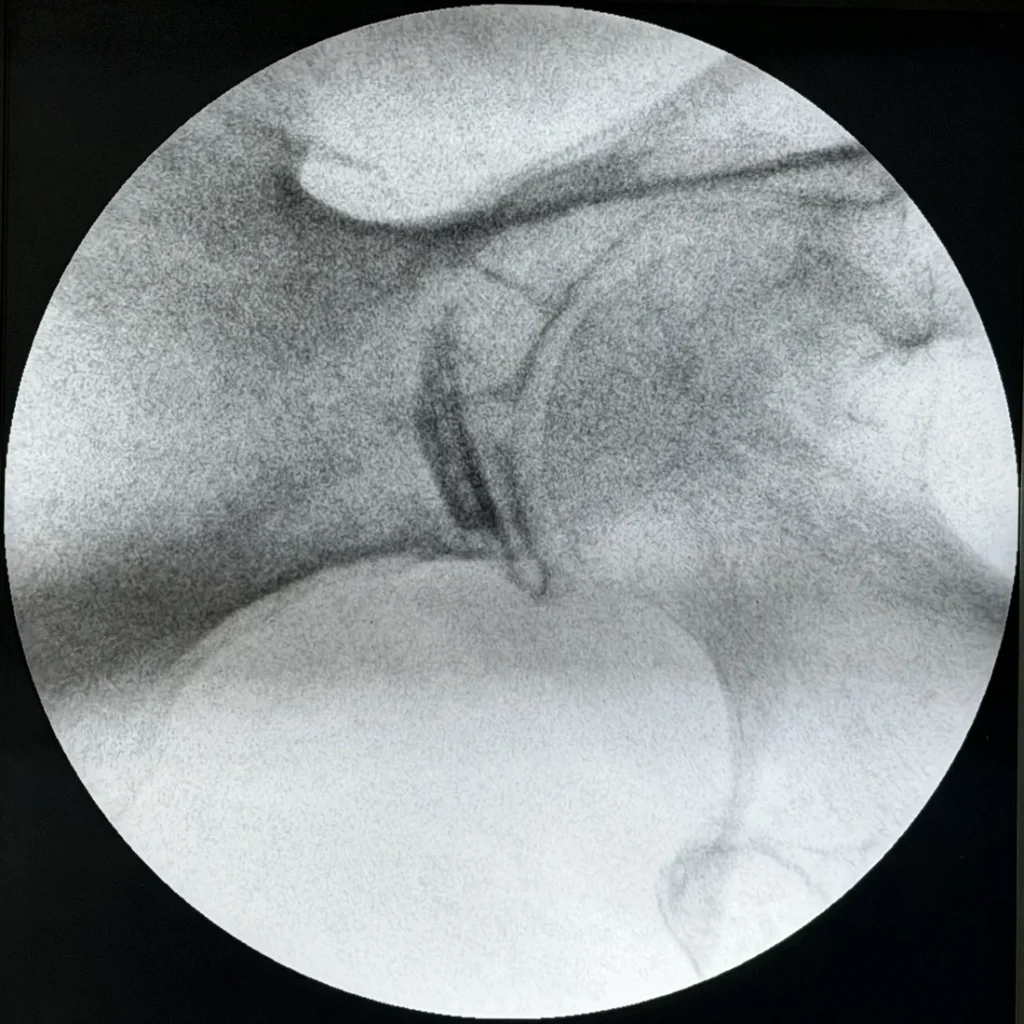
The most useful thing a piriformis injection can do is sometimes to fail. That is not a line to make you feel better. No scan and no blood test can confirm this condition. So a correctly placed injection that changes nothing is one of the few pieces of hard evidence you will get. It tells you where your pain is not coming from.
The problem is what usually happens next. The result gets written off as a letdown. A second injection is booked on the idea that the first one just needed a repeat. And the clue it gave is thrown away.
Did the piriformis injection actually reach the muscle?
A negative result only means something if the needle placement was confirmed. That is the whole reason contrast dye is worth the extra minute.
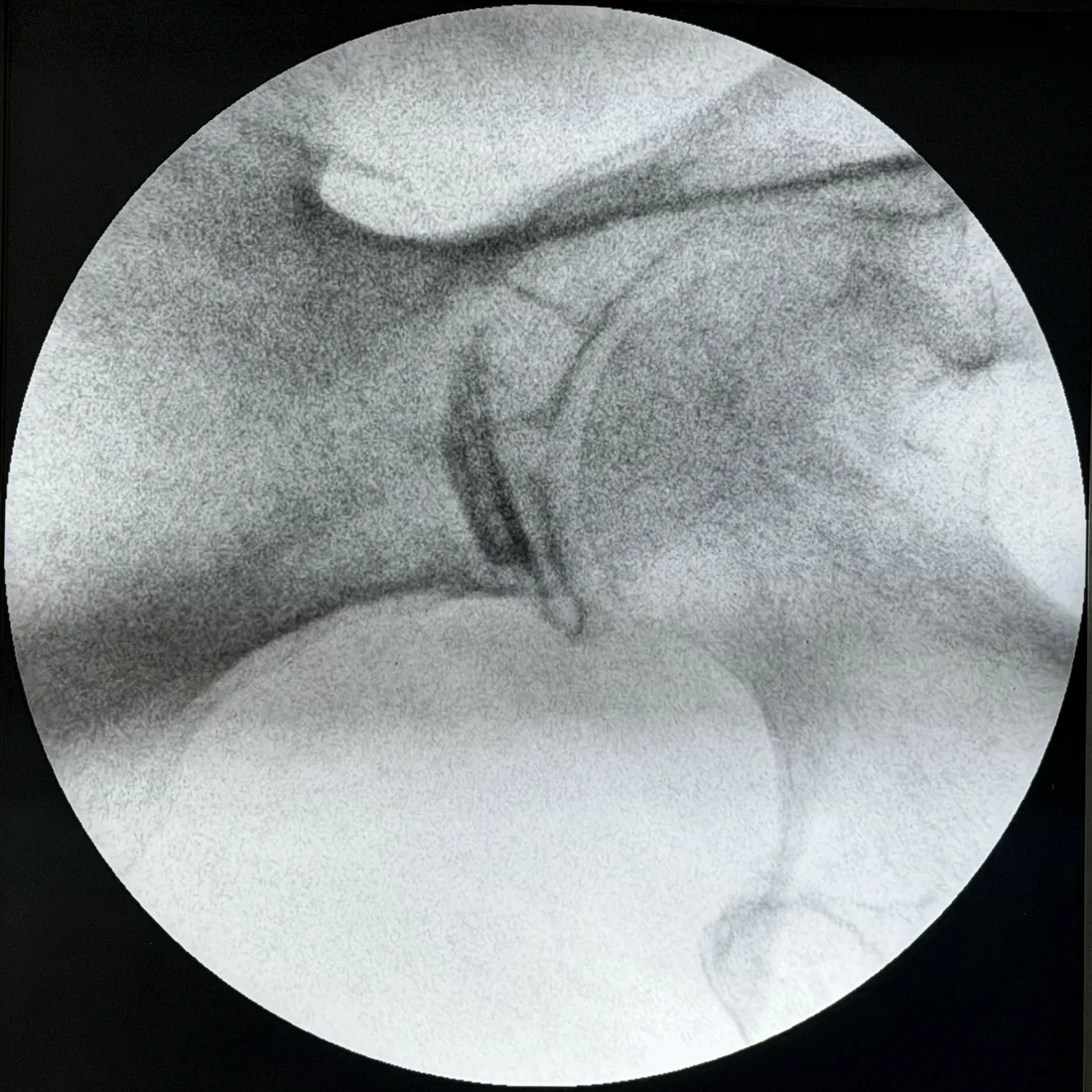
Without that proof, a failed injection has two possible causes, and no way to tell them apart. Either the piriformis is not the source of your pain, or the medicine never reached the piriformis. Those lead to opposite next steps. Image guidance improves needle placement and may lower the risk of harm to nearby structures1 — and it also makes the result readable. That is the quieter benefit.
If your injection was done by surface landmarks alone, with no imaging, the honest truth is that you do not have a result yet. You have an attempt.
What does the timing of relief after a piriformis injection mean?
What happened, and when, sorts you into very different situations:
- Nothing changed at all, including during the first two hours. With confirmed placement, this is the clean negative. The anesthetic was working in the muscle and your pain did not care. Look elsewhere.
- Good relief for a few hours, then back to baseline. The block worked, so the muscle is involved. Whether the steroid then adds lasting benefit is a separate question. It takes several days to answer.
- Relief for days to weeks, then gradual return. The target was right, but the cause is still at work. This is a body-mechanics and rehab problem, not a problem of how often you get injected.
- Worse for a day or two, then better. Common and expected. Soreness after the shot and a short flare of pain are known effects, not signs of harm.1
This is why writing down what changed and when is worth the effort. A month later, all four of those patterns blur into “it didn’t really work.”
If it is not the piriformis, what is causing the pain?
A clean negative takes one structure off a crowded list. Deep gluteal syndrome means the sciatic or pudendal nerve is pinched by a cause other than a disc. Those causes include piriformis syndrome, gemelli-obturator internus syndrome, ischiofemoral impingement, and proximal hamstring syndrome. The condition is often missed or mistaken for something else.2 Behind those sit the hip joint, the sacroiliac joint, the cluneal nerves and the lumbar spine — and where a disc level is still in question, a selective nerve root block tests that level the same way this injection tested the muscle.
Testing and ruling out the piriformis is real progress down that list. It is only wasted if nobody uses the result.
When is a repeat piriformis injection reasonable?
A repeat makes sense when the first injection helped and then faded. It also makes sense when placement was never confirmed and a clean test is still needed. It does not make sense as a reflex. The number of injections should follow what you need, not a schedule — there is no magic in a series of three. A pre-booked course is a scheduling convention, not a fact of biology.
Contrast has already shown this muscle is not the pain source. A second injection into it is not a treatment plan. It is a delay.
What should the exam look for after a failed piriformis injection?
After a confirmed negative, the next step is a return to the physical exam, with a shorter list and better facts. Four things narrow deep gluteal syndrome down. A careful history. A physical exam with provocation tests (moves that bring on the pain). An electrodiagnostic study when a nerve root problem needs ruling out. And imaging aimed at the causes still left.2 Hip range of motion gets checked again. The sacroiliac joint and the top of the hamstring get a real exam, not a guess. Maybe the lumbar spine was scanned early and a wear-and-tear finding was taken as the answer. Now that one rival cause is ruled out, that guess gets a second look.
None of that is exotic. It is the ordinary work that gets skipped when a failed injection is treated as a dead end instead of a clue.
Frequently asked questions
What is the success rate of piriformis injections?
No single number you can trust exists, and the reason is worth knowing. Reported results vary widely because there is no agreed definition of piriformis syndrome. So different studies treat different groups of people and call them the same thing. Any clinic that quotes you an exact percentage is quoting a number the research does not support. Learn more: why the diagnosis is so hard to pin down.
Should I just get a second piriformis injection?
Only if the first one told you something that makes a second worth doing. A repeat is reasonable when the injection clearly helped and the benefit faded. It is also reasonable when placement was unsure and you want a clean test. It is not a sensible default when a confirmed, well-placed injection changed nothing — that is repeating a test that already gave its answer. Learn more: what goes into the injection and when to change it.
Why did the injection help for a few hours and then stop?
That pattern usually means the placement was right and the anesthetic did its job. But nothing lasting followed it. Two causes are common. First, the steroid had not kicked in yet. Its anti-inflammatory effect builds over the next few days, not right away. Second, the strain that overloaded the muscle is still there. It irritated the muscle again as soon as the block wore off. Those two lead to different next steps. That is why the timing of your response matters. Learn more: what to expect in the hours and days after.
What is the next step if a piriformis injection fails?
A new exam, not a bigger procedure. The smart move is to go back through the deep gluteal list of causes and the structures around it — the hip joint, the sacroiliac joint, the top of the hamstring, the cluneal nerves, the lumbar spine. Now you know the piriformis has been tested and ruled out. That is a much shorter list than the one you started with. Learn more: when low back pain is actually the sacroiliac joint.
Could the injection have missed the muscle?
It is a fair question, and it is exactly why contrast is used. Without contrast, a negative result is unclear — you cannot tell a wrong diagnosis from a misplaced needle. When the images show contrast spreading through the muscle, the doubt is gone. Then the negative result can be trusted. If your injection was done without image guidance, that question stays truly open. Learn more: what the contrast frame proves.
Why is my piriformis pain not going away?
Usually for one of three reasons. The piriformis may not be your pain source at all. The source may be the hip joint, sacroiliac joint, top of the hamstring, cluneal nerves or lumbar spine. Or the injection may never have reached the muscle. Only contrast images can settle that. Or the target was right, but the strain that overloads the muscle is still at work. That makes it a rehab problem, not an injection problem.
How long does it take for a piriformis injection to start working?
The two medicines work on different clocks. The local anesthetic acts within the first couple of hours. Relief in that window tells you whether the muscle is involved. The steroid builds its anti-inflammatory effect over the next few days. Feeling worse for a day or two before improving is common and expected. Write down what changed and when, because the timing is the result.
Will piriformis syndrome show up on an MRI?
No scan confirms it, and no blood test does either. That is exactly why a well-placed, contrast-confirmed injection matters. It is one of the few pieces of hard evidence you can get about whether the piriformis is the source. Imaging still has a job. After a clean negative, it is aimed at the causes still left, such as the hip, the sacroiliac joint or the lumbar spine.
To discuss your own case, request an appointment through the appointment request form, call (314) 481-5000, or text (314) 886-5902. You can review the full range of pain treatments, read about the pain management doctors in St. Louis, or find both offices on the locations page.
Sources
- Chang A, Ly N, Varacallo MA. “Piriformis Injection.” StatPearls. Treasure Island (FL): StatPearls Publishing; 2023. NCBI Bookshelf NBK448193
- Park JW, Lee YK, Lee YJ, Shin S, Kang Y, Koo KH. “Deep gluteal syndrome as a cause of posterior hip pain and sciatica-like pain.” The Bone & Joint Journal. 2020;102-B(5):556–567. doi:10.1302/0301-620X.102B5.BJJ-2019-1212.R1
Dr. Gurpreet Singh Padda, MD, MBA, MHP