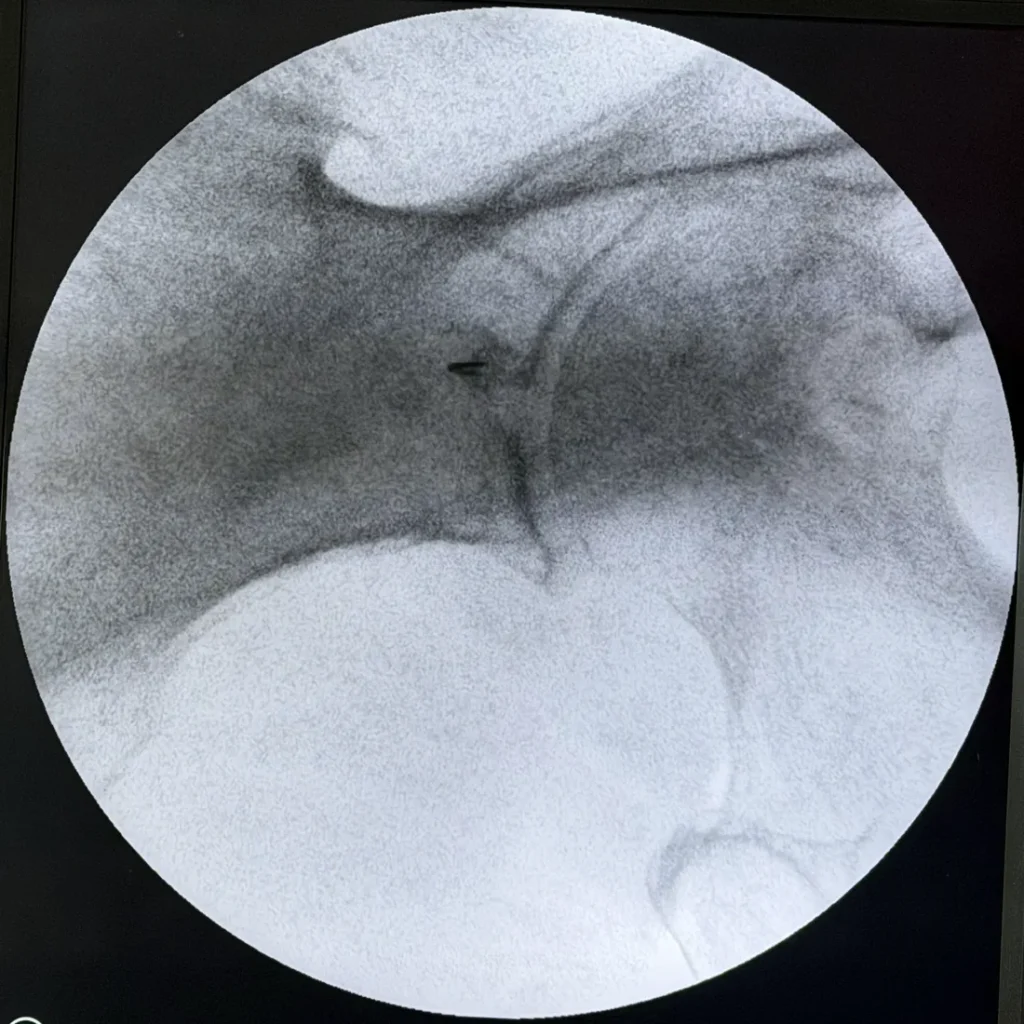
A piriformis injection is done awake, face down and without sedation. Local anesthetic numbs the skin. The needle is guided into the muscle under fluoroscopy (live X-ray) or ultrasound. Contrast dye confirms the spot before the medicine goes in. You drive yourself home, and normal activity, including work, resumes in two to four hours.
Most of what makes a piriformis injection go well happens before the needle moves. Here is what the procedure looks like at the Padda Institute, step by step. That includes the less pleasant parts and the risks worth knowing ahead of time.
How do you prepare for a piriformis injection?
Two things get settled first. One: is the piriformis really the target? A shot into the right muscle for the wrong diagnosis is a wasted procedure and a misleading result. Two: we check whether anything makes the injection unsafe for you.
The reasons to say no are simple. An active infection, either at the injection site or in the body, rules it out. So do serious bleeding problems (coagulopathy) or blood thinners that cannot be safely managed around the procedure. So does a known allergy to the planned medicine, the contrast dye, or the other drugs used.1 If you take a blood thinner, bring it up at the visit before the procedure, not on the morning of it.
Are you put to sleep for a piriformis injection?
We do not use sedation for this procedure. You are awake, you lie face down, and you can talk to us the whole time.
That is not about cost. A piriformis injection is done millimeters from the sciatic nerve. A patient who can say “that just went down my leg” gives us facts no monitor can. Sedation takes away the very feedback that makes the procedure safer. For you, it also means you drive yourself home and do not need a ride.
What happens during a piriformis injection?
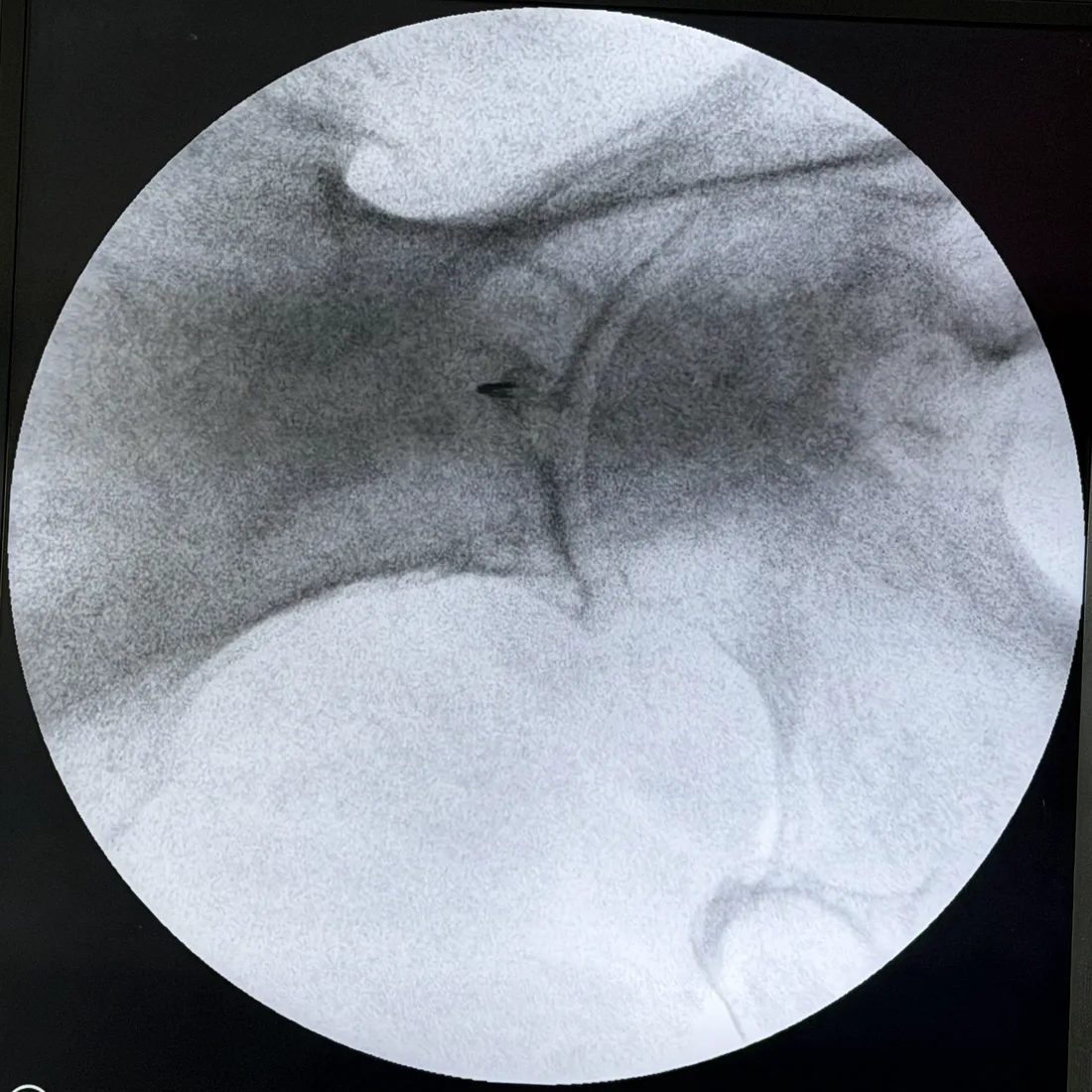
The steps are short and predictable. We clean the skin over the buttock and cover it with a sterile drape. Local anesthetic goes into the skin and along the needle path. That is the only truly sharp part, and it lasts seconds. Then we move the needle toward the muscle under imaging. We check it, adjust it, and check again. We use both fluoroscopy and ultrasound. We prefer fluoroscopy where we have it, because a small amount of contrast dye, given before the medicine, shows where the medicine will spread. Ultrasound cannot show that the same way.
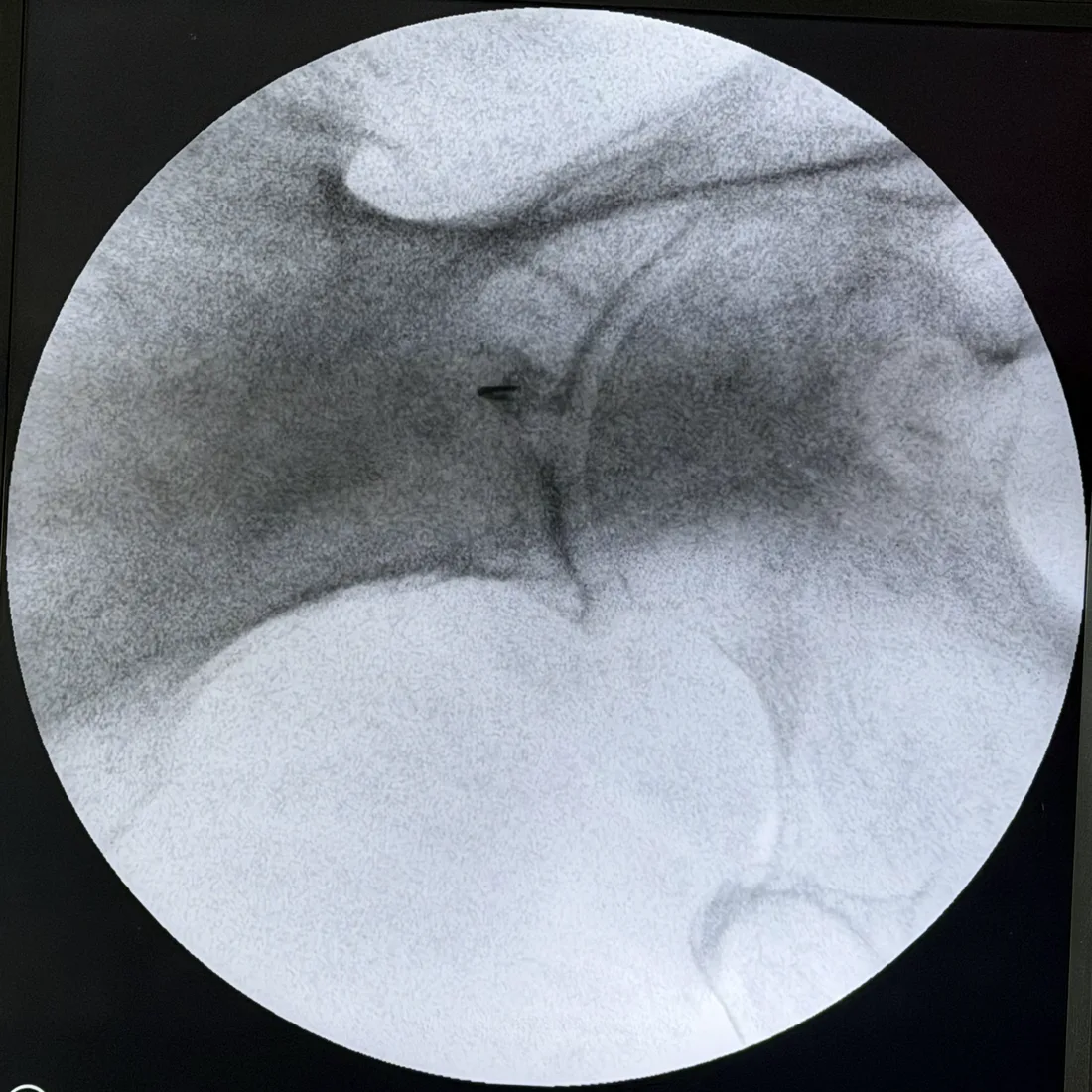
Once the dye confirms the spot, the medicine goes in. Most patients feel a deep pressure or a cramping ache here as the muscle fills. That is the feeling people remember. It fades within a minute or two. The needle comes out, a small bandage goes on, and we help you up.
Published times give a real sense of scale. In a cohort (group) of 109 piriformis injections, the median times were eight minutes with fluoroscopy, ten with ultrasound, and eleven with both.2 The visit runs longer than the procedure, but not by as much as most people expect.
What should you expect after a piriformis injection?
- Recovery is two to four hours. Then normal activity, including work, resumes.
- You drive yourself home, unless the leg is numb or weak for a while. If so, we keep you until it clears.
- Soreness at the site for a day or two is normal. Ice helps. It is not a complication.
- Keep the site clean and dry for the rest of the day.
- Track your response. Write down what changed and when. The first few hours act differently from the next week, and that difference tells us something about the diagnosis.
The risks, named
Complications of piriformis injection are uncommon. But the honest list includes bleeding, infection, soreness after the shot, a short-term rise in pain, headache, allergic or other bad reactions to the medicine, and the procedure failing to give real relief.1 That last one belongs on the list. It is a possible outcome, not a malfunction.
The risk tied to this spot is the sciatic nerve. It sits close by, along with other nerves and blood vessels in the buttock. So accidental nerve irritation or injury is a real risk, especially when the needle is off target. Fluoroscopy or ultrasound guidance puts the needle where it belongs and may lower that risk.1 In the 109-procedure cohort, the most common side effect was short-term leg weakness or numbness.2
How many piriformis injections will you need?
Your need decides the number, not a schedule. There is no magic in a series of three. We do not pre-book a course of injections before we know how you did with the first one. If a repeat makes sense, it is usually some weeks later. Total steroid exposure limits how many you can have. We re-check the plan each time instead of assuming it.
Frequently asked questions
How painful is a piriformis injection?
The skin and the needle path are numbed with local anesthetic first, so the sharp part is short. What most patients remember is a deep, cramping pressure as fluid fills the muscle. It is uncomfortable for under a minute, not sharp. Since there is no sedation, you can tell us when something hurts, and we change the pace. Learn more: the injection sequence, image by image.
Do I need someone to drive me home after a piriformis injection?
No. We do not use sedation for this procedure, so you are awake and clear-headed the whole time and you drive yourself home. The one exception is short-term numbness or weakness in the leg from the local anesthetic spreading near the sciatic nerve. If that happens, we keep you until it wears off. We will not send you out on a leg you cannot fully feel. Learn more: what happens at a first pain appointment.
How long does the procedure take?
The injection itself is short. In a published cohort of 109 piriformis injections, the median times were eight minutes with fluoroscopy alone, ten minutes with ultrasound alone, and eleven minutes with both. The longest cases in any group ran about 25 to 28 minutes. Plan your day around the visit rather than the injection. Check-in, positioning, prep and recovery are what fill the appointment. Learn more: image-guided procedures at Padda Institute.
When can I go back to work after a piriformis injection?
Most patients go back to normal activity, including work, within two to four hours. There is no lifting limit and no bed rest. Soreness at the injection site for a day or two is normal. It does not mean anything went wrong. Learn more: what goes into the injection and how fast it works.
What are the risks of a piriformis injection?
They are uncommon, but real and worth naming. Bleeding, infection, soreness at the injection site, a short rise in pain before it improves, headache, and allergic or other reactions to the medicine or the contrast dye. The main concern here is the sciatic nerve, which sits right next to the muscle. Accidental nerve irritation is the risk that image guidance is there to lower. In the published cohort above, the most common side effect was short-term leg weakness or numbness. Learn more: what happens if the injection does not help.
How much does a piriformis injection cost?
That depends on your insurance plan, your deductible and whether prior authorization is needed. No one can honestly quote you a number from a web page. Our staff will check your benefits and tell you what applies to your plan before anything is booked. Know this up front: prior authorization is not a promise of payment. It means the plan agrees the service is medically needed. It does not mean the plan will pay for it in full. Learn more: piriformis syndrome treatment in St. Louis.
Why does my pain feel worse after a piriformis injection?
A short flare can happen. On its own, it does not mean the injection failed. Soreness at the site for a day or two is normal, and ice helps. A short rise in pain is one of the named risks. So is brief leg weakness or numbness when the anesthetic spreads near the sciatic nerve. Write down what changed and when, because the first few hours act differently from the next week. Learn more: what goes into the injection and how fast it works.
Is a piriformis injection done with ultrasound or fluoroscopy?
We use both, and prefer fluoroscopy where we have it. The reason is contrast dye. A small amount given before the medicine shows where the medicine will spread through the muscle. Ultrasound cannot show that the same way. We move the needle in stages, with a check image between each move, because the sciatic nerve sits millimeters away and exact placement is what lowers the risk of irritating it. Learn more: what fluoroscopy actually shows, image by image.
Who should not get a piriformis injection?
Three things rule it out. An active infection, either at the injection site or in the body. Bleeding problems or blood thinners that cannot be safely managed around the procedure. And a known allergy to the planned medicine, the contrast dye or the other drugs used. If you take a blood thinner, raise it at the visit before the procedure, not on the morning of it. Learn more: what happens at a first pain appointment.
To discuss your own case, request an appointment through the appointment request form, call (314) 481-5000, or text (314) 886-5902. You can review the full range of pain treatments, read about the pain management doctors in St. Louis, or find both offices on the locations page.
Sources
- Chang A, Ly N, Varacallo MA. “Piriformis Injection.” StatPearls. Treasure Island (FL): StatPearls Publishing; 2023. NCBI Bookshelf NBK448193
- Martiszus B, Hua S, Christiansen S, Ramsey K, Zusmer E. “A Novel Piriformis Injection Technique Utilizing Combined Fluoroscopy and Ultrasound — A Pilot Study.” Pain Physician. 2022;25(2):E365–E374. PMID 35322992
Dr. Gurpreet Singh Padda, MD, MBA, MHP